
Retirement Living takes an unbiased approach to our reviews. We may earn money when you click a partner link. Learn More
Do Stair Lifts Damage Stairs?
Stair lifts do not damage stairs during installation or removal; only small holes that can be easily repaired are left behind on the stair treads after they are taken out.


Updated:
At a glance:
- The stair lift installation process involves attaching a rail to your stair treads at multiple points using brackets and screws, distributing loads evenly to prevent damage.
- Stair lift removal does not damage the staircase, leaving behind only small holes on the stair treads that can be easily covered with wood filler or hidden by carpet.
- Most stair lift models—including straight stair lifts and curved stair lifts—attach to the treads to prevent damage.
For seniors and their loved ones, peace of mind involves more than just addressing limited mobility. Many worry that improving home accessibility will impact the structure and value of their hard-earned property.
In the case of stair lifts, it’s a myth that they cause damage to stairs. Regardless of the type of stair lift you need—from a permanent wheelchair lift installation to a temporary chair lift used while recovering from surgery—your stairs are safe from stair lift damage.
In this article, we’ll address how stair lifts work and how easy it is to touch up your stairs after removal.
How Do Stair Lifts Work?
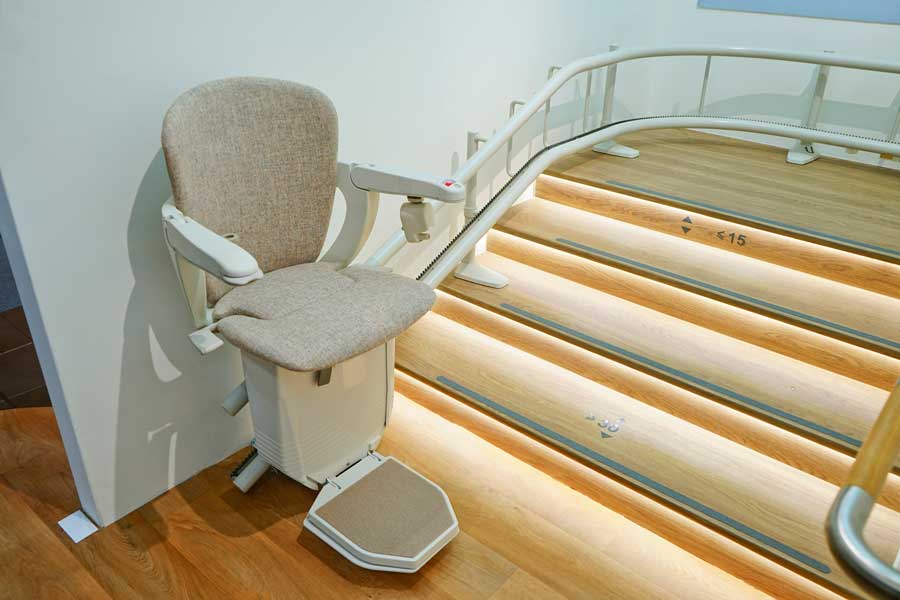
Modern stair lift technology typically includes a chair with a seatbelt attached to a stair lift rail, driven up and down stairs using a battery-powered motor and drive system. The batteries are rechargeable, allowing the stair lift to operate even when power outages occur.
To avoid damage and ensure the rail is secure, professional installation involves carefully mounting the rail to the stair treads—not the wall—with screws and support brackets. This improves structure, prevents wall damage, and allows for easy removal. The lift can also be positioned at the top or bottom of the stairs for easy entry and exit, improving quality of life on the daily.
The best stair lifts can come with a variety of additional safety features, such as swivel seats, footrests, remote controls, and more. None of which are known to cause damage to stairs.
Safe Stair Lift Installation
Safe stair lift installation for both curved and straight staircases requires a professional installer. Both types mount the stair lift rail directly to the treads with minimal impact, using sturdy screws and brackets that leave only small holes when removed.
Straight Stair Lifts
Straight staircases are the easiest to work with, with a simple and efficient installation process that requires no structural changes. First, the rail is cut to match the exact stair length. The railing is then attached to each tread using evenly spaced brackets and screws. This distributes weight across multiple points, preventing excessive strain on any single tread.
Curved Stair Lifts
While curved stair lift installation is generally more customized and complicated—requiring the installer to design a rail that contours to the space—the attachment is generally the same. The rail is fixed to the treads, rather than the walls or banisters, with strategic spacing that provides the most structural support.
Outdoor Stair Lifts
While they might be engineered from special, weather-resistant materials, these models attach to your deck, porch, or patio stairs much in the same way. After the railing is fixed in place with the proper brackets and screws, high-quality sealing protects both your home and the stair lift from the elements.
Understanding Stair Lift Rentals
Stair lift rentals are a great solution for recovering seniors who only need in-home assistance for a few weeks or months. Companies generally allow you to rent stair lifts on a month-to-month basis, making it easy to enjoy the benefits without a long-term commitment.
These installations are simple and easy, using the same brackets and screws mentioned above. When it comes time to remove the temporary installation, only small screw holes are left behind.
Keep in mind that stair lift rentals can easily fit 36-inch-wide straight staircases, but curved or narrow staircases may be more difficult to find a temporary solution for.
About Stair Lift Removal
Many older adults wonder if the stair lift removal process will damage their stairs, walls, handrails, or floors. Luckily, the answer is none of the above.
When removed by a professional technician, stair lifts attached to the treads leave behind only small holes where the screws once were. These holes are nearly invisible on carpeted stairs, and are touched up easily on wooden or concrete stairs.
The removal process itself is clean and non-invasive. Technicians unscrew the brackets, lift the rail free, and disconnect the chair and motor unit. Seeing as the structure of your stairs was never altered, there’s no risk of lasting damage. Just some cosmetic TLC.
Tips For Cost-Effective Stair Touch-Ups
The best way to touch up your staircase after a stair lift removal varies based on what the stairs are made of. Here are some general tips:
Carpeted Stairs
- Vacuuming: The areas where the brackets and screws once were often collect fibers, dust, and pet hair, but a good vacuuming can remedy this.
- Steam cleaning: For a showroom-level clean, consider steam cleaning your stairs to restore texture and minimize visible impressions.
Wood Stairs
- Light sanding: Sand the area before and after filling the holes to ensure a smooth finish.
- Wood filler: Find a wood filler that matches the finish on your stairs, then use it to fill screw holes.
- Stain or wax sticks: After applying wood filler, use a stain or wax stick with the same finish to blend the repaired area with the surrounding wood.
Concrete Stairs
- Concrete filler: Similar to wood filler, this product is used to patch screw holes.
- Surface smoothing: Use a putty knife to even out the concrete filler before it cures.
- Sealant or paint: Blend with the rest of the staircase and increase longevity by applying a matching finish or paint to the filled areas.
The Bottom Line
There is no evidence that stair lifts damage stairs, as they utilize carefully spaced screws and brackets to support structural integrity. Even when removed, previous stair lift installations only leave behind small holes that can easily be covered. This makes both permanent and rental stair lifts an excellent option for seniors who have mobility issues, but also prioritize their home value.
Frequently Asked Questions (FAQs)
No, a stair lift will not cause any noticeable damage to either steps or walls. Walls are unaffected, while the steps will only have small screw holes left over upon removal.
Most in-home stair lifts attach to the stair treads, as it’s the most reliable way to achieve structural integrity without damage. We always recommend that new stair lifts be installed using this method.
No—straight, curved, and even an outdoor staircases usually use the same installation processes, preventing the chance of damage.
Yes, many stair lift companies offer stair lift rentals for post-surgery recovery and other senior needs. Rentals are installed with the same careful process as permanent lifts and leave behind only small screw holes after removal.
Stair lift installation and removal don’t impact the aesthetics of your stairs, as the small holes left behind usually aren’t visible through carpet. A quick vacuum or steam cleaning can also help the carpet fibers bounce back after removal.
The cost of a stair lift removal is typically between $200 and $500, depending on the model and stairwell complexity. Some companies include removal services with the purchase or rental agreement, while others charge separately for labor and disposal. Always confirm pricing with your stair lift provider before scheduling removal.
Help us improve our cost data! Email your latest stair lift quote to [email protected]. Rest assured, your personal details will remain completely confidential.