
Retirement Living takes an unbiased approach to our reviews. We may earn money when you click a partner link. Learn More
Straight Stair Lifts vs. Curved Stair Lifts
Straight or curved, the right stairlift can transform your home into a comfortable, safe, and independent space.


Updated:
At a glance:
- Both lifts carry a rider between flights of stairs, but straight stairlifts have a rail without bends, turns, or curves, while curved stairlifts have customized rails designed to fit the shape of your staircase.
- The main differences are the shape of the track, how the rider dismounts, the installation timeline, and costs; however, their overall purpose is the same.
- Both straight and curved stairlifts can be adapted for indoor and outdoor use, depending on your needs, but outdoor models tend to cost more.
Whether you have mobility challenges or your family member is planning to age in place, adding a stair lift to your home is a great way to increase safety, accessibility, and independence. The question then becomes whether you need a straight or curved lift.
Choosing between a straight and a curved stair lift mostly depends on the shape of your staircase, but your budget also comes into play. To help you fully understand how straight stair lifts differ from curved models, we’ve highlighted the key differences and similarities below.
Straight and Curved Stair Lifts: Key Differences
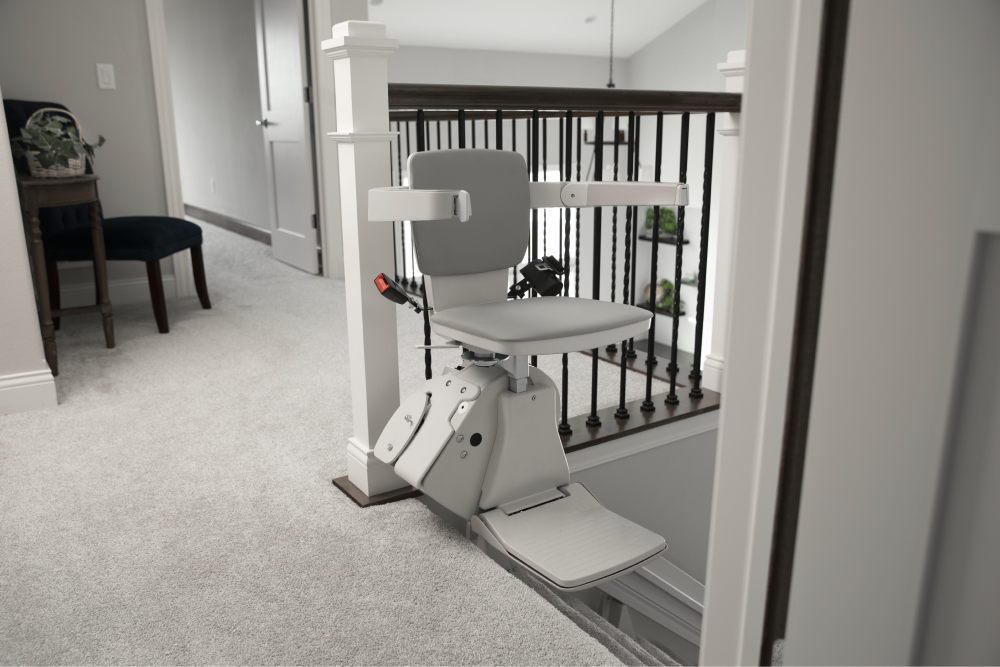
While straight and curved stairlifts both carry a rider between flights of stairs, they have a few defining differences that are important to be aware of when selecting the best stairlift for you.
The Rail Shape
The main difference between straight and curved stair lifts is the shape of the rail system. The stair rail determines the path that the chair travels from one floor to another.
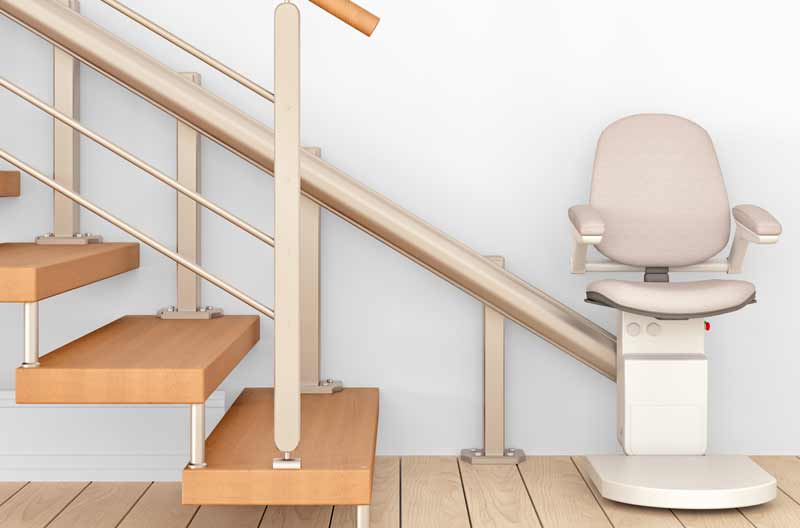
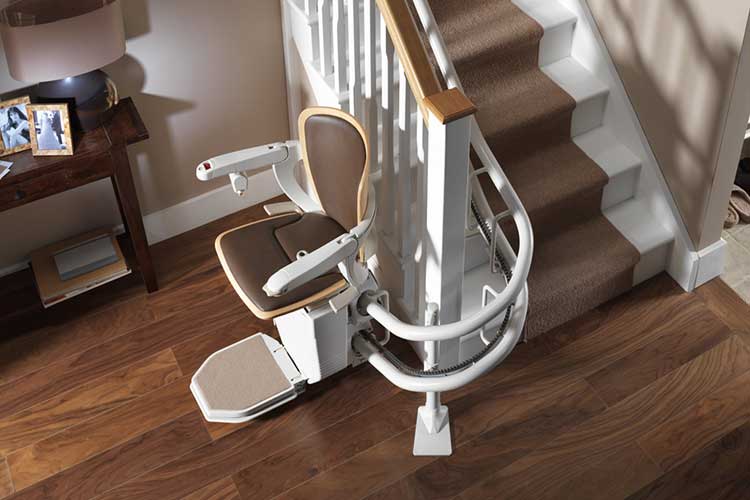
Straight stairlifts have a rail without bends, turns, or curves. It is one straight line from the bottom of your stairs to the top landing. Curved stairlifts, however, have customized rails designed to fit the shape of your curved staircase. They can swing around large landings, pie-shaped, or spiral staircases, providing the user with an uninterrupted and smooth ride.
Top Landing Dismount
Most straight stairlift rails are designed to stop the chair lift right at the top of the stairs. The rail doesn’t cross over to the top landing. Most stair lift models feature a power-swivel seat, which automatically turns the chair when the rider reaches the top landing. However, if the chair does not have a powered turn, users can manually rotate it. This feature allows you or your loved one to safely dismount.
Curved rails, however, are typically designed to “overrun” the top of the staircase. This allows the user to essentially park their chair on the top of the landing. Users can easily step onto the landing without having to rotate the chair. The chair, which can usually fold up, doesn’t block the staircase entrance.
Stairlift Installation Timeline
Installing a straight stair lift is relatively quick and straightforward. It may take a couple of weeks for the lift to be manufactured and delivered; however, actual installation normally takes an average of two to five hours on the day of. The stairlift usually arrives in easy-to-assemble pieces. Installers will connect the modular rails to the stair treads and to each other, which is an easy process for technicians with years of experience.
Curved stair lifts generally take longer to order and install. This is because the curved stair lift is manufactured to the specific dimensions of your staircase. Most manufacturers utilize a CSI-like technology to obtain precise measurements and then use a digital model to create custom rails for your staircase.
This improves the quality of the staircase, but it requires additional time to build, typically around four to six weeks. Due to the custom design of the rail system, installing curved stairlifts can take a whole day.
Curved Stair Lifts vs Straight Stair Lifts Costs
Due to their simpler design and installation requirements, straight stair lifts cost between $2,500 and $9,000, on average. Because curved stairlifts are custom-built and require more manual labor to install, their costs range between $10,000 and $14,000, on average.
Prices largely depend on the manufacturer and model, as well as any additional features and warranties. Most providers offer free consultations where they will discuss your needs and options, giving you a more precise quote.
Both straight and curved lifts can be expensive, but there are ways to make paying for a stair lift easier, such as advantage plans, financing options, and state-based financial assistance programs.
Straight and Curved Stair Lifts: Key Similarities
While straight and curved stairlifts have many differences, they’re both manufactured with the latest technology to ensure high-quality products and proper operation.
Purpose
Both straight and curved stairlifts have the same basic function—safely carrying a rider up and down a flight of stairs. They are designed for individuals with mobility issues, seniors who plan to age in place, or people who are temporarily unable to use the stairs due to an injury.
These lifts are created to enhance home accessibility and increase independence while ensuring safety, giving you and your loved ones peace of mind.
Safety Features
Both straight and curved lifts offer the same main safety features to protect the rider. These features include:
- Safety Sensors: Sensors stop the lift if they detect an obstacle on the stairs. These are also what tell the lift that the chair has reached the top or bottom of the stairwell.
- Seatbelt: Seatbelts keep the rider secured to the chair during travel for added safety.
- Swivel Seat: A swivel seat, which can be powered or manually operated, allows for a safer entry and exit at both the top and bottom of the stairs. Although some curved stairlifts are designed so that this feature isn’t required, they can still utilize it.
Customization Options
You can customize both your straight and curved stairlifts, adding features such as powered footrests, upholstery color, seat padding, foldable rails, power-swivel seats, and more. Most manufacturers have a set weight range for their lifts; however, a custom weight capacity can sometimes be obtained if needed.
Be sure to ask your provider about the customizable options and obtain a free quote for the associated costs.
Indoor/Outdoor Use
Most people have an indoor stair lift; however, both straight and curved models can be created for outdoor use. Outdoor stair lifts are typically more durable and feature weather-resistant materials and protective covers.
However, keep in mind that outdoor lifts are usually more expensive than indoor models, as they require a more specialized installation to withstand outdoor elements.
The Bottom Line
Whether you choose a straight or curved stairlift ultimately depends on the shape of your staircase, your budget, and your preferences. Straight lifts are quicker to install and more affordable, making them great for standard staircases. However, curved lifts offer a customized solution for complex layouts.
Both styles improve safety, accessibility, and independence at home. By weighing the pros and cons, consulting professionals, and requesting quotes, you can find the stairlift that best supports your mobility needs and long-term comfort.
Frequently Asked Questions (FAQs)
The average cost of a curved stairlift ranges from $10,000 to $14,000. However, this range can increase if your stairway is particularly complex or if you add custom functionality.
Unfortunately, Medicare doesn’t pay for stairlifts for seniors as they don’t consider lifts to be necessary or durable medical equipment. However, some Medicare Advantage plans may offer assistance, depending on whether you meet requirements. You can also explore state assistance programs, financing options, and local charities to see if they can provide financial assistance.
During a power outage, stairlifts can continue to operate because of the battery backup. Most batteries can power your chair for 60 cycles (trips up and down) during an outage. This ensures you can continue to travel safely between floors, and if an outage occurs during use, you won’t get stuck.
Some people who have a staircase with a 90-degree turn may consider using two straight stair lifts instead of a curved lift to save money. While this is possible, it’s important to consider the safety of the user.
If the landing is large enough to easily transfer from one chair to another, and if the rider has the mobility to accomplish this task safely, then you may consider opting for two straight lifts rather than one curved lift. However, if neither of these is true, then a curved unit is the best option.
Yes, curved stairlifts can be customized to fit all types of staircase designs, including those with multiple turns, bends, landings, and even spiral stairs.
Stairlifts are chairs connected to rails that attach to your stair treads. They are designed to transfer a single-seated rider from the bottom of the stairs to the top, and vice versa. Vertical platform lifts are powered platforms that typically carry wheelchair users straight up or down without the need to transfer in and out of another seat.
Help us improve our data! Email your latest stair lift quote to [email protected] or submit a review about your experience. Your personal details will remain completely confidential.