
Retirement Living takes an unbiased approach to our reviews. We may earn money when you click a partner link. Learn More
The Difference Between a Lift and an Elevator
Learn how wheelchair lifts and residential elevators differ in function, design, and cost to make the best choice for your mobility needs.


Updated:
At a glance:
- A wheelchair lift is a platform that carries a wheelchair user between two different levels, while a home elevator is a fully enclosed cab that transfers users between multiple floors.
- Both wheelchair lifts and residential elevators increase accessibility and independence at home; however, lifts are more cost-effective, but elevators have a higher weight capacity.
- Loading and unloading from a wheelchair lift is typically more complex and time-consuming than on a home elevator due to design and safety features.
In this case, lifts are in reference to wheelchair lifts, and elevators are residential elevators. Homeowners choosing to age in place may benefit from installing either a lift or an elevator, depending on their needs and mobility challenges.
Below, we review the main differences between wheelchair lifts and home elevators to help you identify which accessibility option is best for you and your loved ones.
What Is a Wheelchair Lift?
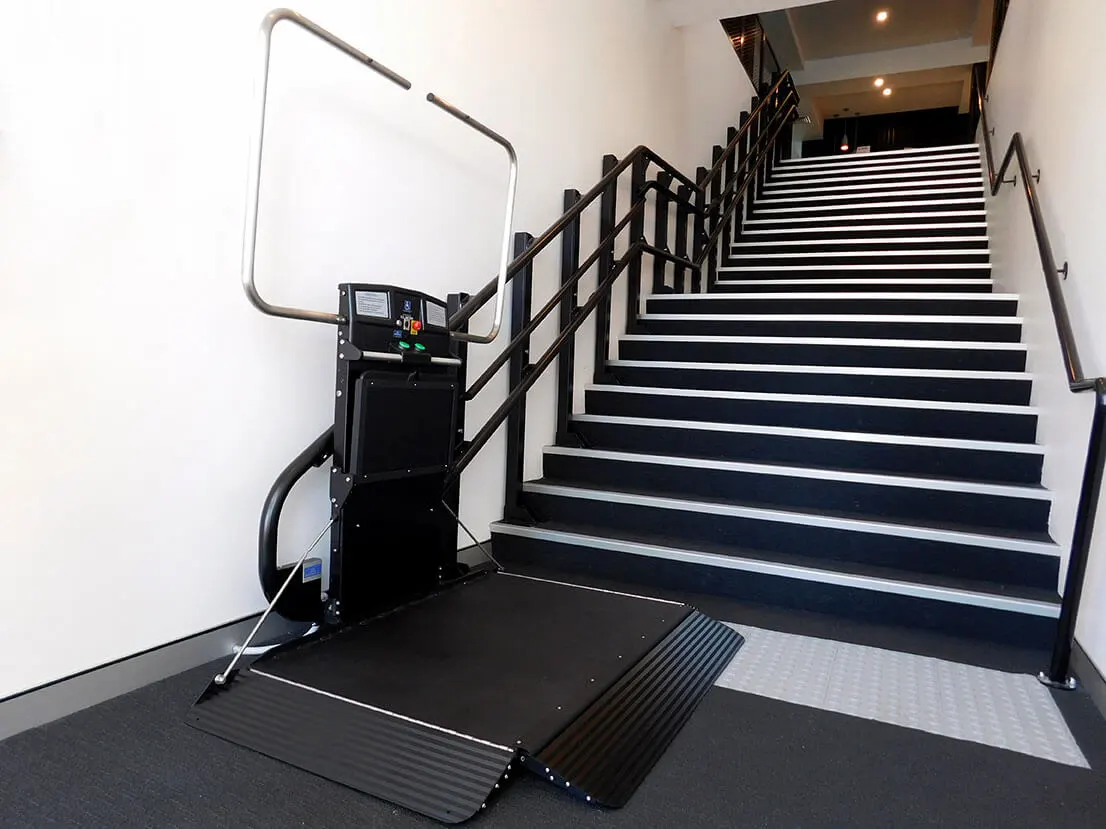
A wheelchair lift is a platform that lifts a user in a wheelchair (or similar mobility device) between levels. They can provide either inclined or vertical travel, and usually have a partial or fully open cab. The most common types of wheelchair lifts are vertical and inclined.
Vertical platform lifts (VPLs) are similar to elevators in that they are vertical transportation systems; however, they travel smaller distances and cannot transport multiple passengers. A similar wheelchair lift homeowners can consider is the inclined platform lift (IPL). These lifts are primarily meant to carry wheelchairs and their users along a track, typically on a staircase.
What is a Home Elevator?
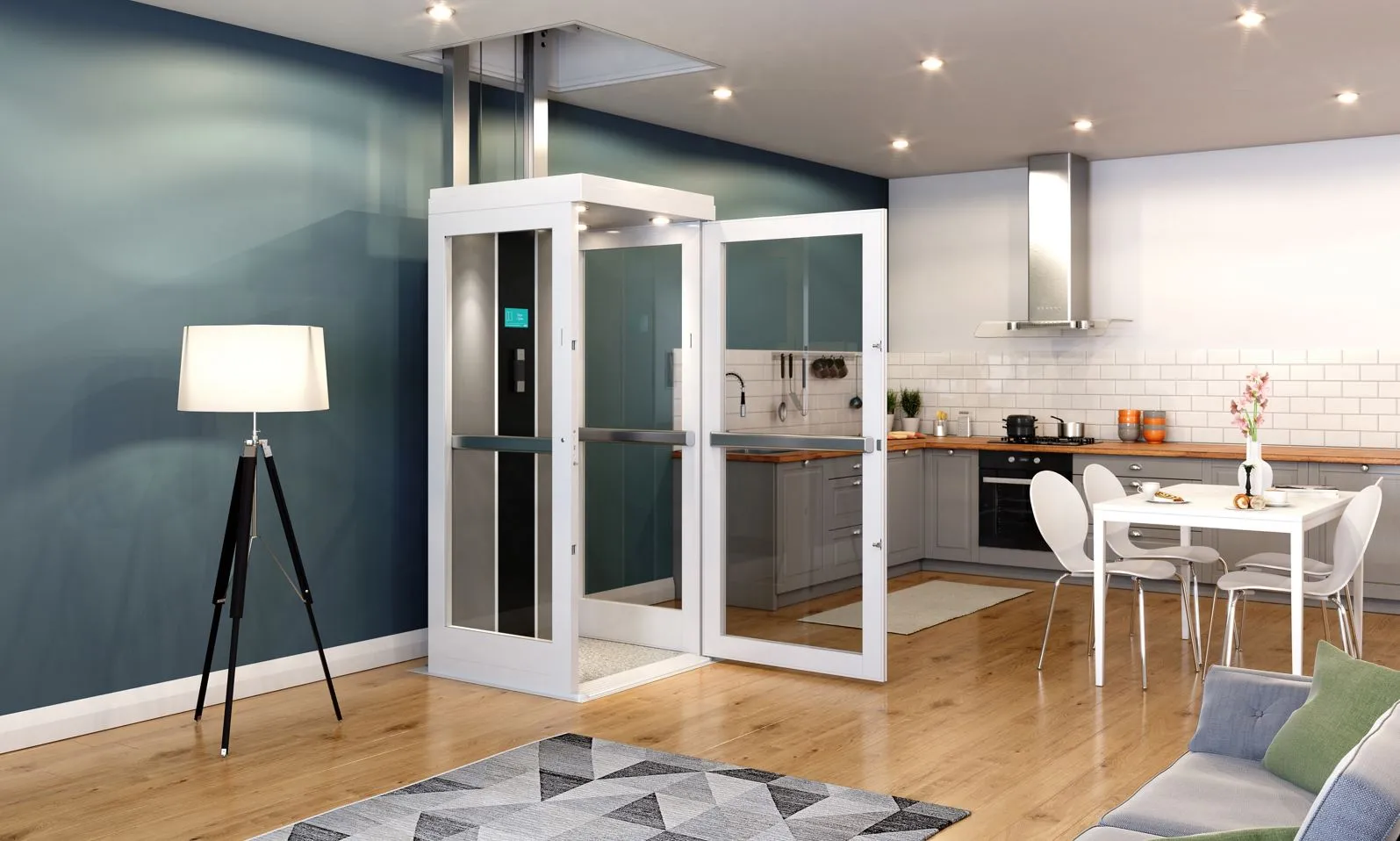
Home elevators function the same as public elevators and can transport multiple people at a time, depending on their size. Unlike lifts, the elevator car is fully enclosed, and the cabs have a higher travel distance. The most common types of elevators are traction and pneumatic.
Traction elevators are widely used in high-rise and commercial buildings due to their higher speeds, travel range, and energy efficiency. These aspects, combined with their weight capacity, make them great for wheelchair users.
Pneumatic elevators have an elegant and space-saving design, making them popular for homeowners. However, they are more compact and often accommodate only a single standing individual.
Main Differences Between a Lift and an Elevator
While lifts and elevators have similar functions, there are a few important differences homeowners should consider.
Design and Structure
Lifts generally have a more compact design and are typically less intrusive to your home. They are shaftless and easier to install. They also have an open design, allowing the wheelchair user to roll on and off the lift easily.
Because they are meant to carry a wheelchair user between two levels—either a flight of stairs or an elevated area (such as a porch)—they are structurally simpler. This typically leads to a lower weight capacity. Additionally, lifts can be built both indoors and outdoors.
Home elevators are fully enclosed and usually require a shaft to travel through, as well as a machine room that takes up space, depending on the model. Some elevators don’t require a shaft, but installers do need to cut a hole in the floor, which may not be ideal for some homeowners.
Elevators are usually more aesthetically pleasing than lifts and typically have a higher travel distance, making them ideal for individuals who value style and have multi-story homes.
Safety Features
Both lifts and elevators come with various safety features.
Most lifts will have anti-slip surfaces, emergency stop buttons, automatic latches, power backups, obstruction sensors, and seatbelts. Home elevators will have emergency brakes, door interlocks, various sensors, battery backups, an emergency communications system, overload sensors, and more.
Most manufacturers of residential lifts and elevators ensure their products meet the required American Society of Mechanical Engineers (ASME) standards. However, always research providers and manufacturers before purchasing a product to make sure they follow these safety standards.
Cost and Maintenance
Due to their less complex design and lower maintenance requirements, wheelchair lifts are generally more cost-effective than elevators. On average, wheelchair lifts cost between $4,000 and $25,000, depending on the type and model. Additionally, most manufacturers offer a limited warranty for maintenance and repairs.
The cost of home elevators ranges from $30,000 to over $100,000, depending on the type and model. Additionally, the actual installation of a home elevator can cost anywhere from $1,500 to $20,000. Elevators also have more maintenance requirements due to the complex hoisting system and many parts.
Advantages and Disadvantages of Home Lifts and Home Elevators
Both wheelchair lifts and residential elevators have advantages and disadvantages you should consider before purchase.
Home Lifts
Advantages
- Increased accessibility and at-home independence
- Affordable and cost-effective solution
- Space-saving and energy-efficient
- Indoor and outdoor use
- Some units are portable
- Minimal maintenance compared to elevators
Disadvantages
- Can only transport the user
- Small travel distance
- Loading and unloading can be time-consuming
Home Elevators
Advantages
- Increased accessibility and at-home independence
- Fast travel between floors
- Advanced safety features
- Higher weight capacities
- Great for residential and commercial use
- Increased home and property values
Disadvantages
- Costly installation and maintenance
- Require lots of space
- Usually require major home modifications
The Bottom Line
Whether you choose a lift or a home elevator depends on your mobility needs, budget, and space. Both promote accessibility, but they cater to different needs.
Wheelchair lifts are ideal for homeowners seeking a cost-effective and compact solution. Home elevators are best for those seeking greater comfort, higher travel distances, and increased home value.
Frequently Asked Questions (FAQs)
Yes, an elevator can be called a lift, especially when comparing American English and British English. “Elevator” is more commonly an American term, while the British tend to refer to all passenger elevators as lifts. However, this typically refers to commercial units. In this case, lifts differ from elevators, as they are designed to transport wheelchair users.
According to Nibav Lifts and other sources, three-story residential elevators range from $53,000 to over $100,000, depending on size, type, features, and customization.
To make a vertical platform lift ADA-compliant, it must meet specific requirements for platform size, safety features, operation, and adherence to industry standards like the ASME A18.1 code. Some factors include having a stable, non-slip platform, easy-to-reach emergency controls, independent operation, and unassisted entry/exit.
Homeowners have many types of lifts to choose from, including stair lifts (also called chair lifts), platform lifts, and home elevators. All transport the user between floors but function slightly differently.
Help us improve our data! Email your latest home elevator quote to [email protected] or submit a review about your experience. Your personal details will remain completely confidential.