
Retirement Living takes an unbiased approach to our reviews. We may earn money when you click a partner link. Learn More
How to Operate a Wheelchair Lift
Operating a wheelchair lift involves preparing the area, securing the wheelchair user, and transferring the user at the press of a button.


Updated:
AT A GLANCE:
- The first step to operating a wheelchair lift is ensuring the area is free of obstructions. Then the wheelchair user can roll onto the platform and secure the chair in place.
- Pressing and holding a button will move the lift up or down, transferring the user to the desired location. Once secured in place, the user can safely exit the platform.
- Wheelchair lifts are equipped with safety and operational features that meet ADA requirements to prevent accidents and ensure proper functionality.
Operating a wheelchair lift may differ depending on the type of lift. For instance, a residential wheelchair lift may work differently from a wheelchair lift for a vehicle. However, the overall operation is the same, no matter what the wheelchair lift is attached to.
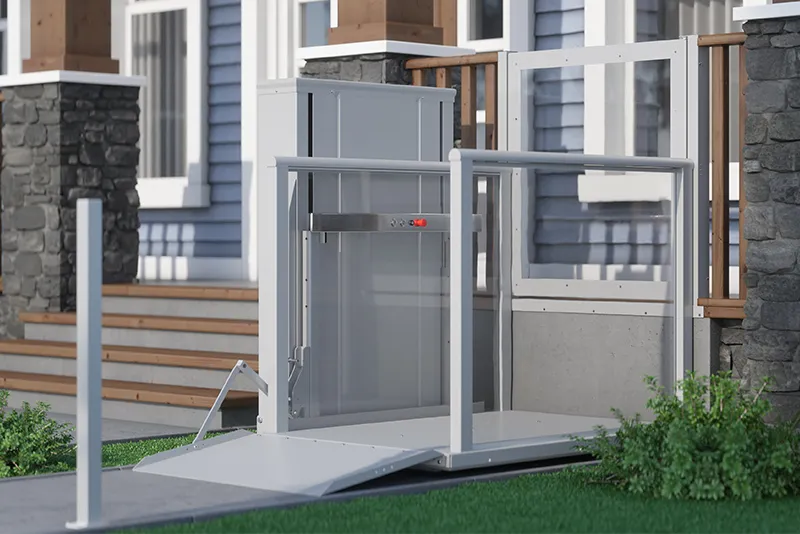
Below, we provide a step-by-step guide on how to operate a wheelchair lift, focusing on residential models, but the principle can be applied to all wheelchair lifts.
Steps to Operating a Wheelchair Lift
The way a wheelchair lift works varies by type, but the operation is essentially the same across models. The main steps to operating a wheelchair lift involve preparing the area, securing the wheelchair and passenger, lifting the user, and exiting the lift.
Step 1: Preparing and Loading the Lift
The first step to operating a wheelchair lift is ensuring the area is free of any obstructions. You want to make sure the loading platform is level and away from other people to ensure safety during wheelchair loading.
Once the area around the wheelchair lift is clear, press the button to call the platform and lower the ramp. If your lift has a powered ramp, it will most likely lower on its own. With a manual wheelchair lift, you may have to lower both the lift and the ramp by hand.
With the lift platform in place, the wheelchair user can roll onto the lift. Some lifts may have boundaries to stay within. For example, the BraunAbility vehicle lift has yellow boundary markers. If your wheelchair lift comes with safety features such as straps or handrails, secure them in place. Many experts recommend activating the parking brakes or cutting power to a powered chair to keep it from rolling.
Step 2: Operating the Lift
Many wheelchair lifts have a remote control or lever with a “press and hold” function that signals the lift to unfold, go up, go down, or fold. Most residential wheelchair lifts, such as those from Bruno, have a button on both the landings and the inside of the lift, allowing the user to operate it as needed. Vehicle lifts typically have a remote or pendant to operate the wheelchair lift.
Once the user is secured in place, press the up button (or down button), and the lift will begin moving. In many cases, the ramp will automatically fold up to prevent the user from rolling off the lift while in motion; however, with manual lifts, you may have to raise it by hand before going up.
Some lifts will automatically stop at the next level or at the maximum height; however, the user may need to release the button if the lift does not have preset destinations.
Step 3: Unloading the Lift
Once the wheelchair lift stops moving, it’s time to exit the platform. In residential models, the user can simply open the gate, disengage the brake, and exit the lift, assuming no safety belts have been used. Vehicle lifts may need the inner barrier to rotate before the user can exit the wheelchair lift safely.
Before exiting, ensure the lift has been properly shut off or locked in place. If your lift has lights that indicate when it is safe to exit, make sure they are on. After exiting the lift, you can usually press a button to fold the ramp and “stow” the lift.
Features of a Wheelchair Lift
Wheelchair lifts are designed to help prevent accidents or injuries to passengers and operators through high-quality designs and safety features that adhere to the ADA wheelchair lift requirements. For instance, many hydraulic lifts have systems that prevent the platform from shifting while not in use. Additionally, modern wheelchair lifts are equipped with various sensors that ensure proper function and user safety.
Core Safety Features
Below are the most common safety features you will find on a wheelchair lift.
- Obstruction Sensors: These stop the lift if it encounters an object in its path.
- Emergency Stop Buttons: Stop the lift immediately in any situation.
- Constant-Pressure Controls: The user must hold the button to move the lift, which will stop instantly when released.
- Door Interlocks: These prevent the lift from operating unless doors/gates are fully closed and latched.
- Safety Belts/Straps: Secure the user and wheelchair in place during transit.
- Non-Slip Surfaces: Prevent the wheelchair wheels from sliding while in motion.
- Backup Power: In case of power failures, the wheelchair lift is equipped with a battery backup system or manual pump, ensuring you don’t get stuck on the lift.
- Securements: A restraint system designed to keep the wheelchair from moving. Parts include tie downs, floor anchors, occupant restraints, and more.
Core Design & Operation Features
Below are the most common operational features you will find on a chair lift for powered wheelchairs and other mobility devices.
- Drive Systems: To move the platform, wheelchair lifts will typically use hydraulic systems or ball-screw systems.
- Weight Capacity: Weight limits vary by brand, but they range from 600 lbs to 750 lbs on average.
- Platform: The lift platform must be sturdy and large enough to fit wheelchairs/scooters, with solid sides or folding arms to keep users secure.
- Controls: Controls should be easy to use and located at both landings and on the platform.
- Power: Many wheelchair lifts function on AC power, with optional battery backup for power failures.
Maintenance of a Wheelchair Lift
To ensure the wheelchair lift continues to operate correctly, it’s important to keep it maintained. Most installers will go over regular maintenance with you the day of installation, but you will likely find details in the operator’s manual as well.
Start by cleaning the lift regularly. Remove dirt, leaves, and debris from the platform and mechanisms to prevent blockages. Avoid harsh chemicals when cleaning the lift, and instead use mild soap and water. If you have an outdoor wheelchair lift, be sure to use covers to protect it from harsh weather conditions.
Follow this checklist when performing routine maintenance checks:
- Electric components: Check all power cables, connections, switches, and lights.
- Hydraulics: Look for fluid leaks and check fluid levels if they’re accessible.
- Mechanical parts: Look for loose bolts and damaged parts. Test the platform movement and ensure it’s smooth, and keep an ear out for any odd sounds.
- Barriers: Ensure all barriers operate correctly and are easily identified.
- Lubrication: Add lubrication to moving parts as recommended.
- Batteries: Keep the batteries charged and test them occasionally to ensure they work.
If you have any questions about how to maintain your wheelchair lift properly, contact the provider or manufacturer. They should be able to provide you with a breakdown on maintenance or send a professional to inspect your lift.
The Bottom Line: People with Disabilities Can Benefit from Wheelchair Lifts
Wheelchair lifts are great tools for people with disabilities that make homes, public spaces, and vehicles wheelchair accessible. They are designed to be safe and easy to use.
While our step-by-step guide provides an overview of how to operate most wheelchair lifts, it’s important to read the operating instructions that came with your lift, as some models may have unique features you should be aware of.
Frequently Asked Questions (FAQs) on Wheelchair Lift Operation
To operate a wheelchair lift on a school bus, a trained professional must ensure both the entry and exit areas are clear, turn the power on, unfold the platform (which may occur automatically), roll the wheelchair user onto the lift, secure the wheelchair, press a button to raise the lift into the school bus, rotate the lift inside the bus so it faces the right way, and then secure the wheelchair in place.
Your wheelchair may not be working for various reasons, including power issues, safety interlocks, or mechanical issues. First, make sure all the power and safety features are functioning properly and in place. Look for anything that might be obstructing the doors or the path. If you cannot find anything, then call your provider for assistance.
No, the original Medicare plans do not cover wheelchair lifts for vehicles or homes, as they aren’t considered Durable Medical Equipment (DME), but rather home modifications. However, some Medicare Advantage plans may provide coverage, so reach out to your insurance provider to see what options are available to you.
Wheelchair lifts come with many safety attachments to keep the wheelchair secure. Once the wheelchair is on the platform, engage the brakes/turn it off. Then use the tie-downs or belt to secure the wheels in place, pulling them tightly. Other features include non-slip surfaces, handrails, gates, and more.
Help us improve our guides! If you’ve recently bought a wheelchair lift or handled your own maintenance checks, we’d love to hear from you. Share your experience with us at [email protected]. Your personal details will stay completely confidential.