
Retirement Living takes an unbiased approach to our reviews. We may earn money when you click a partner link. Learn More
Types of Wheelchair Lifts for Vehicles
Find out how different wheelchair lifts work, which vehicles they fit, and what to know before choosing one for your mobility needs.


Updated:
AT A GLANCE:
- Vehicle wheelchair lifts make it safer and easier to load and transport wheelchairs, power chairs, and mobility scooters in cars, vans, SUVs, and pickup trucks.
- The main types include platform, hoist, hitch-mounted, interior, under-vehicle, and hybrid lifts, each suited to different vehicles, weight capacities, and space needs.
- When choosing a lift, compare safety features, weight capacity, vehicle compatibility, durability, and installation requirements to find the best fit for your mobility needs.
Wheelchair lifts for vehicles are mechanical systems that help you load and secure a wheelchair, power chair, or mobility scooter into a car, van, SUV, or pickup truck. They reduce the physical effort of lifting heavy mobility devices and make it safer to travel with them.
This guide explains the different types of vehicle wheelchair lifts, how to match them to your vehicle and mobility device, and what to look for in features, brands, and installation.
Types of Vehicle Lifts for Wheelchairs
Different lift designs work in different ways and fit different vehicles.
Here are the main types of wheelchair lifts to know about:
Platform Lifts
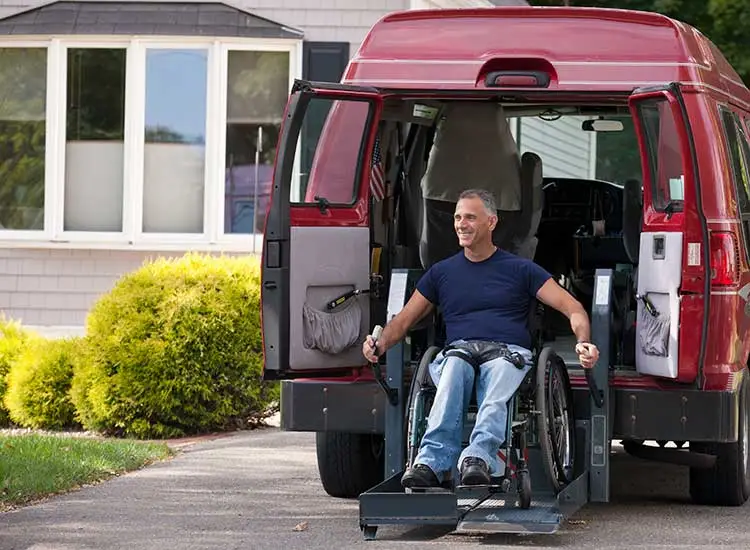
These lifts move your entire wheelchair, scooter, or power chair from a flat platform into the vehicle’s cargo area. They are most often installed in wheelchair vans or minivans because they need more interior space and headroom.
Platform lifts can handle heavy-duty power wheelchairs and large mobility scooters with high weight capacities. Staying seated during loading reduces the need to transfer and makes entry smoother for full-sized power chair users.
Hoist or Crane Lifts
Hoist lifts use a powered arm to raise and swing a folded wheelchair or scooter into your vehicle. They work well in the cargo areas of SUVs and pickup trucks where there is room to move the device inside.
These lifts suit manual wheelchairs, small power chairs, or lightweight mobility scooters because they have lower lifting capacities. Folding the device first saves interior space, which can leave more room for passengers or other cargo.
Hitch-Mounted (Exterior) Lifts
Hitch-mounted lifts attach to a trailer hitch and carry your scooter or power chair outside the vehicle. They are common on SUVs, minivans, and pickup trucks that have a hitch receiver. Hitch-mounted lifts stay outside the vehicle, which frees up interior space. However, this also leaves your mobility device exposed to weather.
Many models include swing-away arms so you can open the trunk or tailgate without removing the lift. This feature is helpful if you often carry passengers or groceries.
Interior Lifts
Interior lifts are installed inside the vehicle’s cargo area to lift and secure your wheelchair, scooter, or power chair. They protect your device from weather and theft while traveling.
These lifts fit well in minivans, SUVs, and wheelchair vans that have enough interior height and depth. Interior lifts offer medium to heavy lifting capacities and keep your mobility device secured inside the vehicle.
Under-Vehicle Lifts (UVL)
UVLs store underneath your vehicle and slide out when needed, then fold away when not in use. They are mainly used in wheelchair vans with enough ground clearance to house the lift system. These lifts preserve interior space by staying hidden under the vehicle and can support the weight of heavy power wheelchairs and scooters.
This design can be helpful if you need full lifting strength but want the inside of your vehicle kept open.
Hybrid Lifts
Hybrid lifts load your mobility device from outside the vehicle and then store it inside the cargo area. They combine the easy loading of exterior lifts with the weather protection of interior lifts. These lifts are designed for large power chairs or heavy-duty scooters and require enough interior space to fit the device once it’s inside.
Their higher lifting capacities make them a strong option if your equipment is heavier than most standard scooters.

Key Factors When Choosing the Right Lift
Choosing the right wheelchair lift is about more than fitting it into your vehicle. You need to match the lift’s design, strength, and features to your mobility device and your daily use.
Use this checklist to compare your options:
- Vehicle compatibility and interior space: Make sure the lift fits your type of vehicle, whether it is a minivan, SUV, pickup truck, or wheelchair van. Measure the cargo area to confirm there is enough height and depth for your mobility device and the lift system.
- Weight capacity and lifting capacity: Check that the lift can handle the full weight of your equipment. Manual wheelchairs are lighter, while electric wheelchairs, power chairs, and mobility scooters are heavier. A scooter lift or power wheelchair lift often needs a higher lifting capacity.
- Safety features and functionality: Look for secure tie-downs or locking arms to keep the device stable and swing-away arms to maintain trunk access. Hand or remote controls can reduce strain during operation, and automatic stop sensors help prevent damage during use.
- Durability and maintenance needs: Choose a lift made from corrosion-resistant steel or aluminum that can support heavy loads without bending or rusting. Ask about routine maintenance, such as lubricating moving parts and checking the battery system, to avoid breakdowns later. A durable lift will last longer and stay reliable.
- Professional installation requirements: Most automotive wheelchair lifts need professional installation to work safely and fit your vehicle correctly. Ask if installation is included in the price, since it can add to the overall cost of wheelchair lifts, and check whether the installer is trained by the manufacturer.
Comparing Top Wheelchair Lift Brands
Here are some of the top brands for wheelchair lifts, along with their lift types, weight capacities, and key features.
| Brand | Common Lift Types | Typical Weight Capacity | Notable Features | Warranty |
| Arrow Lift | Vertical platform, inclined platform | Up to 750 lbs | Showroom demos, professional installation, tailored fit for cargo area | Extended warranty options |
| Lifeway Mobility | Platform lifts (indoor/outdoor, automotive) | 750–1,050+ lbs | USA-made lifts, heavy-duty models, installation and labor warranty | Product + labor warranty |
| Bruno | Interior lifts, hoist lifts, trailer lifts, platform lifts | Up to 750 lbs+ | High safety features, customizable platform size, power controls | Limited lifetime warranty |
| Harmar | Interior lifts, exterior scooter lifts, platform lifts | Up to 750 lbs | Rust-resistant build, heavy-duty power chair lift models | 3-year parts warranty |
To compare these brands side by side, visit the best wheelchair lifts guide.
FAQs about Types of Wheelchair Lifts for Vehicles
Costs vary widely by type and weight capacity. Hitch-mounted lifts can start around a few thousand dollars, while heavy-duty platform lifts or under-vehicle lifts can cost $10,000 or more. Pricing also depends on installation and custom fittings.
Not all lifts fit every vehicle. Larger lifts like platform models need the height and cargo area of a minivan or wheelchair van, while smaller wheelchair hoists for car or hitch-mounted lifts can fit in SUVs or pickup trucks. Always confirm compatibility before buying.
With regular maintenance, most vehicle wheelchair lifts last 7 to 10 years. Durability depends on how often they are used, the weight they carry, and how well they are maintained.
Most lifts require professional installation to ensure they are safely secured and work properly with your vehicle’s electrical system. Incorrect installation can lead to safety risks or damage to your vehicle.
Regular maintenance includes lubricating moving parts, checking the electrical or battery systems, and inspecting tie-downs and safety locks. Scheduling annual inspections can help prevent breakdowns and extend the lift’s lifespan.
Some lifts can be removed and reinstalled in another vehicle if the size and electrical systems are compatible, but this often requires professional service. Always ask the installer about future transfer options before buying.
Help us keep our articles accurate! If you’ve recently installed a vehicle wheelchair lift, email us at [email protected] and share your experience. Your personal details will remain completely confidential.