
Retirement Living takes an unbiased approach to our reviews. We may earn money when you click a partner link. Learn More
Hydraulic vs. Pneumatic Elevators: Which is Best for Your Home?
Including installation, both hydraulic home elevators and pneumatic systems have an average cost of $47,500, with the former generally having a much higher weight capacity and travel distance, but more space requirements and maintenance costs.


Updated:
At a glance:
- Pneumatic vacuum elevators cost between $35,000 and $60,000, while hydraulic systems cost between $25,000 and $70,000.
- Hydraulic elevators achieve lift through pressurized hydraulic fluid, while pneumatic lifts use an air pressure system to lift the elevator car within limited spaces.
- Hydraulic lifts can consume up to 5 kWh per day, while pneumatic elevators can consume as little as 0.5 kWh.
How Does a Hydraulic Elevator Work?
Unlike traditional traction elevators, which use pulleys and counterweights, hydraulic elevators use pressurized hydraulic fluid (typically oil) to raise and lower the elevator cab. An electric motor powers a hydraulic pump that forces the fluid into a cylinder, causing a piston to move the elevator. In turn, electrical valves carefully control fluid release for smooth movement.
While careful, the force is also immense compared to other options, allowing the lift to handle heavier loads. However, this capability comes at the cost of consuming more electricity on average. Here’s how it works:
- Once you enter the elevator and choose your floor, the electric motor powers on the hydraulic pump.
- Fluid is forced into the hydraulic cylinder to move the piston, lifting the elevator cab upward.
- To go down, the electrical valves release fluid slowly to lower the cab.
Types of Hydraulic Elevators
While pneumatic elevators all have the same holeless, machine-room-less (MRL) design, hydraulic lifts come in a variety of different types and price points. For instance, holeless hydraulic elevators are one of the cheapest options, generally falling between $25,000 and $40,000, cheaper than pneumatic lifts, while MRL options can cost up to $70,000.
- Holed hydraulic elevators: A deep hole fitted with a piston is drilled beneath the elevator pit, providing enough power to raise the cab 60 feet. Rides are smoother, but installation is either more expensive or unavailable in locations with rocky or waterlogged soil.
- Holeless hydraulic elevators: Pistons are mounted on the side of the elevator, providing enough power to lift the cab 40 feet. This option is cheaper and easier to install, but has more limitations.
- Roped hydraulic elevators: A hybrid between a hydraulic and traction system, these elevators use a piston and pulley to lift the elevator cab. They require less pit depth, but have a more complex installation and maintenance that increases costs.
- Machine room (MR) hydraulic elevators: Elevators that have a separate space adjacent to or above the elevator shaft that houses the control system and pump unit. They’re less expensive and cheaper to maintain, but require more space.
- Machine room-less (MRL) hydraulic elevators: Require a higher upfront investment but save energy over time through integrated control systems within the elevator shaft.
How Does a Pneumatic Elevator (PVE) Work?
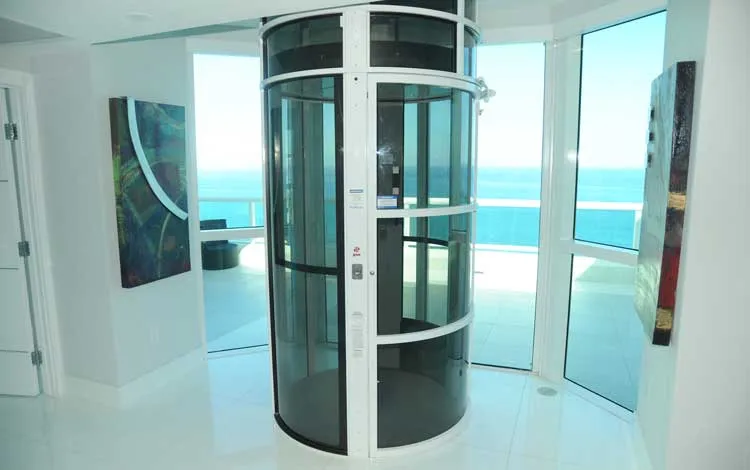
Pneumatic (vacuum) elevators are one of the most modern mobility solutions available to seniors, only hitting the market as recently as the early 2000s. They operate by using air pressure inside a clear, vertical tube to smoothly move the elevator cab between floors.
More specifically, the airtight-sealed system relies on a vacuum pump to control pressure above and below the cab. The elevator lifts when air is removed from the space above the cab, while reintroducing this air allows gravity to lower it in a controlled manner. This means the elevator doesn’t require a pit, machine room, or hoist cables to function, giving it a space-saving footprint, minimal construction requirements, and more energy efficiency compared to traditional elevator types.
Here’s the step-by-step process:
- Once you activate the lift, the vacuum pump adjusts the air pressure inside the vertical tube.
- To travel upward, air is removed from above the cab, creating a pressure difference that causes lift. Rubber-coated seals keep the system safe and airtight.
- To go down, valves gradually release air back into the chamber, allowing the cab to descend safely and smoothly using gravity and controlled airflow.b.
Pneumatic vs. Hydraulic Elevators: Pros and Cons
If you’re considering a residential elevator installation in your home, understanding the pros and cons of each system is key. Here are the most important factors you should be aware of for both elevator types:
Pneumatic Elevators
Pros
- Energy efficient: By using air pressure and vacuum technology instead of fluid-based systems, these elevators consume less energy on average (only 0.5–1.5 kWh/day).
- Less maintenance: Fewer complex parts (hydraulic pumps, pistons, etc.) mean that pneumatic elevators typically require less maintenance and eliminate risks associated with oil leaks, line failures, or fluid replacement.
- Space-saving design: These systems don’t require a machine room and have a compact design that’s ideal for small buildings or areas where major structural changes aren’t practical.
- Smooth and quiet operation: The air-driven system produces a gentle, controlled ride with minimal vibration and reduced mechanical noise.
- Environmentally friendly: Pneumatic lifts don’t use hydraulic oil, making them a cleaner option with fewer environmental concerns during operation.
Cons
- Limited investment options: It’s difficult to find an installation that’s less than $35,000, and there are limited companies available due to specialized materials, custom components, and vacuum technology.
- Reduced travel height: While reliable for travel between two floors, even advanced installations can’t rise above 50 feet.
- Lower weight capacity: Models are not designed for heavy-duty use and are less suitable for moving heavy loads, especially compared to hydraulic options.
- Cab size limitations: While the cylindrical tube design offers a panoramic view, it struggles to accommodate larger cabs or higher passenger volumes.
Hydraulic Elevators
Pros
- More options: Hydraulic elevators come in a variety of types, providing solutions for certain structural challenges and options that are more affordable than pneumatic elevators.
- Higher weight capacity: Hydraulic pistons provide a powerful, direct lift that can handle wheelchairs, several passengers, and other heavy loads.
- More travel distance: Hydraulic elevators can travel higher than most pneumatic models, with many capable of reaching 60 feet (4-6 stories).
- Easier Retrofitting: The lack of complex machinery or needed overhead space makes it easier to retrofit used hydraulic elevator equipment.
- Cost-effective installation: Compared to pneumatic elevators, hydraulic lifts generally have a lower upfront cost.
Cons
- Less space-saving: Most hydraulic elevators require a dedicated elevator pit and machine room, making them a less viable option for homes with limited space.
- Less Energy Efficient: Uses a lifting mechanism that requires more electricity over time (1.0–5.0 kWh/day), raising long-term costs.
- Slightly Rougher Ride: May have jerky and noisy rides compared to pneumatic lifts, reducing the quality of life for seniors.
- Requires Oil Maintenance: Hydraulic fluid must be checked regularly to prevent leaks, odor, or decreased performance.
Choosing the Best Type of Home Elevator For Your Situation
Depending on the size of your home, the number of floors, and your specific needs, one elevator might be a better choice for you than another. Below, we’ve gathered a few essential factors you should consider when deciding between a pneumatic or hydraulic system:
1. Understand Your Space
Before you install a new elevator, you’ll need to know how much space you have available, how many floors it needs to travel, and where it should go. For example, a home with space for an elevator pit and hoistway can support a hydraulic lift, while a home with limited space can benefit from a compact PVE. Before you invest, allow a professional to take precise measurements.
2. Consider Your Mobility Needs
Create a list of your most important needs as a senior. Do you need a higher weight limit for your wheelchair, or can you afford something that’s more energy-efficient, but with a lower weight capacity? Understanding your exact mobility challenges and which elevators meet them will help you choose the best installation.
3. Set a Budget
Do you have enough money for a high upfront investment, or are you looking to save more in the long term? PVE systems tend to cost more upfront, but have lower monthly energy consumption, while hydraulic systems provide the opposite benefit. Always create a realistic budget based on your current finances before making a purchase.
4. Look Into Safety Features
Consider how extra safety features will match your budget and mobility needs. Automatic door openers, power outage protection, emergency call buttons, and remote monitoring all cost more upfront, but provide essential benefits for seniors aging in place.
5. Understand Regular Maintenance
Research the expected lifespan of systems and the cost of servicing, based on the type of elevator and the specific elevator company. Both hydraulic and pneumatic elevators tend to last between 20 and 30 years, but have different maintenance requirements.
6. Talk to a Professional Installer
If you still have questions, concerns, or don’t know which elevator is right for you, reaching out to a local expert can help. Find a professional company that can assess your space, explain code requirements, and recommend the best systems for your budget and needs.
Our Takeaway: Hydraulic and Pneumatic Elevators Serve Different Mobility Needs and Home Setups
Both hydraulic and pneumatic elevators help seniors with mobility challenges navigate multi-story homes, but each option has specific pros and cons. Seniors who live in homes with only two floors, limited space, and high energy bills should consider installing a PVE, while someone who’s wheelchair-bound might need the powerful lift of a hydraulic system.
Ultimately, the best elevator for your situation is something you’ll need to conclude based on your unique mobility needs, space availability, travel distance, and budget.
Frequently Asked Questions (FAQs) About Hydraulic vs. Pneumatic Elevators
Pneumatic and hydraulic elevators have a similar average cost, but different actual costs based on the specific type of hydraulic system, local region, and company. Here are the typical price ranges when you account for professional installation:
• Hydraulic elevators: $25,000 – $70,000+
• Pneumatic elevators: $35,000 – $60,000+
Pneumatic elevators are generally more expensive to install due to their complex, modern technology. However, specific types of hydraulic systems, like machine-room-less (MRL) designs, can have very high costs. The type of soil underneath the building also impacts hydraulic elevator installation costs. Always determine the best system for your building before you work with a professional installer.
Complex pumps and pistons requiring regular oil checks and replacements generally give hydraulic elevators higher maintenance costs. Pneumatic elevators also require regular maintenance, but eliminate the risks associated with oil leaks, line failures, or fluid replacement.
Pneumatic elevators are usually the most cost-effective over time, as they consume significantly less energy per floor. Consuming fewer kWh of electricity each day results in lower energy bills.
Because most hydraulic fluid is oil-based, leaking and other issues pose an environmental hazard. Conversely, PVE systems do not use hydraulic oil, making them cleaner and safer for sensitive sites.
Help us improve our cost data! Email your latest elevator quote to [email protected]. Rest assured, your personal details will remain completely confidential.