
Retirement Living takes an unbiased approach to our reviews. We may earn money when you click a partner link. Learn More
How to Insert Hearing Aids
Proper insertion depends on the type of hearing aid, as BTE and ITE hearing aids have slightly different processes.


Updated:
At a glance:
- Hold the hearing aid in the right position, gently push the earpiece into the ear canal, secure any anchors or removal cords, and adjust as needed.
- Pulling on the tip of your ear can open your ear canal, making it easier to push the earpiece in securely.
- To remove your hearing aids, reverse the insertion process, being gentle as you pull them out of your ear canals.
For hearing aids to be most effective for those with hearing loss, they must be worn correctly. Learning the proper way to insert your hearing aids will ensure enhanced sound quality and a more comfortable fit, leading to better hearing.
Finding the right hearing aid is also important for your hearing health, as the wrong style of hearing aid can cause discomfort and mental strain. When choosing a hearing solution, be sure to discuss available options with your healthcare provider or an Au.D (Doctor of Audiology) to ensure the best possible fit.
Before Inserting Hearing Aids
Before you put in your hearing aids, follow these steps to ensure a smooth process and avoid potential complications.
- Wash and dry your hands.
- Ensure your ears are clean and dry (safely remove any excess earwax from the area where the device will sit).
- If you wear hearing aids in both ears, identify which one goes in each ear—red for right, blue for left. (Each device is tailored to the needs and shape of its designated ear, so mixing them up will cause discomfort and poor hearing.)
- Follow any instructions provided by your audiologist during the initial hearing aid fitting.
Following these steps will keep your devices clean and functioning best while ensuring a proper fit and sound quality.
How to Insert Your Hearing Aids
While similar, the exact process for inserting your device depends on the type of hearing aid, as some models require a different approach.
Below, we review how to insert behind-the-ear and in-the-ear hearing aids. These two types are among the most common, and the steps can be applied to similar hearing aid styles.
Inserting Behind-the-Ear (BTE) Hearing Aids
Before inserting, identify the right and left hearing aid. Right will be denoted by a red mark or serial number, and the left will be denoted by a blue mark or number. While the location of these marks may change model to model, the colors will be the same.
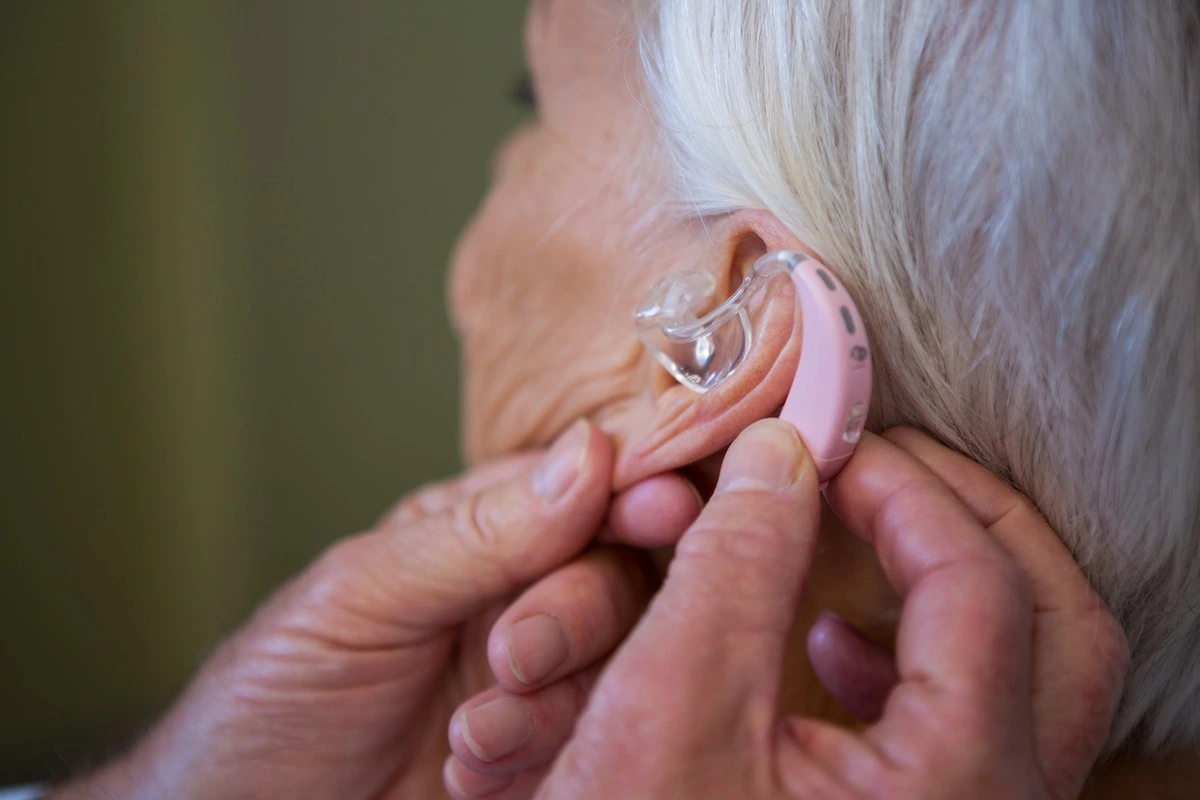
- Hold the body of the BTE hearing aid between your thumb and index finger, then position it behind your ear.
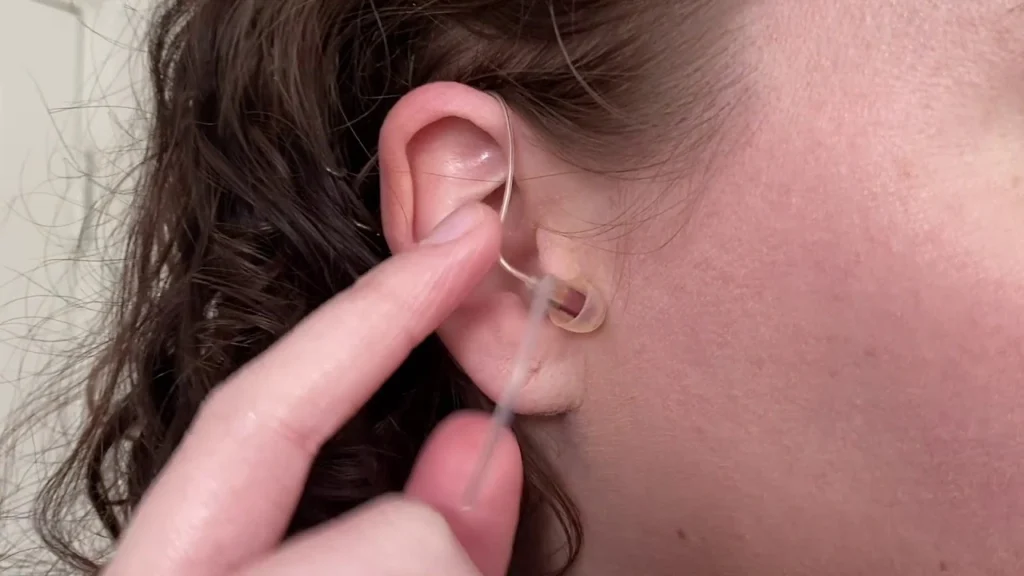
- Once the body is sitting in place, guide the wire or thin tube over the front of your ear.
- Holding the wire in place, push the earpiece, point inwards, toward your ear canal.
- Gently pull the top of your ear back while pushing the earpiece in to open the canal and create a secure fit.
- If your hearing aid comes with a retention anchor, tuck it into the bowl of your ear to secure it in place.
Once complete, repeat the process for the other ear and adjust devices as needed.
Inserting In-the-Ear (ITE) Hearing Aids
Start by identifying the right and left hearing aids, then follow these steps for proper insertion.
- Take the hearing aid and, if present, position the removal cord downward.
- Ensure the smaller side of the ITE hearing aid is pointing toward your ear canal.
- With your other hand, pull the top of your ear up and gently push the hearing aid into your ear canal.
- Tuck the removal cord into the bowl of your ear.
If your hearing aid doesn’t have a removal cord and is a larger unit, follow the same process, but make sure the vent is facing down and out. You can twist the hearing aid to get it more securely in place, if needed. Repeat the process for your other ear.
Removing Hearing Aids
Removing your hearing aids is a simple process. In essense you follow the same process to insert them, but in reverse.
Removing BTE hearing aids:
- Remove the retention anchor from your ear.
- Gently pull the ear mold from your ear, being careful of the sound wire.
- Take the body of the hearing aid and fully remove it.
Removing ITE hearing aids:
- Gently pull the top of your outer ear up.
- Grab the hearing aid or removal cord and pull the device free, twisting if needed.
Once they are removed for the evening, it is a great time to clean your hearing aids. Daily cleaning will ensure your hearing aids continue to function properly for many years, providing the best hearing experience.
Tips on How to Put in Hearing Aids
For the best results when inserting your hearing aids, keep these tips in mind.
- Double-check color markers to make sure you’re inserting the right hearing aid. Red is always for your right ear; blue is always for your left ear.
- Follow the natural contours of your ears until the hearing aid is fully inserted. This will ensure the best fit and sound quality.
- Use a mirror to help you position your hearing aids until you get the feel for it.
- Do not insert small devices over an open sink or drain.
- Use a solid-colored surface to rest the devices on to help you avoid losing any small pieces.
- When removing hearing aids, try making chewing motions with your jaw to help loosen the device.
The Bottom Line on Inserting Hearing Aids
Properly inserting your hearing aids will ensure comfort and the best possible sound quality. The longer you wear your hearing aids, the easier it will be to insert them properly. Each ear is different, so it may take a few weeks to find the best method for the shape of your ear.
During your initial hearing test and fitting, you can ask your doctor to help show you how to put your hearing aid in properly and ask any questions that may concern you.
Frequently Asked Questions (FAQs) on Inserting Hearing Aids
If your hearing aid is inserted correctly, it will feel secure and comfortable. If it’s in wrong, it may slip out of place, cause discomfort, or produce feedback, like whistling. If you notice any of these signs, try removing and reinserting your hearing aid.
If you’re having trouble putting your hearing aid in, it could be due to either improper insertion, earwax buildup, or a poor fit (dome size or mold issues). First, try reinserting your hearing aid, lifting the top of your ear to open the ear canal. Clean the ear canal if that doesn’t work, then try again. Check that the dome size is correct, and ask a hearing care professional for assistance if you need it altered.
How far a hearing aid should be inserted may depend on the type of hearing aid, but for most cases, you want it to go in until the dome or ear mold is secure and comfortable. If there’s pain, it’s likely in too far; if it seems to be falling out, you’ll want to push it in further.
Yes, you can easily wear hearing aids with glasses, including behind-the-ear models. It may feel crowded at first, but most people can comfortably wear both by putting on their glasses first.
Help us improve our cost data! Email your latest hearing aids quote to [email protected]. Rest assured, your personal details will remain completely confidential.