
Retirement Living takes an unbiased approach to our reviews. We may earn money when you click a partner link. Learn More
Apple Watch vs. Medical Alert Systems: Which Is Better?
Apple Watches cost more upfront but detect falls automatically, while medical alert systems cost less upfront and connect to 24/7 monitoring centers.


Updated:
At a glance:
- Apple Watches rely on either users or automatic fall detection to contact emergency services (like 911), while traditional medical alert systems have a help button that connects to a 24/7 monitoring center in emergency situations.
- Medical alert systems are designed for ease of use when navigating mobility issues and medical conditions, featuring a simple help button and long battery life. Apple watches provide more features overall but require daily charging and navigating the smartwatch touchscreen.
- Apple Watches generally cost more upfront but run on a cellular plan with lower monthly fees. On the other hand, dedicated medical alert systems are cheaper upfront but have more expensive monthly fees for their landline or cellular connection.
Older adults planning to age in place or travel are always looking for ways to boost safety, and both Apple Watches and traditional medical alert devices can play an essential role. These wearable devices provide help when medical emergencies occur, whether that means calling 911, emergency contacts, or a dedicated monitoring center.
Below, we’ve compared the key differences between both options—from costs and coverage to safety features and battery life—so you can choose the best device for your situation with confidence.
What Is An Apple Watch?
Apple Watches are a line of premium smartwatches offered by Apple that combine health monitoring, emergency safety features, and communication tools. Unlike traditional medical alert systems, which focus on addressing medical emergencies, they’re a full smart device capable of making calls, sending text messages, tracking health data, and accessing apps.
As far as safety features for seniors, Apple Watches provide automatic fall detection and Emergency SOS. When you fall or activate Emergency SOS using the side button, the device quickly calls emergency services and notifies emergency contacts.
Ultimately, Apple Watches are a useful hybrid device that, when connected to Wi-Fi, an iPhone, or a cellular plan, can assist with hard falls and other medical emergencies. There are also several devices available at different price points.
| Apple Watch model | Upfront cost | Monthly cost | Key features |
|---|---|---|---|
| Apple Watch SE (3rd Gen) | From $249 | $0 (GPS) or $10–$15 (cellular plan) | Fall detection, Emergency SOS, GPS tracking, heart rate monitoring, sleep tracking |
| Apple Watch Series 11 | From $399 | $0 (GPS) or $10–$15 (cellular plan) | Fall detection, Emergency SOS, GPS tracking, advanced health tracking, ECG app, blood oxygen monitoring, sleep apnea notifications |
| Apple Watch Series 11 (Titanium/Cellular) | From $699 | Cellular included + carrier plan | Fall detection, durable materials, GPS tracking, Emergency SOS, advanced health tracking, ECG app, blood oxygen monitoring, sleep apnea notifications |
| Apple Watch Ultra 3 | From $799 | Cellular included + carrier plan | Fall detection, 2- to 3-day battery life, GPS tracking, Emergency SOS, advanced health tracking, ECG app, blood oxygen monitoring, sleep apnea notifications |
What Is A Medical Alert System?
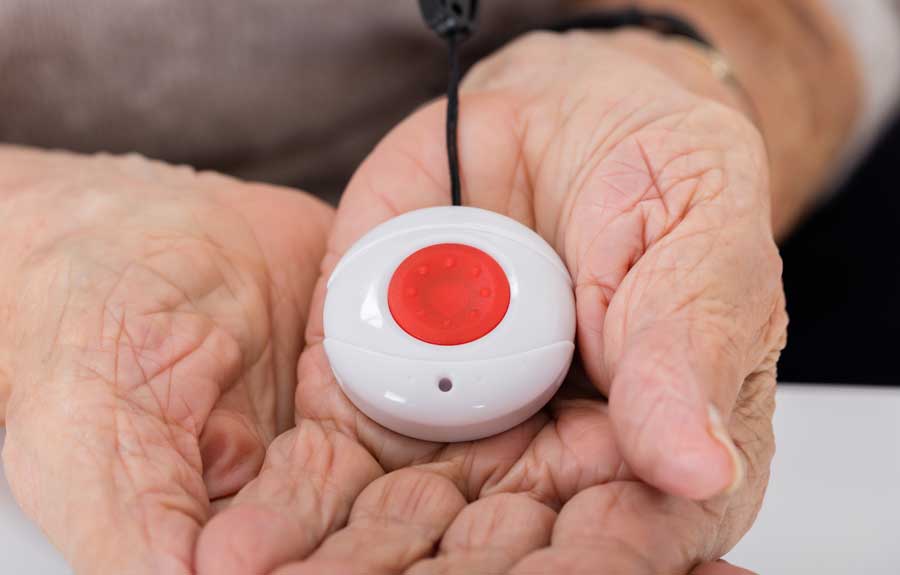
For the most part, traditional medical alert systems are a type of specialized device designed to connect seniors to a dedicated help center. The system typically includes either an in-home base station connected to wearable help buttons or on-the-go wearables that don’t need a base station to function. Cheaper, in-home devices can be either landline-based or cellular, while mobile devices use a cellular connection. In either instance, when a fall is detected or the help button is pressed, it instantly connects the user to a 24/7 professional monitoring center.
Once the connection is made, trained operators assess the situation, contact emergency services if needed, and notify loved ones or caregivers. Aside from automatic fall detection, many modern systems also include GPS tracking, two-way communication, and basic health tracking.
Medical Guardian

Great variety
Call chain for caregivers
Sleek, stylish wearable devices
ADT Medical Alert

Great plans
Home temperature monitoring
Fixed-rate service
Unlike Apple Watches, medical alert systems are built entirely around both safety and simplicity. You’ll likely find longer-lasting battery life, more navigable controls, and reliable emergency responses, making them appealing for seniors who want basic yet comprehensive protection.
Here are a few examples of popular, reliable medical alert companies, the devices they offer, average price ranges, and features:
| Medical alert company | Devices offered | Upfront cost | Monthly cost | Potential features |
|---|---|---|---|---|
| MobileHelp | In-home and mobile | None | $20–$35 | Fall detection, GPS tracking, water resistance, lockbox |
| Medical Guardian | In-home, mobile, and smartwatch | $0–$199 | $31–$46 | Water resistance, Fall detection, GPS tracking, 3- to 5-day battery life |
| Bay Alarm Medical | In-home, mobile, and smartwatch | $0–$199 | $28–$40 | Fall detection, GPS tracking, up to 6-day battery life, water resistance |
| Lifeline | In-home, mobile, and smartwatch | $0–$200 | $28–$45 | Fall detection, GPS tracking, step tracking, up to 4-day battery life, water resistance |
| Personal Living Alert | In-home, mobile, and smartwatch | $0–$149.95 | $30–$55 | Fall detection, GPS tracking, health tracking, water resistance, up to 5-day battery life, lockbox |
| Medical Care Alert | In-home, mobile, and smartwatch | None | $30–$40 | Fall detection, GPS tracking, water resistance, 2-day battery life |
Are There Medical Alert Watches?
Yes, many medical alert companies offer watches. They’re similar to traditional smartwatches but created specifically for emergency services. On top of the typical medical alert features, they may have health tracking and reminders built into their simple touchscreen design.
Compared to an Apple Watch, you’ll likely have a simplified user experience and access to fewer apps and tools. For example, Apple Watches offer broader health tracking, messaging, and entertainment tools, while medical alert devices typically have longer battery life and provide access to a professional monitoring center.
Comparing The Functionality of Medical Alert and Apple Watch Models
While we always recommend reaching out to your local healthcare provider for expert advice, simple comparisons can also help you choose the best medical alert system or Apple Watch for your situation. Below, we’ve compared both options:
Upfront and Monthly Costs
- Apple Watch: Upfront equipment fees can be substantial, ranging between $249 and $799+. Some devices require a cellular plan that costs $10–$15/month, while others include it free of charge.
- Medical Alert Systems: Equipment or activation fees may or may not be present, depending on the company, but typically have lower average costs ($0–$350+). On the other hand, monitored devices have higher average monthly fees ($37 on average).
Healthcare Coverage
- Apple Watch: Devices are not typically covered by health insurance, though you may be able to purchase them using HSA or FSA funds or receive partial coverage through specific Medicare Advantage Plans (Part C).
- Medical Alert Systems: Also limited, but generally more reliable healthcare coverage. Original Medicare (Parts A and B) doesn’t cover the cost of medical alert systems, but if eligible, certain Medicare Advantage, Medicaid, and Veterans Benefits programs might. You can also use HSA or FSA funds to purchase devices.
Cellular Connectivity
- Apple Watch: Uses a cellular network to make calls, send texts, and contact emergency responders. Depending on the device, this connectivity may or may not require a monthly fee of $10–$15.
- Medical Alert Systems: Many in-home base units use a landline to connect to the monitoring center, while on-the-go systems require a cellular connection. The price of these connections is typically included in the monthly monitoring fee.
Emergency Response Features
- Apple Watch: Emergency calls are placed to either 911 or your personal contacts when the side button is pressed or hard falls are detected. With that in mind, the level of care you receive in an emergency depends on your existing support system.
- Medical Alert Systems: Most reliable medical alert systems connect to a dedicated call center in less than 30 minutes. From there, trained agents can assess the situation, contact emergency responders, and give family members notifications.
Battery Life and Reliability
- Apple Watch: Basic devices have 18- to 24-hour battery life, meaning you’ll need to charge them daily. The Apple Watch Ultra 3, specifically, can last 2–3 days on a full charge.
- Medical Alert Systems: Highly variable battery life depending on the exact company or system, with the average ranging from 2 to 6 days before recharging is required. Many in-home base stations also include a backup battery that triggers in the event of a power outage.
Mobile App Integration
- Apple Watch: Users and caregivers stay connected through Apple’s Health and Find My apps, which feature location tracking/sharing, health data tracking, medication reminders, and emergency contact notifications.
- Medical Alert Systems: Some companies offer companion apps for seniors and caregivers, but functionality is typically more limited. Apps may allow users to view device status, battery levels, or GPS location.
Bottom Line: Which Device is Better For Older Adults?
For seniors who want peace of mind at home or while traveling, both Apple Watches and traditional medical alert systems can connect to emergency services when needed. Seniors with minor mobility issues who want to track their own health at a low monthly cost might consider an Apple Watch. Just keep in mind that the device can only connect to 911 or stored phone numbers, rather than a dedicated monitoring center.
For a lower upfront cost but higher monthly fees, medical alert systems provide access to a 24/7 monitoring center when falls or other medical emergencies occur. They can come in a variety of shapes and sizes, from landline-based in-home systems to on-the-go pendants, wristbands, and smartwatches. They also generally have longer-lasting battery life, which is helpful while traveling or during power outages.
Ultimately, determining what to invest in requires examining your current budget, mobility needs, and lifestyle. That way, you can choose an affordable system that retains the features you need to stay safe.
Frequently Asked Questions: Apple Watches vs. Medical Alert Systems
The terms PERS and medical alert systems are used interchangeably to describe the same devices, though PERS is often used in the medical context. Apple Watches are not considered PERS; they’re noted as premium smartwatches.
Yes and no. Apple Watches can help seniors aging in place with features like health tracking, automatic fall detection, and emergency calls—like an unmonitored medical alert device with smartwatch features. However, Apple Watches do not provide access to a 24/7 professional monitoring center.
Yes, both Apple Watches and many medical alert devices offer fall detection. For Apple Watches, it’s a free, built-in feature once you purchase the device. For medical alert devices, it’s often an optional add-on that increases the monthly price by $10.
Medical alert systems have response times that typically fall under 30 seconds, though companies like Life Alert are less reliable. Response times for Apple Watches depend entirely on your local police station and emergency contacts.
Most medical alert systems have stronger battery life than Apple Watches, which can only last 1–3 days on a full charge.
In most cases, yes. As an Apple product, they’re designed to pair with iPhones specifically. Cellular-enabled models can make emergency calls and send messages without the phone nearby, but users still need an iPhone to manage settings and apps. Conversely, medical alert systems don’t require a cell phone to function.
Help us improve our cost data! Email your medical alert quote to [email protected]. Rest assured, your personal details will remain completely confidential.