
Retirement Living takes an unbiased approach to our reviews. We may earn money when you click a partner link. Learn More
Best Hearing Aid Companies
Our research highlights top hearing aids for every lifestyle and budget.



Updated:
|
Expert Reviewed
We evaluated 32 well-known hearing aid brands. Our research included performing long-term testing on devices and consulting audiologists to help identify the most important factors to consider. Here are the best hearing aid companies based on our in-depth research.

4.7
Eargo hearing aids treat mild to moderate hearing loss. Consumers can buy breathable, rechargeable hearing aids online. No hearing test or prescription is needed. Eargo provides unlimited phone support from licensed hearing professionals.
- Innovative Products
- Expedited process
- 2 hearing aid models available

4.5
ELEHEAR offers affordable OTC hearing aids available for purchase online. The three offerings are rechargeable with app-based sound customization and AI noise reduction. ELEHEAR provides remote support and a risk-free trial period.
- Great Battery Life
- Rechargeable, app-controlled models
- AI noise reduction
4.7
Audicus offers affordable RIC hearing aids. Customers receive free lifetime audiology support, fully customized hearing aids, and a 100-day risk-free trial.
- Fully customized hearing aids starting at $62/mo
- Lifetime audiology support
- 45 Day Risk-Free Trial

Jabra Enhance offers online tools that begin with a virtual consultation. This helps you find the right hearing aid for your needs. After receiving them, the company provides support as needed. Jabra Enhance offers a great choice for those seeking affordable hearing aids. You don’t need to visit an office to get them.
- Trained audiology care team support
- 100-day free trial
- 3-year warranty

4.6
Lexie Hearing aids are affordable and offer easy access to customer service. The company sells directly to consumers. This allows for lower costs. You can also choose Lexie Hearing subscription payment plans.
- Great Technology
- 45-day free trial
- Affordable subscription available
4.6
MDHearing is a Midwestern hearing aid company that creates affordable hearing solutions. There are four models to choose from in two different styles. All models are smartphone-compatible and feature advanced feedback cancellation technology.
- Great Value Hearing Aid
- Smart and rechargeable options
- Free lifetime support
4.7
Upload your hearing test to Embrace Hearing. You’ll receive custom hearing aids with two-way Bluetooth. Embrace Hearing’s online Hearing Aid Comparer lets you compare prices, warranties, and more for around 30 hearing aid models.
- Great Service and Value
- Custom programmed by Embrace Audiologists
- Free online hearing test

4.5
Hear.com provides a wide variety of hearing aids. These devices feature advanced technology in compact designs. Hearing care specialists help customers pick the right hearing aid.
- Great Selection
- 2,000 licensed providers
- 45-day no-risk trial on Hear.com brand hearing aids
4.8
ZipHearing provides discounts on various hearing aids. They also offer personal fittings and adjustments. Plus, there’s a 45-day trial period. Check out their website to compare hearing aid prices and view fitting options.
- Great Online Store
- Comprehensive online product selection
- Local hearing aid service
4.4
Widex hearing aids provide unmatched high-definition sound. They reduce distortion, especially in complex settings. The SmartRIC has an L-shaped design. This shape improves the microphone’s angles, leading to clearer sound.
- Great Natural Sound
- Noise suppression for enhanced clarity
- Provides tinnitus relief
Signia Assistant AI and TeleCare support keep your hearing aids performing well everywhere. The company offers hearing aids for active people. They have a discreet design and elegant styles, among other features.
- Great Mobile Apps
- Hearing aids for mild to profound hearing loss
- Large selection of models to choose from
Phonak is an award-winning leader in hearing aid technology. The company offers 12 hearing devices plus accessories to provide the right fit. Phonak produces crisp, natural sound that adjusts to your environment.
- Broad Product Line
- Has an extended wear option
- Models for all types of hearing loss
4.4
With prices starting at $98, Audien Hearing devices are a great option for seniors on a budget. Audien offers three models, two ITE hearing aids, and one advanced BTE hearing aid. Try out the trade-in program to get the newest hearing aid technology at a lower price.
- Great Affordable Option
- Wireless charging
- Easy setup process
4.4
Oticon is a tech leader. Its high-quality products are pricey but seen as top-notch.
- Innovative Products
- Various styles of hearing aids
- Mobile application

Starkey is a U.S. manufacturer. They blend advanced sound processing with health and wellness tracking features. Its current lineup features different styles for customization. It also works well with easy-to-use apps.
- Great variety available
- Health and wellness tracking available
- Large, well-known hearing aid manufacturer
We began by evaluating 32 well-known hearing aid brands. We considered costs, features, hearing aid model selection, consumer reviews, and expert data. Our search ended with the best hearing aid companies: Eargo, ELEHEAR, and the companies we reviewed below.
Read our methodology for testing hearing aids to learn more about our experience wearing the devices.
Comparing the Best Hearing Aid Companies Side-by-Side
The following table offers a quick comparison of our picks for the best hearing aids and what they offer.
Hearing Aid Comparison
| Feature | Eargo | ELEHEAR | Audicus | Jabra Enhance | Lexie | MDHearing | Embrace Hearing | Widex | Signia | Phonak | Audien Hearing | Oticon | Starkey |
|---|---|---|---|---|---|---|---|---|---|---|---|---|---|
| Price | $1,699 – $2,699 | $369-$599 | $750 – $1,250 | $1,195 – $1,995 | $299 – $999 | $297 – $699 | $899 – $4,398 | $2,000 – $4,500 (per ear) | Not specified | Not specified | $98 – $689 | $4,000 – $9,000 | Not specified |
| Type | CIC | BTE | CIC, RIC | RIC | RIC, BTE | BTE, ITE | RIC, BTE | BTE, RIC, ITE | CIC, RIC, ITC, BTE, ITE | CIC, RIC, BTE, ITE | ITE, BTE | ITC, ITE, BTE, CIC, IIC | ITC, ITE, CIC, IIC, BTE, RIC |
| OTC or Prescription | OTC | OTC | OTC | OTC | OTC | OTC | OTC | Prescription | Prescription | Prescription | OTC | Prescription | Prescription |
| Adjustment | App, ear, remote programming | App or ear | App, ear, remote programming | App, ear, remote programming | App, remote programming | Button, dial, 1:1 programming | App, remote programming, online support | Button, dial, app, in-person | Button, dial, app, in-person | Button, dial, app, in-person | App, button | Button, dial, app, in-person | Button, app, in-person |
| Warranty | Up to 2 years | 1 year | Up to 3 years | Up to 3 years | 1 year | 1 year | 3 years | Not specified | Not specified | Not specified | None | Not specified | Not specified |
| Trial Period | 45 days | 45 days | 45 days | 100 days | 45 days | 60 days | 45 days | Not specified | Not specified | Not specified | 45 days | Not specified | Not specified |
Best Hearing Aid Company Reviews
Read our reviews below for a detailed look at our top picks for the best hearing aid companies.
Eargo Review
Innovative Products
|
Eargo sells affordable and attractive in-canal hearing aids without a prescription. Eargo hearing aids work for mild to moderate hearing loss. Their tips provide a breathable fit. Customers receive lifetime phone support from licensed hearing professionals. You can even test the fit before you buy by ordering a free non-electronic sample delivered to your home.
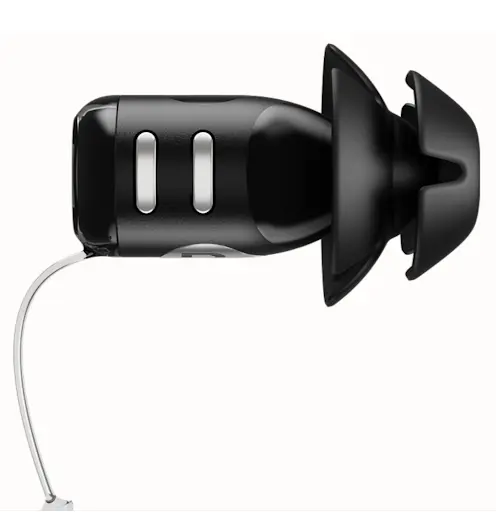
All Eargo hearing aids come with a manufacturer’s warranty and a 45-day return period. Once you buy an Eargo device, use the mobile app to fit and adjust your hearing aids. You can also get help from hearing professionals.
Eargo devices offer noise reduction, feedback cancellation, and personalized sound settings. Use the companion app to manage these features. It offers an easy, self-guided hearing experience.
Eargo’s latest lineup includes the Eargo 8 and Eargo SE. Both models fit snugly in the ear canal. This offers a discreet design and a natural sound experience.
The Eargo 8 is the brand’s top model. It features Smart Sound Adjust technology that adapts to your environment. It also includes Device Scan for fitting and performance checks. This model includes a two-year warranty. The Eargo SE offers a budget-friendly choice. It features basic sound processing and app controls. Plus, it comes with a one-year warranty.
Read our comprehensive Eargo review to learn more.
ELEHEAR Review
Great Battery Life
|
ELEHEAR features the Beyond, Beyond Pro, and the newest model, the Delight. These are OTC hearing aids, designed for adults with mild to moderate hearing loss.

The Beyond model enhances speech clarity with AI that cuts noise and stops feedback. It offers up to 37 dB of amplification. Great for daily use, it’s perfect for chatting, watching TV, or small meetings.
The Beyond Pro adds upgraded sound processing, Bluetooth streaming, and full app-based customization. Users can change the volume. They can switch listening modes and adjust settings in the companion app. This allows for a more personalized experience.
The Delight model is a basic choice. It offers sound amplification and noise reduction for daily listening. This easy-to-use option offers reliable hearing support. It’s perfect for users who don’t need Bluetooth or app adjustments.
ELEHEAR advertises up to 20 hours of battery life per charge. In real life, battery performance can last much longer. It depends on how long you stream and your listening settings.
Read our comprehensive ELEHEAR review to learn more.
Audicus Review
Fully customized hearing aids starting at $62/mo
|
Audicus sells four over-the-counter hearing aids online. You can also visit one of its clinics in New York City, Chicago, Illinois, and Denver, Colorado, in person. The RIC and CIC devices treat mild to severe hearing loss. Audicus offers a special rental program, the Audicus Premier. Members can upgrade to newer models when they renew their contracts.
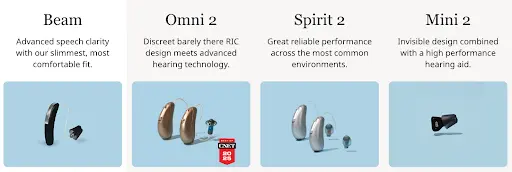
Audicus hearing aids don’t require fitting, so you can take a hearing test online, and an audiologist will customize your hearing aids according to your needs. Remote setup, programming, and adjustments are available. You can also adjust settings in the mobile app or via the buttons on the device.
Audicus provides a 45-day trial period. Prices are between $750 and $1,250 per ear. This makes them a more affordable choice than some competitors. You can get optional accessories and service upgrades. This includes care kits and extended warranty coverage. Pricing varies.
Read our comprehensive Audicus review to learn more.
Jabra Enhance Hearing Aids Review
Trained audiology care team support
|
Buy Jabra Enhance hearing aids without a prescription from the direct-to-consumer website. Jabra Enhance provides affordable behind-the-ear (BTE) and receiver-in-canal (RIC) hearing aids. GN, a global leader with 150 years of experience in hearing, supports these products. You can choose from three models, each available in several colors for discreet wear. They’re suitable for those with mild to moderate hearing loss.
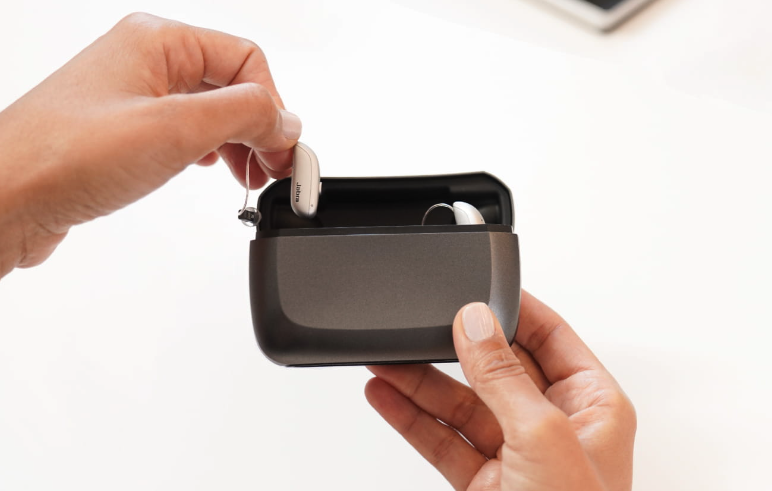
The Enhance Select 700, 300, and 50R have a rechargeable battery for all-day use. You receive three years of audiology support. There’s also a 100-day risk-free trial and a three-year warranty.
When you work with Jabra, you gain full access to Jabra Enhance’s audiology care team. They provide thorough remote support, which not all hearing aid companies offer. Devices include advanced noise reduction and app-based controls. Adjust manually or through the app (the audiology care team will help you).
Read our comprehensive Jabra Enhance review to learn more.
Lexie Hearing Review
Great Technology
|
Lexie’s self-fitting OTC hearing aids are available at low prices. They’re suitable for mild to moderate hearing loss. Lexie has a monthly subscription plan. It spreads the cost of hearing aids, making them easier to afford. You can buy Lexie devices online and in stores where healthcare devices are sold. The company offers remote support via their app and care team.
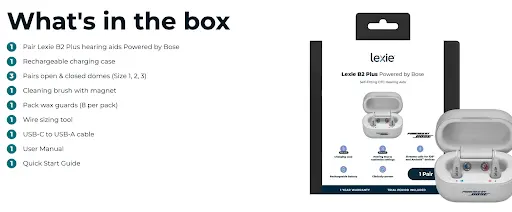
All Lexie hearing aids reduce noise and feedback. This helps decrease background sounds and minimizes whistling. The Lexie B2 allows you to stream phone calls on iPhones. However, it works only with some Android devices.
Lexie Hearing’s mobile app lets you adjust your hearing aids. It can also monitor battery power and save your favorite settings for quick changes. This is a great feature for tech-savvy users. But if you like to adjust your aids manually, consider other brands.
Read our comprehensive Lexie Hearing review to learn more.
MDHearing Review
Great Value Hearing Aid
|
MDHearing offers top-notch hearing aids in BTE and ITE styles. You also get U.S.-based support from audiologists and licensed specialists. MD Hearing offers a cost-saving option if you don’t need a custom fit. The best part is its range of affordable products.
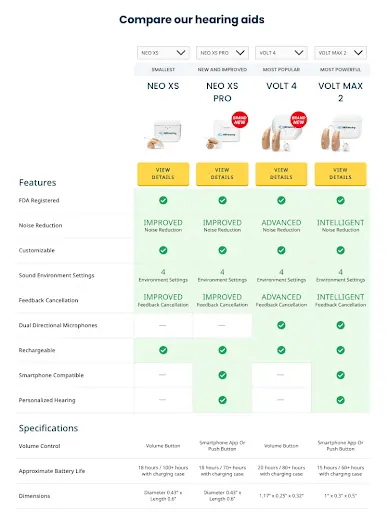
MDHearing offers four devices, including the Volt 4, Volt Max 2, Neo XS, and Neo XS Pro. The company runs frequent sales, and single-device pricing is also available. It also offers financing options, a 60-day trial period, and a money-back guarantee. MDHearing sells directly to consumers to help keep costs down.
The Neo XS and Neo XS Pro are entry-level models. They both provide noise reduction and feedback cancellation. Higher-tier models add features like directional microphones and Bluetooth. These devices are FDA-registered and developed with input from doctors and audiologists.
Read our comprehensive MDHearing review to learn more.
Embrace Hearing Review
Great Service and Value
|
Embrace Hearing offers two hearing aid designs, each featuring many models. All Embrace Hearing aids are custom-programmed to the customer’s hearing test. The same audiologist who initially programs your hearing aids makes future adjustments.
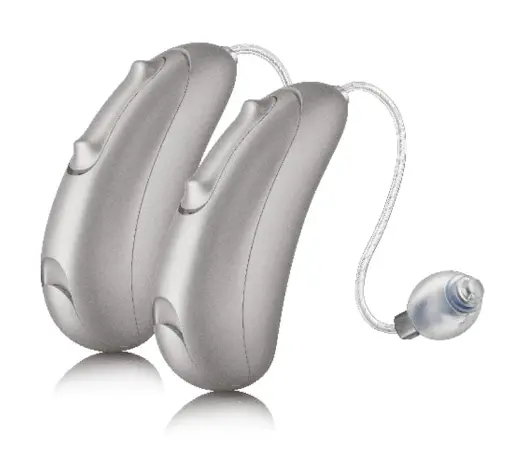
- The NX-Series is a RIC design with Bluetooth for hands-free calls and TV streaming. Adjust the hearing aids with a button on the device, the remote control, or the mobile app. Performs well at home and in small group settings. These hearing aids come with either a rechargeable battery or a replaceable one.
- Embrace Hearing’s C-Series is a nearly invisible ITC model. It fits comfortably with glasses, masks, and helmets. Use the mobile app or a small remote control to adjust the hearing aids. Works well in group meetings and large venues like theaters with background noise.
Customer service and support are available 24/7. Consult audiologists to pick the best hearing aids. They can help based on your hearing test results. Embrace Hearing needs an audiograph from a professional test. This is required to provide your hearing aids.
Embrace Hearing aids cost from $899 to $4,398. Add $200 per ear for a rechargeable model with a telecoil. The hearing aids are produced by one of the world’s leading hearing aid manufacturers. Embrace Hearing offers a 45-day trial period, a three-year warranty, and payment plans.
Read our comprehensive Embrace Hearing review to learn more.
Hear.com Review
Great Selection
|
Hear.com works with major prescription brands to sell hearing aids from most of the industry’s top manufacturers. Take a quick online questionnaire. A hearing specialist will help you choose the best hearing aid for your budget and level of hearing loss.
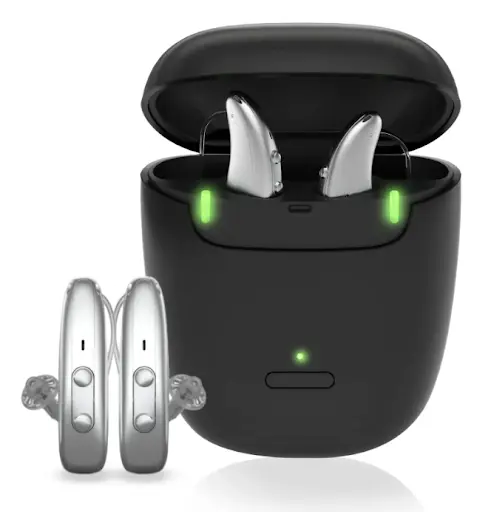
The prescription hearing aid brands may include, at any given time:
Some products at Hear.com are prescription devices. So, you’ll pay more for these medical-grade devices. You’ll get hearing tests, customer support, aftercare, warranties, and more. Costs at Hear.com range depending on the brand and type.
Hear.com also has two models of its own, the Horizon GO IX and the Horizon Mini IX. These are both RIC models with rechargeable all-day battery life and Bluetooth technology. They both come with a 45-day trial period.
Read our comprehensive Hear.com review to learn more.
ZipHearing Review
Great Online Store
|
ZipHearing is a marketplace. It sells top prescription hearing aid brands online. You can save up to 50% compared to retail prices. All purchases include local, face-to-face care. This ensures proper tunings and fittings. You’ll get timely adjustments and easy follow-up care.
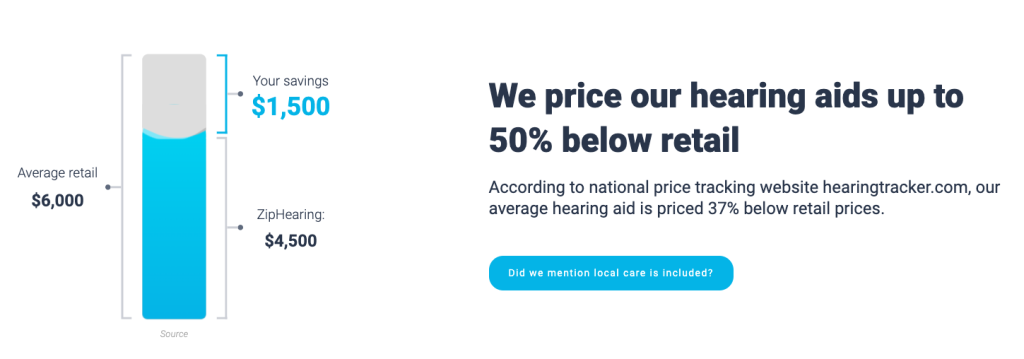
We mystery shopped ZipHearing’s website. The prices were competitive, and the shopping was easy. Browse product listings by using filters. You can sort and compare hearing aids by type, size, features, price, or brand. You can quickly narrow your options and read consumer reviews. Most models show prices, but some require a chat or phone call for cost due to the various model options.
ZipHearing is an authorized seller of top brands like Phonak, Starkey, Signia, Resound, and Widex. Visit one of the 1,000 local audiology or hearing aid clinics. They offer fittings, adjustments, and other follow-up services.
Customers report saving up to 50% on the cost of hearing aids. Pricing varies by model and selected features, but ZipHearing offers competitive rates compared to traditional providers. ZipHearing offers a 45-day risk-free trial.
Read our comprehensive ZipHearing review to learn more.
Widex Review
Great Natural Sound
|
Widex offers high-quality hearing aids with precision tuning and rigorous testing. Choose from BTE, RIC, or ITE types. Dr. Michele Matyko praises Widex for its management of tinnitus symptoms. Its Zen and SoundRelax tones enhance relaxation and deliver relief from tinnitus. Widex hearing aids reduce wind noise. This is important if you travel often or enjoy the outdoors.
The company has different models for treating hearing loss. These models cover levels from mild to profound. The SmartRIC has an L-shaped design. This design raises the microphone higher on your ear. It also angles the mic to help you hear better in any sound environment. In this position, the microphones lie flat. This setup helps cut down wind and touch noise better.
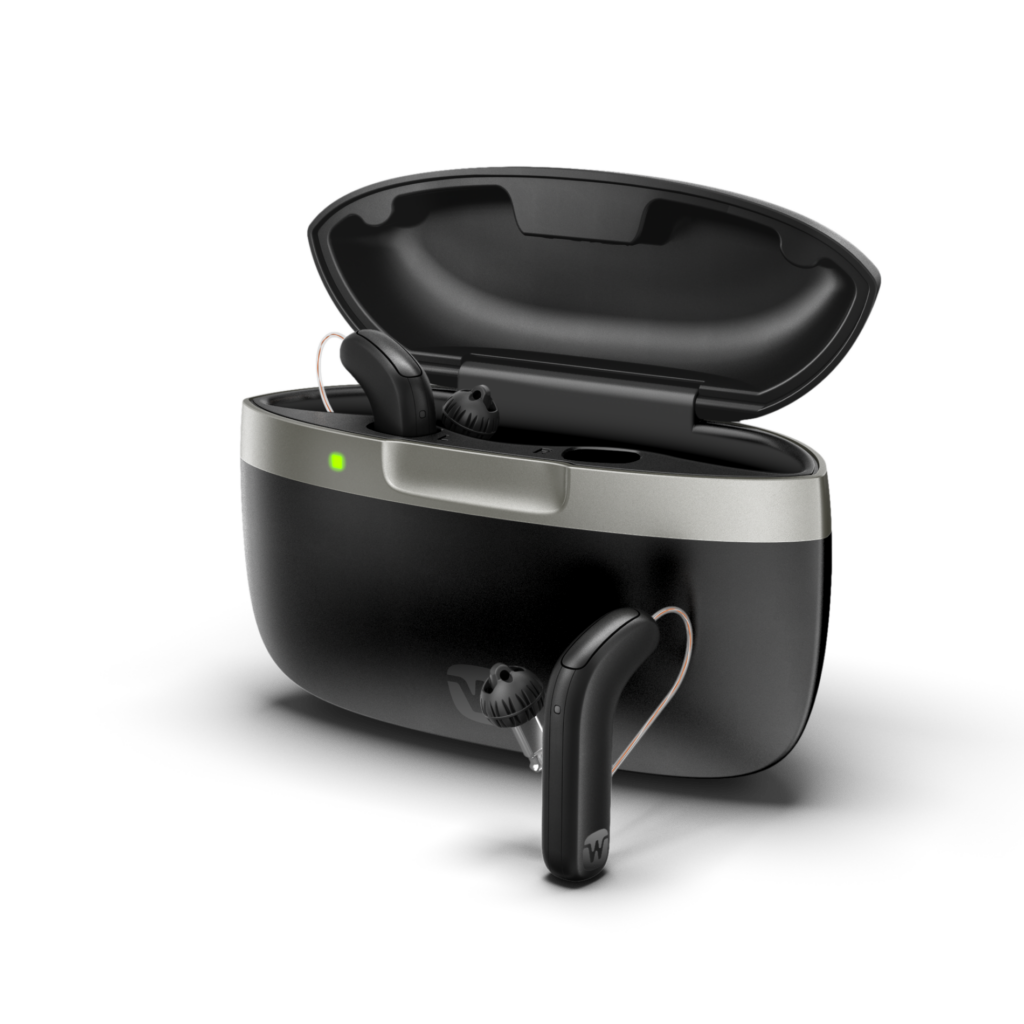
You can’t buy Widex hearing aids directly from its website. You need to fill out an online form. Then, a local hearing care professional will reach out to you. Widex’s prescription devices cost more than OTC brands. Both customers and experts recommend Widex. They praise its advanced hearing technology and many features. Dr. Matyko gives the Widex app a high rating. He points out that its programming software is easy to use and manage.
Widex does not publish prices on its website and notes that the costs for the same model will vary by provider. Pricing usually falls between $2,000 and $4,500 per ear. The cost can vary based on the model, technology level, and services included.
Read our comprehensive Widex review to learn more.
Signia Hearing Aids Review
Great Mobile Apps
|
Signia makes premium hearing aids for mild to profound hearing loss. One model, CROS, also helps with single-sided hearing loss. The company’s mobile app includes TeleCare, remote support from a hearing care professional. The app also allows you to adjust your hearing aids to your environment.
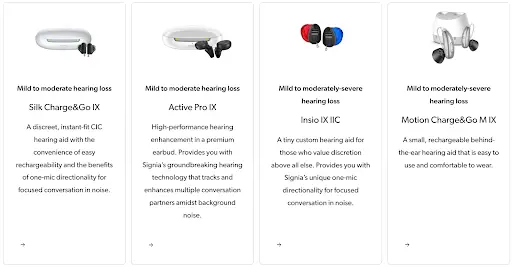
Signia devices are known for their sleek designs. They feature Own Voice Processing (OVP) that adjusts your hearing aids. This helps you hear your own voice naturally. Most models help manage tinnitus and are rechargeable (including travel cases).
To buy Signia hearing aids, you need a professional evaluation at a hearing care clinic. Signa might not match OTC prices, but its costs are close to other prescription hearing aids like Oticon and Phonak.
Read our comprehensive Signia review to learn more.
Phonak Hearing Aids Review
Broad Product Line
|
Phonak manufactures hearing aids with Bluetooth compatibility to smartphones and most Bluetooth-enabled devices. It’s one of the only hearing aid companies to offer an extended-wear hearing aid that can be worn 24/7 for months at a time. The company focuses on advanced tech to boost hearing in tough listening situations.
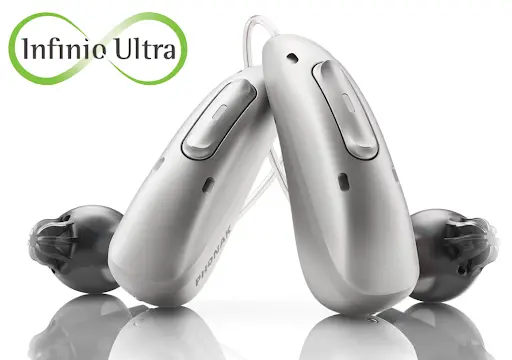
Phonak sells hearing aids for any level of hearing loss, including profound loss. Its current lineup features the latest Infinio platform and Lumity. It offers various styles, including:
- Audéo receiver-in-canal devices
- Naída for severe to profound hearing loss
- Sky for children
- CROS systems for single-sided hearing loss
- Virto custom in-the-ear models
- Lyric for extended wear
The product line is designed for comfort and ease of use. Most Phonak hearing aids are rechargeable, though their battery-powered options are more affordable.
Dr. Matyko says Phonak has one of the best reputations among hearing professionals. “It’s usually the most expensive, but people are genuinely happy with the product.” Phonak’s hearing aid prices are set by your local provider. Phonak doesn’t distribute directly to customers, but instead through hearing professionals. Retailers like ZipHearing can also locate a local provider for you.
Read our comprehensive Phonak review to learn more.
Audien Hearing Review
Great Affordable Option
|
Audien Hearing offers affordable OTC hearing aids. The Audien Atom series (in-the-canal) and the ION Pro 2 (behind-the-ear) are FDA-regulated OTC hearing aids. They are made for adults with mild to moderate hearing loss. Current models are the Atom X, Atom Pro, and ION Pro 2. Prices range from $98 to $689, based on the model.
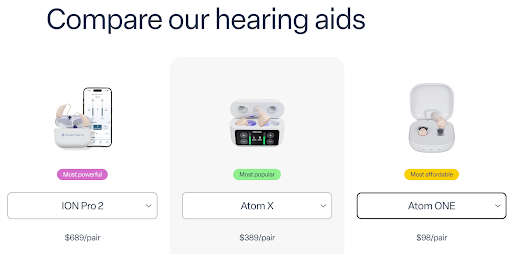
Our editorial team personally tested Audien devices. Audien devices are not only affordable but also very easy to set up and program. Once you buy a hearing aid, it’s shipped directly to your door within three to five business days.
To program your Audien hearing device, follow these steps:
- Charge it.
- Choose the right-sized earbud.
- Adjust the volume to your preferred level.
The rechargeable devices last up to 24 hours.
While Audien’s devices are inexpensive, the company does not offer a warranty. Instead, you have a 45-day trial period to decide if their hearing devices are right for you.
Audien offers a trade-in program that makes your hearing aids more affordable. Trade in an old Audien device and earn up to a $480 credit.
Read our comprehensive Audien Hearing review to learn more.
Oticon Review
Innovative Products
|
Oticon’s hearing aids are organized into four families – Zeal, Intent, Real, and Own SI. They’re designed for individuals with mild to profound hearing loss. Oticon Zeal is the latest model and is very discreet. Oticon Intent features 4D Sensor technology. This tech uses sensors to track head movement, body motion, and conversation. It adapts to the acoustic environment for tailored hearing support.
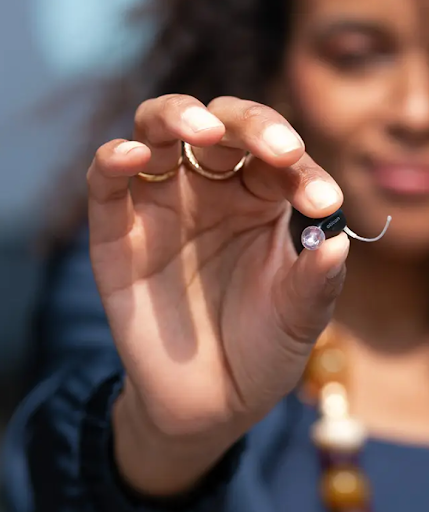
With the Oticon Companion App, you can:
- Check battery levels
- Switch programs
- Find lost hearing aids
- Get remote support
The app is available in the App Store and Google Play.
Oticon doesn’t publish hearing aid prices online. However, we found a range from about $2,000 to $4,500 or more per ear (roughly $4,000 to $9,000 per pair) based on consumer data.
Read our comprehensive Oticon review to learn more.
Starkey Hearing Aids Review
Great variety available
|
Starkey Hearing Aids is a U.S.-owned company that makes hearing aids. Its headquarters are in Minnesota. The company has different hearing aid families: Omega AI, Signature Series, Edge AI, and G Series AI. They come in various styles. Starkey is one of the world’s largest hearing aid manufacturers. Dr. Matyko says Starkey’s customer service is responsive and helpful. She also recommends Starkey most often for people in need of custom hearing aids.
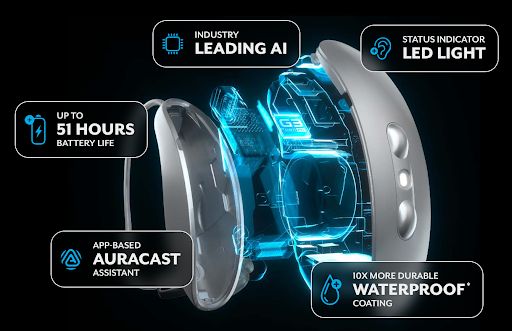
Starkey smartphone apps control and extend the functionality of your hearing aids. My Starkey helps users adjust hearing aid settings. You can stream calls and TV. It also finds lost hearing aids. Plus, it offers health and wellness features like:
- Step counting
- Engagement tracking
- Balance tracking
- Reminders
- Translation
- Remote support through TeleHear.
Hear Share lets users share health and wellness info with chosen family or caregivers. Starkey apps are available for both iPhone and Android users.
Starkey hearing aids accommodate different lifestyles, levels of hearing loss, and budgets. With Starkey, you can find a hearing aid that meets your needs, even if you prefer fewer bells and whistles.
Read our comprehensive Starkey review to learn more.
Additional Hearing Aid Companies We Considered
Most people will find the right fit among our top picks above. However, hearing needs, budgets, and preferences vary. If those options don’t work, look at our detailed reviews of other hearing aid companies below.
Our Research Methodology
Our review team tested hearing aids to give you a balanced look at different brands. A member of the Retirement Living review team has mild hearing loss and uses hearing aids. Over two weeks, they tried hearing aids from various brands.
We talked to four audiologists. They helped us identify the key factors consumers should consider when buying hearing aids. We looked at each brand based on professional feedback. We focused on fit, comfort, price, technology, and available support.
Lastly, we scored the following data points to give you a well-rounded review of each provider:
- Status with the FDA, company experience, and other credentials
- Costs, both upfront and ongoing
- The range of hearing loss that the devices support
- Return policies, trial periods, and warranty options
- Customer service and device support availability
- Online buying experience for OTC devices
- Types of hearing aids available
- Ease of use
- Features and technology, such as Bluetooth connectivity and rechargeable batteries
- Look and design of the device
- Online hearing tests available
Companies that obscured their prices, lacked customer support, and/or had limited options to buy or try hearing aids were eliminated. The result of our analysis is a list of hearing aid companies for you, a friend, or a family member to consider.
What Are Hearing Aids and How Do They Work?
Hearing aids are tiny electronic devices. They fit in or behind the ear. They help people with hearing loss by amplifying sounds. They don’t restore normal hearing. However, they make speech and environmental sounds louder and clearer. This helps the brain process them better.
Modern hearing aids are digital devices powered by a tiny computer chip. They don’t just make everything louder. They analyze sound and enhance speech while reducing background noise.
For those with mild to moderate hearing loss, OTC models offer preset sound profiles. You can also make adjustments through an app. For serious hearing loss, an audiologist customizes devices for the best fit.
Hearing aids capture sound and adjust it to fit your needs. Then, they deliver clearer sound quality to your ear.
How to Choose the Right Hearing Aid Product
- Select the hearing aid product that treats your specific type of hearing loss. The CDC outlines four degrees of hearing loss. These levels depend on how well you hear and understand different sounds.
- Understand the difference between over-the-counter hearing aids and prescription hearing aids. You need a hearing test to get a prescription for a hearing aid. Also, some OTC brands don’t help with profound hearing loss or one-sided deafness.
- Check that the manufacturer and the specific hearing aid model are FDA-registered. Since the FDA approved over-the-counter hearing aids, talk to your doctor. They can recommend trusted brands and dealers.
What to Consider Before Choosing a Hearing Aid
Hearing loss is fairly common. In fact, age-related hearing loss shows that it is more common in people aged 65 and older. And there is an easy solution—hearing aids. To choose the right hearing aid, consider your hearing loss, lifestyle, and budget. This way, you’ll have a comfortable and well-fitting device.
1. Your Lifestyle
A great hearing aid fits well with your lifestyle. Choose one with the right features for you. (More on key hearing aid features below.) Do you work? Socialize in large crowds? Frequent public places like restaurants and stores? Features such as directional microphones and Bluetooth connectivity are important for active lifestyles.
The best hearing aids according to your lifestyle:
- For TV watchers and small-group chats: OTC hearing aids with Bluetooth and directional microphones.
- For outdoor activists: CIC models with feedback suppression that reduces wind noise.
- For working professionals: Look for devices with directional hearing microphones. They capture sound from many angles, not just the front.
- For glasses wearers: ITEs, ITCs, and CICs that fully sit in the ear canal and do not interfere with glasses.
- For those with severe hearing loss: Prescription hearing aids like Phonak with advanced sound processing.
2. Type of Hearing Loss
Hearing loss statistics indicate that there are several types of hearing loss, spanning frequencies from high to low. Getting a hearing test before buying can show how much hearing loss you have. It also helps you find the best hearing aid for your needs. For example, over-the-counter aids are best suited for those with mild-to-moderate loss.
Some hearing aid providers offer online tests. However, an in-person test with a hearing professional is usually more accurate. OTC hearing aid companies, such as Jabra Enhance and Audicus, have audiology teams. They interpret audiograms and program hearing aids.
Check the experts who recommend OTC hearing aids. Dr. Michelle Matyko, an audiologist and co-owner of Roosevelt Field Hearing in Garden City, New York, says to do your homework.
“[Some] OTCs are sold by professionals with little to no audiology experience, and they may not know how to read an audiogram or what it says,” explains Dr. Matyko. “I suggest customers ask their hearing care professional to explain their results and let them know if they are a candidate for OTCs.”
3. Ongoing Maintenance and Warranties
Most high-quality hearing aids last for three to seven years. But all devices, regardless of the technology, require ongoing maintenance. Opting for a device that comes with a warranty is often a great way to ensure loss-and-damage protection.
Choose a hearing professional or online hearing aid company that provides support programs. This way, you can easily repair, replace, or reprogram your devices if needed.
Top hearing aid companies offer great support by phone, online, or in person. ZipHearing specialists connect customers to local dealers who offer lifetime customer support.
4. Technology
Hearing aid technology has changed a lot. Today, devices are much smaller than they were decades ago. The OTC Atom X and Pro are discreet models that sit in the canal. The Oticon Zeal is a CIC model. It says it’s completely invisible.
Also, rechargeable hearing aids are popular. They eliminate the need for battery changes. This makes them a great option if you have vision issues or find it hard to handle small parts.
- Artificial Intelligence (AI) helps hearing aids tell apart sounds so they can amplify or soften them. The technology cuts through the cluttered noise in most environments. AI uses machine learning and Deep Neural Networks to mimic the brain’s neural connections. This technology powers the Oticon Own hearing aid.
- Feedback suppression, telecoils, and preprogrammed settings are ideal for hearing well in crowded or large spaces and for adjusting as needed.
- Bluetooth connects hearing aids to smartphones, tablets, and more. This lets users stream sound and enjoy other benefits.
- Directional microphones, infrared, and FM systems cut background noise. They also adjust settings automatically based on your surroundings.
5. Trial Periods and Return Policies
Hearing aids can be expensive, so you might want an affordable option. However, it’s crucial to pick one you’ll actually wear. This means trying out different products. Some cheaper devices lack the detailed programming options needed for different types of hearing loss.
You may try several hearing aid models before finding the right one. We suggest focusing on hearing aid companies that provide trial periods and simple return policies. Many OTC hearing aid companies provide a 45-day trial. Other brands also have good return and refund policies.
Types of Hearing Aids
Hearing aid statistics show two main types: In-The-Ear (ITE) and Behind-The-Ear (BTE). ITE aids are often called “invisible hearing aids.” They fit snugly in your ear canal and are, shaped from an impression of your ear. BTE aids sit beside or on top of your outer ear, with tubes that transfer sound into your canal via a custom-fit ear mold.
Each of these two styles has different combinations and features. Hearing aid makers are creating smaller devices. However, your hearing loss or lifestyle may not fit the tiniest styles.
From Our Expert
“BTEs are used with children and seniors because they are compatible with accessories used at home and in the classroom. BTEs are also more powerful, and the molds can be easily changed as children outgrow the current ones.
Middle-ear issues or those with a hole in the eardrum are better suited for an aid that does NOT sit directly in the ear canal. Plus, BTE hearing aids function better with a cleanable mold than an actual aid, which is convenient if you have heavy earwax buildup.”

Dr. Michelle Matyko, AuD, CCC-A
The chart below shows different types of hearing aids. An audiologist can help you find the right hearing aid style. They’ll consider your hearing loss, lifestyle, and budget.
| Hearing Aid Style | Fit and Use |
|---|---|
| Behind-The-Ear (BTE) | · Components in the lower, outer ear and in the canal · Custom-fit, smaller ITE model · Mild to profound hearing loss |
| Receiver-In-Canal (RIC) | · Speaker in the canal · Similar to BTEs, with better amplification · Mild to severe hearing loss |
| In-The-Ear (ITE) | · Speaker in the outer ear · Biggest, custom-fit option · Mild to severe hearing loss |
| In-The-Canal (ITC) | · Components in the lower, outer ear and in the canal · Custom-fit, smaller ITE model · Mild to moderate hearing loss |
| Completely-In-Canal (CIC) | · Speaker in the canal · Small, custom fit · Mild to moderate hearing loss |
| Invisible (IIC) | · Speaker in the canal · Smallest and most discreet model · Mild to moderate hearing loss |
OTC Hearing Aids vs. Prescription Hearing Aids
The Over-the-Counter Hearing Aid Act of 2017 was the first law to let consumers buy hearing aids without a prescription. It’s similar to buying cold medicine. In August 2022, the FDA allowed people to buy certain hearing aids directly from pharmacies, stores, and online retailers. No doctor visit or prescription is needed. OTC hearing aids are meant for adults 18 and older with mild to moderate hearing loss.
The FDA regulates both OTC and prescription hearing aids as medical devices. You can buy OTC hearing aids straight from the manufacturers. You must buy prescription hearing aids from a clinic after getting a hearing test.
Prescription hearing aids often cost more. This is because they come with fittings and ongoing adjustments included. OTC aids cost less, and prices might drop. But they often lack the strong customer support you might want when searching for hearing aids. Companies like Eargo and Jabra Enhance offer remote customer support.
Again, if you are able, consider more than just the budget when choosing a hearing aid. Prescription hearing aids might be easier than new OTC aids. Still, they are a smart investment.
“OTC hearing aids are definitely for a specific patient: Tech savvy, independent, and they present with mild to moderate hearing loss,” says Dr. Matyko. “Most of our patients need hands-on training, care, programming, maintenance, and all-around assistance with hearing aids.”
Read more: Check out our resource on the best OTC hearing aids to learn about our testing experience.
Hearing Aids vs. Hearing Amplifiers
Hearing aids and hearing amplifiers both make sounds louder. But amplifiers boost all sounds equally. Hearing aids, on the other hand, adjust the amplification to fit your needs. This helps you hear more clearly. The FDA does not regulate amplifiers, so you can buy one without a prescription. However, those with mild-to-severe hearing loss may find hearing aids more beneficial.
There are three essential parts to all hearing aids:
- Microphone: Picks up sounds around you and turns them into a digital signal.
- Amplifier: Selectively increases sounds digitally.
- Speaker or receiver: Delivers the amplified sound in your ear.
Amplifiers are also less expensive than aids—often starting at around $50. Talk to your audiologist about your hearing loss before getting an amplifier, says Dr. Matyko. This helps you understand what options are right for you.
Read more: Hearing Aids vs. Hearing Amplifiers
How Much Do Hearing Aids Cost?
Hearing aid prices vary widely. After talking with manufacturers and providers, we found that they start at around $100 and can go up to $8,000 or more. The FDA’s August 2022 ruling should lower the cost of OTC hearing aids. Companies will compete to make these devices more affordable and accessible.
Total hearing aid prices usually cover service bundles. These bundles often include:
- An initial consultation and evaluation
- Hearing tests
- Custom molds and fit adjustments
- Ongoing support for reprogramming when needed
Affordable hearing aids can be just as effective. They just have fewer advanced features.
Does Medicare or Medicaid Cover Hearing Aids?
Wondering how to pay for hearing aids? Medicare doesn’t cover hearing aids. However, Medicaid might assist seniors in some states. As of now, 28 states provide coverage for those over age 21. These states include:
Alaska, California, Connecticut, Florida, Hawaii, Illinois, Indiana, Iowa, Kansas, Michigan, Minnesota, Missouri, Montana, Nebraska, Nevada, New Hampshire, New Jersey, New Mexico, New York, North Dakota, Ohio, Oregon, Rhode Island, South Dakota, Texas, Vermont, Wisconsin, and Wyoming.
Contact your state agency to find out if you’re eligible. Many state Departments of Health and Human Services offer programs to help cover hearing aid costs. Considering the noise levels in the loudest cities, maybe you’re eligible.
Hearing Aid Features to Consider
- Telecoil (t-coil) technology improves hearing in public places and on telephones. CIC and IIC devices often lack telecoil technology due to their smaller size.
- Directional microphones make it easier to converse with small groups in noisy environments.
- Rechargeable batteries eliminate the need for replacements. These batteries can last up to five years. In contrast, disposable batteries must be replaced every few weeks. IICs and manya lot of CICs require a battery and cannot be rechargeable.
- Feedback suppression technology reduces acoustic feedback (often experienced with phones). This can also include impulse noise and wind reduction tech. These features are helpful for listeners who hear well in lower frequencies.
- Bluetooth technology lets you stream calls and audio from your phone to your hearing aid. You can also adjust your sound settings from your phone.
- Tinnitus masking helps lessen the ringing or buzzing sounds for those with tinnitus. Many hearing aids help manage tinnitus, but not all do, so confirm that this feature is included if you need it.
Some devices let you change settings with remote controls. You can switch between preset options for better hearing in different places. If you’re unsure about hearing aid features, ask an audiologist or specialist. They can help you choose wisely.
How to Buy a Hearing Aid Online
Buying hearing aids online removes barriers to getting care for hearing loss. The process for most OTC hearing aids is like shopping online at any other store. First, you’ll browse various models and devices. Next, you’ll check out and enter your billing and shipping info. Some companies also offer financing.
Some companies might ask you to upload a hearing test result from another source if they don’t provide one. We recommend getting a hearing aid test, either online or in person, before you buy. This way, you can choose a device that fits your needs.
Our Experience Taking Online Hearing Tests
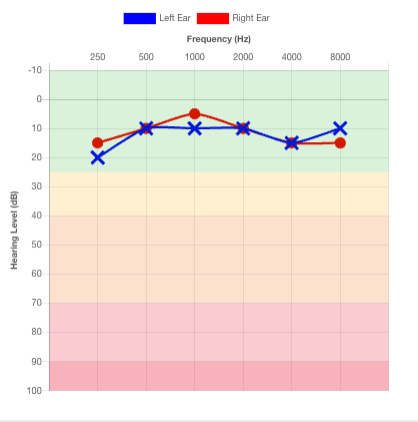
Many brands provide online hearing screenings. These help customers know if they have hearing loss. The Retirement Living editorial team completed 11 online hearing assessments. They looked at how useful the results were. You could use them to buy a hearing aid, program your devices, or talk to an audiologist. The tests from the brands above are free. Each company has its own testing model, so results may vary.
Here are a few key takeaways from our experience with online hearing tests:
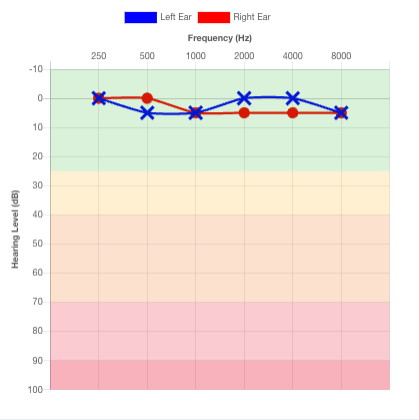
- The equipment you use makes a difference. Every test suggested using headphones or earbuds for better accuracy. However, GoHearing and Eargo offered options to use computer speakers instead. Every audiologist we spoke to warned that online screenings can’t account for background noise or the earpieces used during the test. We tested with and without headphones. The results show they can change based on how well you follow the test recommendations. (See the pictures below for comparison.)
- Online tests provide general results compared to in-person evaluations. Most online hearing tests check tone frequencies, but they aren’t diagnostic. They can’t identify the type of hearing loss. It could be conductive, sensorineural, or mixed. Use these tests as a starting point for more evaluation and suggestions when you can.
- Online tests are quite advanced. Users can easily connect their headphones to devices. They can adjust the sound and get accurate results. One brand, Eargo, even used a hand-rubbing technique right in front of us to better calibrate sound.
Frequently Asked Questions (FAQs) about Hearing Aids
The most common hearing loss affects clarity, not volume. That means most people with hearing loss can hear voices but aren’t sure what’s being said. If you think you have hearing loss, see an audiologist or an ENT doctor. They can give you a full diagnosis.
ITE, ITC, and CIC hearing aids work well for people who wear glasses. They fit snugly in the ear canal. This design keeps glasses from getting in the way. It’s great for people with mild to moderate hearing loss.
Manufacturers with FDA-registered devices can team up with retailers. You can buy over-the-counter hearing aids at stores like Best Buy, Walmart, Costco, and Walgreens. If you have a prescription for hearing aids and serious hearing loss, you can buy them. You can find brands like Oticon, Starkey, and ReSound online or at a local authorized hearing aid professional.
Hearing aid development costs are high, especially for companies focused on innovation. These manufacturers face strict consumer safety rules and insurance requirements. They also provide continuous support. The final price includes the device along with ongoing maintenance services.
Hearing aids can last three to seven years or even longer. Their lifespan depends on how they’re built, how often you wear them, and how well you take care of them.
To find the best hearing aid for you, it helps to consult an expert. They can do a hearing test and ask about the extent of your hearing loss. Consider your lifestyle habits, job, and the places you often visit. Also, think about any extra features you want in your hearing aid. An audiologist can help you find hearing aids that fit your hearing loss and budget. You should also consider the fit and feel of hearing aids. Most experts say the best hearing aid is one you will wear regularly.
The easiest hearing aid to use depends on several factors. These include your level of hearing loss, communication needs, and lifestyle. Also, consider your dexterity, vision, and comfort with technology. Smaller instruments are easier to hide. However, they can be harder to use for people with limited dexterity. It’s also harder to squeeze more features into a smaller device. Some users prefer rechargeable batteries for easy management. Others appreciate automated features such as app connectivity and digital noise reduction. These tools help make hearing easier in challenging environments.
Local Hearing Aid Companies Near Me
- Atlanta, GA
- Austin, TX
- Boston, MA
- Charlotte, NC
- Chicago, IL
- Cleveland, OH
- Dallas, TX
- Denver, CO
- Detroit, MI
- Fayetteville, AR
- Fort Worth, TX
- Houston, TX
- Las Vegas, NV
- Los Angeles, CA
- Memphis, TN
- Miami, FL
- Minneapolis, MN
- New York, NY
- Orlando, FL
- Philadelphia, PA
- Phoenix, AZ
- Portland, OR
- Raleigh, NC
- San Diego, CA
- San Francisco, CA
- San Jose, CA
- Seattle, WA
- St. Louis, MO
- Tampa, FL
- Tulsa, OK
- Washington DC
Concluding Thoughts on Hearing Aids
Bottom Line: If you’ve been told you need hearing aids, you have options.
We narrowed your hearing aid options, but you still have many to choose from. Always consider your lifestyle and cost when you shop for hearing aids. You might need to spend more for proper hearing correction, so don’t compromise quality to save cash. However, low-cost hearing aids with excellent technology are available.