
Retirement Living takes an unbiased approach to our reviews. We may earn money when you click a partner link. Learn More
What Is a Stair Lift?
Learn how stair lifts work and how they can help you or a loved one navigate stairs safely at home.


Updated:
AT A GLANCE:
- A stair lift, also known as a chair lift, is a motorized chair that helps users move up or down stairs safely and independently.
- Stair lifts can be installed on straight, curved, or outdoor staircases and are available in heavy-duty and standing models.
- Most lifts run on a battery-powered motor, include safety features like swivel seats and sensors, and can function during power outages.
- Stair lift costs range from $2,000 to over $10,000, depending on the type, rail configuration, and features like upholstery, powered swivel, or backup batteries.
A stair lift is one of the most practical accessibility solutions for people who find stairs difficult to navigate. Whether you’re recovering from surgery, managing limited mobility, or planning to age in place, climbing stairs can feel risky or exhausting without added support.
Despite the need, only about 40% of U.S. homes have at least one aging-friendly feature. Stair lifts help bridge that gap by offering a seated, motorized way to move between floors safely and independently. In this guide, we’ll explain how stair lifts work, the different types available, and how to choose the best option for your needs.
What Is a Stair Lift/Chair Lift?
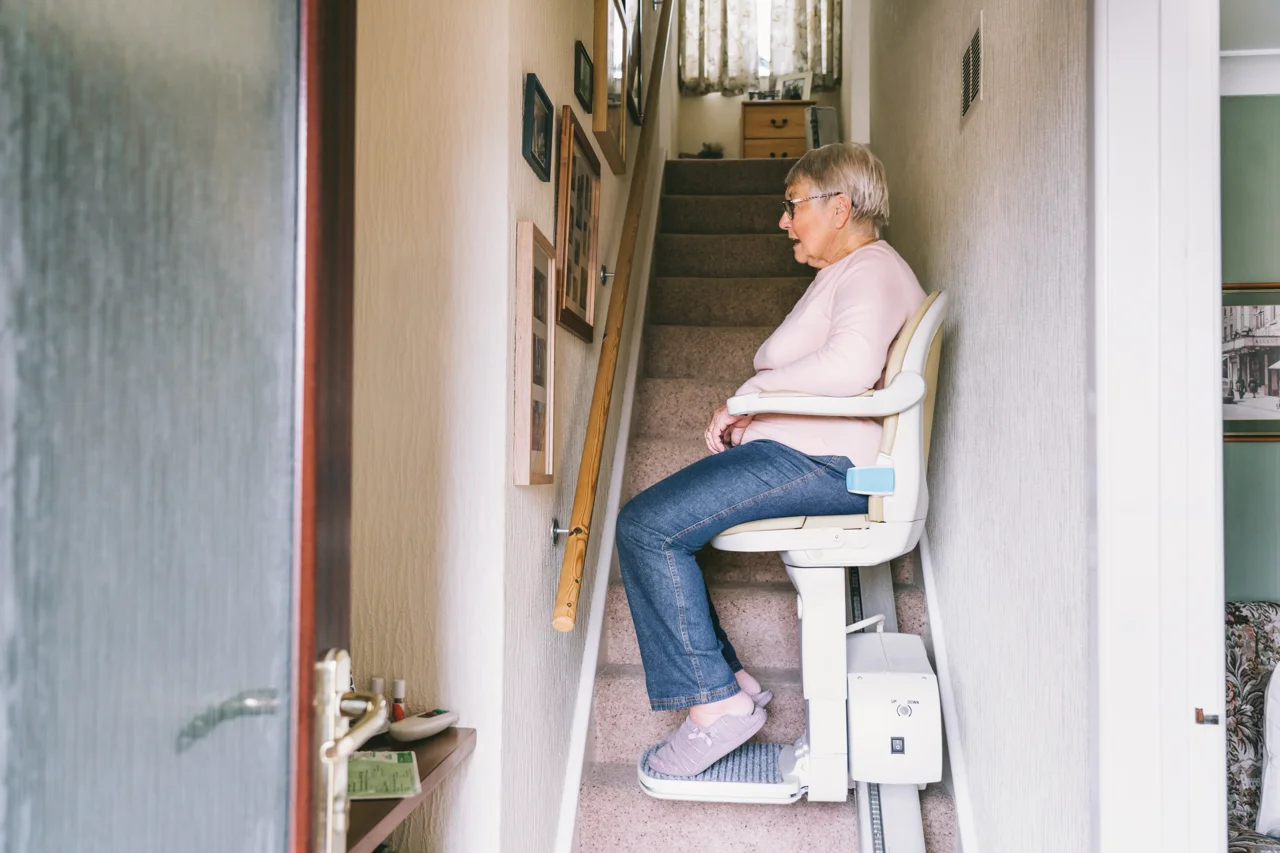
A stair lift, sometimes called a chair lift, is a motorized seat that travels along a rail mounted to your staircase. It’s designed to carry a person safely up or down the stairs, with minimal physical effort. Stair lifts are often used in homes where climbing stairs has become challenging due to age, injury, or medical conditions.
The term “chair lift” typically refers to the same type of device—it features a foldable seat, armrests, and a footrest that allow the lift to be used comfortably and stored compactly when not in use. Stair lifts can be fitted to both straight-rail and curved-rail staircases, and outdoor models are available for exterior steps exposed to the elements.
Modern stair lift technology offers smoother start-and-stop operation, powered swivel seats, space-saving rail designs, remote controls, and rechargeable batteries that continue to function during power outages. These improvements make today’s stair lifts safer, more dependable, and more comfortable for everyday use.
Types of Stair Lifts
Stair lifts come in several configurations to fit different home layouts and mobility needs. Below are the most common types:
- Straight Stair Lifts: Designed for stairs without curves or landings. These are the most affordable and widely used type and can typically be installed within a day.
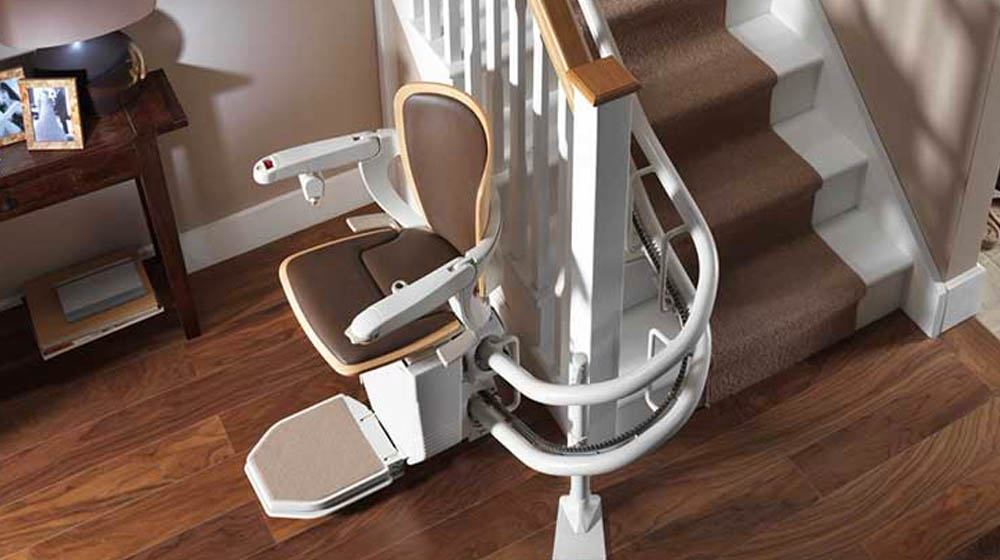
- Curved Stair Lifts: Custom-built to fit staircases with curves, landings, turns, or spirals. These lifts require precise measurements and professional installation but provide a smooth and comfortable ride on complex staircases.
- Outdoor Stair Lifts: Designed to withstand rain, snow, and temperature changes. These are ideal for porches, decks, or outdoor entryways and include weather-resistant materials and protective covers.
- Standing Stair Lifts: Ideal for users who have difficulty bending their knees. These allow the rider to stand or lean against a small perch platform while traveling up or down the stairs.
- Heavy-Duty Stair Lifts: Reinforced for higher weight capacities—typically up to 600 pounds. These models often include wider stair lift seats, heavy-duty motors, and enhanced stability for maximum support.
How Do Stair Lifts Work?
Stair lifts use a combination of mechanical and electrical components to move safely and smoothly along a staircase. Here’s how each part works:
Rail and Track System
The rail attaches directly to the stair treads, not the wall, so installation rarely requires major structural changes. Rails may be straight for standard staircases or custom-curved for stairs with turns or landings. Outdoor rails are built to resist corrosion and withstand year-round weather exposure.
Motor and Power Source
Most stair lifts operate using a quiet, battery-powered motor. The batteries automatically charge when the lift is parked at either end of the rail, where the built-in charging stations are located. Keeping the lift fully docked when not in use ensures the batteries remain charged and ready.
The average battery lasts between three and five years, depending on usage. Many stair lifts can complete multiple trips during a power outage thanks to their backup batteries. Plug-in or direct-current models are also available, but battery-powered systems are preferred because they continue working even if the home loses electricity.
Seat and Safety Features
The seat usually folds up to save space when not in use and includes a seatbelt, swivel function, and footrest for added comfort and stability. Built-in safety sensors detect obstacles and automatically stop the lift to prevent accidents.
Controls and Operation
Stair lifts are operated with a simple toggle switch on the armrest or a handheld remote. Most models utilize smooth start-and-stop technology to ensure a gentle ride, eliminating sudden movements or jolts.
Who Should Consider a Stair Lift?
A stair lift is a smart solution for anyone who finds stairs difficult or unsafe to navigate. It offers independence, reduces fall risk, and helps people remain in their homes longer without major renovations. Unlike some mobility aids, stair lifts allow users to move between floors safely without assistance.
You might consider installing a stair lift if:
- You’re a senior with limited mobility who wants a safer way to access upper or lower floors.
- You’re recovering from surgery or injury and need temporary support while avoiding strain.
- You’re a caregiver looking to provide peace of mind for a family member living at home.
- You’re preparing to age in place and want to make your home more accessible without needing to relocate.
Several reputable stair lift brands offer stair lifts with a range of features, warranty coverage, and installation options to meet different mobility and budget needs.
It’s important to compare stair lift costs, which can vary based on stair type, weight capacity, and customization. In some cases, Medicaid or Medicare may help cover part or all of the cost of a stair lift, depending on your state’s program and whether the lift is deemed medically necessary for financial assistance. Here’s a look at some of the top options:
| Brand | Best For |
|---|---|
| Bruno | Certified quality, indoor and outdoor use |
| Lifeway Mobility | In-home assessments and funding guidance |
| Arrow Lift | Try-before-you-buy showrooms and service plans |
| Harmar | Heavy-duty lifts and easy installation |
| Stannah | Reliable performance and customizable designs for any type of staircase |
| Mobility123 | Professional installation and comprehensive maintenance for long-term reliability |
How to Use a Stair Lift
Stair lifts are designed to be simple and safe for everyday use. With a few quick steps, users can travel up or down stairs comfortably and securely. Here’s what to expect when using a stair lift:
Preparing the Stair Lift Chair
At the top or bottom landing, unfold the seat, armrests, and footrest if they’re not already open. Some models include power-folding footrests, which are useful for people who have difficulty bending.
Ensure the seat is locked in place. At the top of the stairs, swivel the chair away from the staircase and lock it securely before sitting down.
Sitting Down Safely
Stand close enough that the back of the knees touch the edge of the seat. Use the grab bars or armrests for support while sitting down. Once seated, fasten the seatbelt securely. The upholstery on most chairs is padded for comfort and is easy to clean. Swivel the chair back into its travel position until it locks in place.
Riding the Lift
Use the armrest control or a remote to press and hold the directional button (up or down). The chair will travel smoothly along the rail and stop automatically if you release the button. Most models slow slightly before reaching the end to ensure a gentle stop.
Exiting the Chair
Once the lift stops, swivel the seat toward the landing (at the top) or simply unbuckle and stand up (at the bottom). Use the armrests for support as you exit. If you’re at the top, always make sure the seat is fully swiveled and locked to face the landing before standing.
Optional: Sending or Calling the Lift
Use the remote or wall control to send the chair to the other floor when not in use. Family members can also use the controls to call the lift when needed. Lightweight items may be placed on the seat and sent up or down, but avoid transporting loose or heavy objects.
Stair Lift FAQs
There is no functional difference; “chair lift” is simply another name for a stair lift. Both refer to the same motorized seat that helps a person move up or down stairs safely while seated.
Yes, most stair lift chairs include a swivel seat that allows users to turn the chair toward the landing before getting on or off. This feature provides safety, especially at the top of the stairs.
Buying a stair lift is a better option for long-term use, while renting may work well for short-term needs, such as recovery from surgery. Not all brands offer rentals, and rental availability may be limited for custom or curved staircases.
A stair lift is a seated device that carries one person along a rail attached to the staircase. A wheelchair lift (also called a platform lift) is a larger unit that raises a person while they remain in their wheelchair, using a vertical platform lift instead of traveling up the stairs.
The average cost for a basic straight stair lift ranges from $2,000 to $5,000, while curved or custom stair lift models can cost $10,000 or more. Pricing depends on the length and shape of the stairs, lift features, and the complexity of the installation. Many brands include a warranty and offer financing options to help manage the expense.
Help us improve our stair lift data! If you’ve recently purchased or received a stair lift quote, email us at [email protected]. Your personal details will remain completely confidential.