
Retirement Living takes an unbiased approach to our reviews. We may earn money when you click a partner link. Learn More
Stair Lift Installation Guide
Yes, stairlifts are generally very safe, especially when installed correctly and paired with additional safety features.


Updated:
At a glance:
- The average cost of labor to install a stair lift is $2,000, but it can range between $2,500 and $5,000, or 15% to 20% of the purchase price.
- The average time to install a stairlift ranges between 2 to 5 hours, depending on the type of stairlift.
- Stairlifts can be installed on basically any type of stair tread, from wood to metal, and because they’re not attached to the wall, no remodeling is needed.
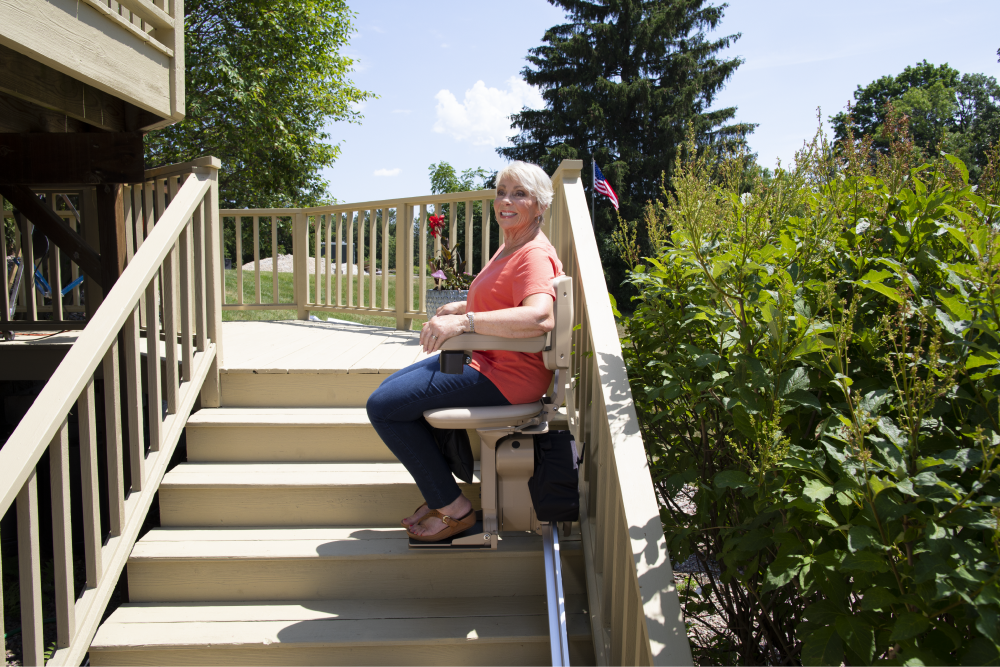
There are various types of stair lifts homeowners can choose from. Whether you have curved or straight staircases, require an outdoor stair lift, or want a stair lift chair with added padding, you can find something that suits your needs. Once you choose a lift, it will need to be installed in your home.
Luckily, stair lift installation doesn’t require extensive work or home modifications. Below, we discuss the professional installation process so you know what to expect, allowing you and your loved ones to make informed decisions.
Stair Lift Installation Requirements
Stair lifts are one of the easier mobility aids to install in a home. They can be installed on basically any type of stair tread, from wood to metal. Additionally, because the feet of the rail are the only part that attaches to your steps, no remodeling is needed, making them a cost-effective solution. Plus, since most stairlift models are designed with a high weight capacity, there’s no need to reinforce the steps ahead of time.
However, before purchasing a stair lift, experts recommend getting an evaluation from an accessibility expert. This is essentially working with an expert to determine if a stair lift is the right solution for you. Typically, this will involve a visit to your home to inspect your staircase and discuss your mobility needs
If the expert agrees that a stairlift is the right option, then you can find the best stair lift for you and begin the installation process.
Consultation and Measurements
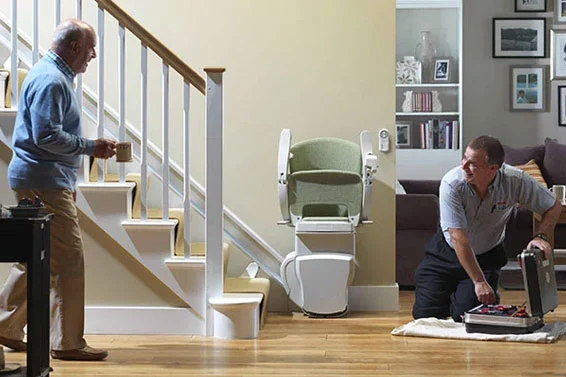
The first step in the installation process is getting a free consultation and having measurements taken. During consultations, installers will discuss safety concerns, comfort needs, and measures to improve home accessibility.
Professional installers will identify:
- Mobility needs and issues (e.g., what reasons have made using the stairs difficult)
- Living situation (whether you’re living alone or with family members)
- Type of staircase (i.e., straight staircase, curved staircase, one with a door at the top or bottom of the stairs, and more)
- Your goals (what do you want to achieve with the stair lift? This could include regaining independence in your own home, getting access to a downstairs room to spend time with family, or simply giving you peace of mind.)
Once the consultation is complete, the installers will measure your staircase. These measurements typically include:
- Width of the staircase
- Length of the staircase
- Angle of staircase
- Stair tread depth
- Number of steps
- Any permanent obstructions
- Height and weight of the user
The team will also ensure there is access to a 110-v outlet near the staircase. Stair lifts are typically battery-powered, and they need to be charged when not in use. This is also a great time to discuss any additional comfort or safety features you might want, such as a swivel seat, footrest, extra padding, or other new stair lift technology that can improve your time at home.
Once all requirements and measurements are recorded, the manufacturer will build the staircase to perfectly fit your home.
Preparation
If you purchased a straight stairlift, minimal preparation is required. The company will schedule a day and time that works best for you for the installation to take place. Curved staircases require extra time, as they typically need to be custom-designed for your home. This process can take anywhere from 2 to 5 weeks.
Before the day of installation, be sure to remove any obstructions on or near the stairway before our technicians arrive. This will ensure the process goes quickly and smoothly. Typically, technicians will be made aware of any permanent obstructions, so you won’t have to worry about those.
Installation
Typically, stair lift installation takes 2-5 hours, depending on the length and shape of your staircase. On a day off, licensed technicians will prepare all components and parts. The stair lift rail is attached to the stairs themselves, not the wall. This means you don’t have to worry about extensive damage or home modifications.
After the lift is installed, the technicians will guide you through its use step by step. They will make sure you are aware of all the basic safety features and are comfortable operating and using the unit.
Maintenance
After installation, you’ll need to have it regularly maintained. This ensures the stair lift will continue to operate safely and smoothly. Most lift purchases or rentals include a comprehensive warranty on both the stair lift and labor.
Some providers only offer a one-year warranty, while others offer more extensive ones. Be sure to discuss yearly maintenance with your provider to determine the available options for you.
Having a yearly maintenance plan increases the longevity of your stair lift, reduces the chances of breakdowns, and can help you avoid costly repairs or removal, saving you money in the long run.
How Long Does It Take To Install a Stair Lift?
On average, technicians can install a stairlift within 2 to 5 hours, depending on the complexity of the staircase.
Additionally, most providers can install a basic straight staircase within a day or two of the initial consultation. However, the more upgrades or optional features you add will likely increase the time between ordering and installation
How Much Does a Stairlift Cost To Install?
The average cost of labor to install a stair lift is $2,000, but it can range between $2,500 and $5,000. Other sources say that installation costs can be between 15% and 20% of the stair lift’s purchase price.
Most of the time, the cost of installation is included in the overall cost of the stair lift, which can be from $2,900 to $14,000, depending on the type, additional stair lift options, and convenience features you might add. Keep in mind that the more complicated the stair lift’s design is, the higher the labor cost will be.
Some convenience features include:
- Lift-up footrests and armrests
- Speed control
- Fold-up rails (manual or automatic)
- Seats that swivel, collapse, or tilt
- Obstruction detection
- Harnesses and seatbelts
- Calling systems or handheld remotes
Other factors that affect cost include:
- Stairway configuration
- Number of steps
- Outdoor lifts
- High weight requirement
Additionally, purchasing a new stair lift will likely be more expensive than buying a used one. While purchasing a used stair lift may be a cost-effective solution, it might be more difficult to find a unit that fits your staircase, especially if you have one that curves.
Straight Stair Lift vs. Curved Stair Lift Installation Cost
Straight stair lifts generally cost less to install than curved stair lifts. This is because straight stair lifts are easier to install as they have fewer parts. Curved stairlifts are typically manufactured to fit your unique staircase. Technicians use the measurements, a photo system, and a specialized camera to ensure the curved stairlift fits your space.
Below are the average price ranges for the most common types of stair lifts, as well as the installation cost (estimated as 20% of the average purchase cost). Keep in mind, installation costs are normally included in the average price range, but make sure to speak with your provider to ensure it’s not a separate fee.
| Type | Average Price Range | Average Installation Cost |
| Straight stair lift | $2,500 – $9,000 | $500 – $1,800 |
| Curved stair lift | $10,000 – $14,000 | $2,000 – $2,800 |
| Refurbished stair lift | $1,000 – $10,000 | $200 – $2,000 |
| Outdoor stair lift | $5,000 – $10,000 | $1,000 – $2,000 |
Financing for Stair Lift Installation
Paying for a stair lift can be the main obstacle for most homeowners. Unfortunately, health insurance providers don’t normally cover stair lifts, as they aren’t considered a medical necessity. However, you might be able to get financial assistance from the Home and Community-Based Services (HCBS) program offered through Medicaid.
Additionally, some states might offer assistance programs, providing grants or loans with options for free stair lifts for individuals with disabilities. Be sure to look into what financial assistance your state might offer, as it could significantly reduce out-of-pocket costs.
Ask your stair lift provider about the financing options they offer, as many companies allow you to pay off your purchase through monthly installments.
Frequently Asked Questions (FAQs)
Yes, most stair lifts have a weight limit of 250 to 350 pounds (113 to 159 kg). However, some units can carry up to 600 pounds. Finding a model that can safely transport you between levels is vital, so be sure to research the lift’s weight limit.
While DIY installation is possible, we highly recommend having licensed professionals handle the installation. Not only will this ensure your stair lift is installed properly and safely, but it won’t risk voiding the warranty. Additionally, some states require that installations be performed by a licensed technician. Overall, it’s a better idea to have professionals handle it.
Stairlifts are designed to carry a single user up a flight of stairs. It cannot lift any additional mobility aids. Whereas a wheelchair lift can carry both the user and a wheelchair (or scooter) between levels. Wheelchair lifts have a higher weight capacity, but typically travel shorter distances and have a higher price range.
Unfortunately, no. Because Medicare considers stairlifts self-help devices and not necessary, durable medical equipment (DME), Medicare plans do not cover the cost of a stairlift. However, those with Medicare Advantage plans may be able to get support if they have a chronic illness. You can speak with an insurance professional to learn more about potentially obtaining coverage for doctor-approved mobility equipment.
When choosing a stair lift installer, consider the company’s reputation, expertise, products, warranty, and support after purchase. You should also consider what additional features for comfort and/or safety, prioritizing the features most important to you. While stair lifts can be expensive to install, they are an investment in your safety and quality of life, so it is worth finding a stair lift company and installer that will give you a quality product and install it correctly.
Help us improve our cost data! Email your latest stair lift quote to [email protected]. Rest assured, your personal details will remain completely confidential.