
Retirement Living takes an unbiased approach to our reviews. We may earn money when you click a partner link. Learn More
ADA Wheelchair Lift Requirements
Get a clear breakdown of ADA wheelchair lift requirements, including size, safety features, controls, and installation rules for public and commercial spaces.


Updated:
AT A GLANCE:
- ADA wheelchair lift rules only apply in public and commercial spaces, and lifts can only be used in locations permitted under ADA Section 206.7.
- Every ADA-compliant lift must follow ASME A18.1 for platform size, controls, safety features, weight support, and power-loss operation.
- Compliance depends on confirming the lift type allowed, checking clear floor space and electrical needs, and following local building and fire codes before installation.
ADA wheelchair lift requirements explain what a lift must have so persons with disabilities can use it safely in a public building. These rules cover the space you need, the weight the lift can carry, the controls you use, and the way the lift is installed to meet the required safety standard.
This guide explains when the ADA applies to lifts, what the requirements include, and how to confirm compliance.
What Is the ADA and How It Applies to Wheelchair Lifts
The Americans with Disabilities Act (ADA) is a civil rights law that gives wheelchair users the right to enter and use public and commercial buildings. If you use a wheelchair or another mobility aid, the ADA requires a clear way for you to move from one area to another. A wheelchair lift can be part of that path.
The technical rules for platform lifts come from the 2010 ADA Standards and the earlier ADA Accessibility Guidelines. The Access Board created these standards, and the Department of Justice enforces them through 28 Code of Federal Regulations (CFR) Part 36.
The ADA applies to places you visit in daily life, including local government buildings. This includes clinics, stores, senior centers, apartment lobbies, schools, recreation facilities, and other public accommodations. Local building codes still apply, but the ADA sets the minimum level of access that every covered building must provide.
When Do ADA Wheelchair Lift Requirements Apply
The ADA applies when a building is open to the public or used for commercial activity. This includes places where you receive care, shop, meet with others, or enter for services. If you live in an apartment building, the lift in the lobby or other shared areas must also follow these rules.
The ADA treats new construction and existing buildings differently. New buildings must follow the current standards. Existing facilities follow these rules only when they update an area that people use to enter or move through the space. If a change is made to an entrance or another part of that path, the lift in that area must meet ADA rules.
A lift can be used on an accessible route, but not in every situation. Some locations allow a lift, such as stages and small changes in level. Other locations require an elevator car. The choice depends on how the space is used and how people move through it.
Private homes and residential dwelling units do not fall under the ADA. If you install a lift in your house, you do not need to follow ADA rules.
Types of Wheelchair Lifts Allowed by ADA
Here are the main types of wheelchair lift allowed under ADA platform lift requirements, along with the devices that are not covered by these rules.
Vertical Platform Lifts (VPLs)
A vertical platform lift moves you straight up and down. The ADA allows this type of lift at an entrance, on a stage, in a courtroom, or in another place where you need help moving between levels.
A VPL is used for short vertical travel within the limits set by ASME A18.1. This code sets rules for lift speed, platform size, and how far the lift can rise.
The ADA does not set a fixed height limit, but it only allows platform lifts in certain settings listed in Section 206.7. The lift may be used when the conditions in that space meet the rules for platform lift use.
A VPL may be appropriate for a raised platform, porch, or similar change in level. If the building layout or use requires travel beyond what ASME A18.1 allows, or if the ADA does not permit a lift in that area, another type of device may be needed.
Inclined Platform Lifts
An inclined platform lift carries you up a stairway while you remain on a platform. The ADA allows this type of lift when a building cannot fit an elevator, escalator, or a vertical lift.
The lift can only be used if the stairs remain usable in an emergency. It must fold out of the way and leave enough clear space for people to exit the building. If it blocks the stairs or reduces the exit path, the ADA does not allow it.
Devices Not Regulated by ADA
The ADA building standards do not apply to lifts used only in private homes or to devices made for personal use. These devices cannot be used to meet the access rules that apply to public and commercial buildings.
Here are examples of devices not covered by the ADA regulations:
- Stairway chairlifts used inside a home
- Private residential elevators made for personal use
- Vehicle or scooter lifts used in a car, van, or garage for personal transport
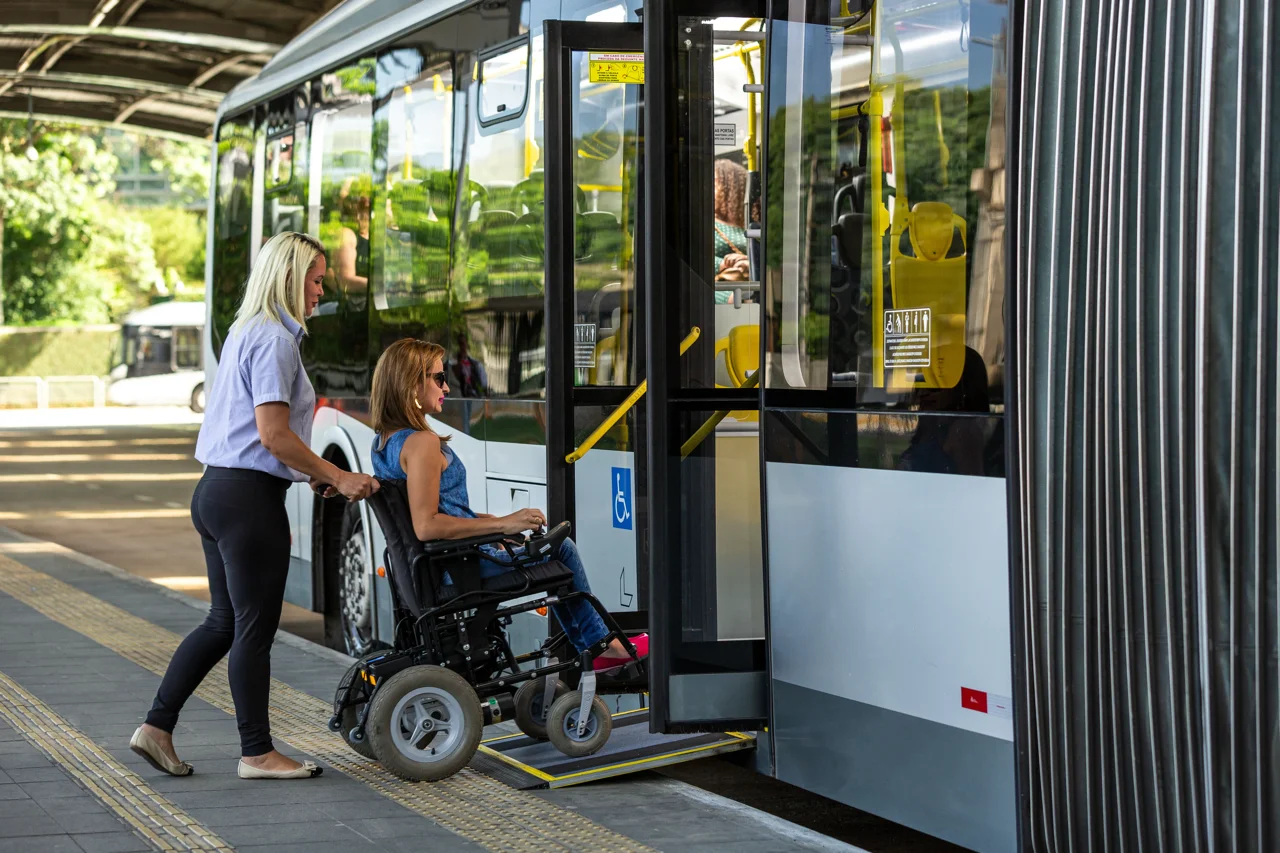
Some vehicle lifts used in public transportation are covered by separate ADA rules from the Department of Transportation.
Core ADA Technical Requirements for Wheelchair Lifts
Here is a clear look at the main wheelchair lift code requirements that apply in public and commercial spaces.
Platform Size and Clear Floor Space
A wheelchair lift must give you enough room to stay in your mobility device and move onto and off the platform without strain. The ADA and ASME A18.1 give minimum space requirements for platforms used on an accessible route.
Here are the points you need to know:
- A platform must be at least 36 inches wide to support a standard wheelchair.
- The overall platform area cannot exceed 18 square feet under ASME A18.1.
- The space you need depends on how you enter and exit. A straight-through lift uses one set of dimensions. A 90-degree or 180-degree turn will need a different layout.
- There must be clear floor space at the entry and exit so you can move without tight turns.
- The controls must fall within simple reach so you can use them from a seated position.
- Objects near the lift cannot stick out more than four inches, as stated in ADA Section 307.
ADA Sections 305 and 308 describe clear floor space and reach ranges, and ASME A18.1 sets the limits for platform size.
Weight Capacity and Structural Requirements
A wheelchair lift must support the full weight of your mobility device and anyone riding with you. The rated load is set by ASME A18.1 and depends on the type of lift.
Many commercial platform lifts on the market are designed to hold loads in the 600-pound range or higher. Some models also support greater weight for larger power chairs or scooters.
ASME A18.1 also sets the structural rules for how a lift must carry this weight during use. These rules cover the way the lift supports the platform, how the parts hold the load, and how the lift must perform under full weight.
Operable Parts and Control Requirements
The ADA sets rules for how lift controls must be placed and used. These rules help you reach the controls and operate the lift without strain.
Here are the codes that describe these requirements:
- ADA Section 309 explains where controls must be placed and how you must be able to use them. It requires controls to be within simple reach and operable with one hand without tight grasping or twisting.
- ASME A18.1 explains the emergency controls a lift must have, including emergency communication features. It requires an emergency stop, a safe method to lower the lift during a power loss, and clear call buttons that you can use during normal and emergency operation.
Safety and Surface Requirements
Wheelchair lifts in public spaces must meet safety rules from ASME A18.1. This code sets the requirements for a slip-resistant floor surface, handrails, guard panels, and barriers when they are needed. These features help you stay steady while the lift moves.
ASME A18.1 also explains when a lift must have an enclosure. An enclosure is used when the lift travels through an opening or moves above a set height. It keeps the platform contained during the ride.
ICC A117.1 sets the rules for swing doors and gates on lifts. These rules cover how the doors open and close and how much force you need to move them.
When a lift is placed near an exit route, the installer must follow the building and fire code to keep the path clear. These rules make sure the lift does not block people who need to leave the building during an emergency.
Installation Location Requirements
ADA Section 206.7 explains that a wheelchair lift may be installed at an entrance or in another place where you need a safe way to move between levels. It must be set back from traffic or any public way so you can enter and leave the platform without stepping into moving paths.
Some spaces have extra rules. As per ADA Section 206.7 and related scoping sections, a lift can only be used in assembly rooms, recreation areas, and courtrooms when it does not block how people move through the space. These sections also allow a lift on a raised speakers’ platform when the platform needs an accessible route.
Electrical and Power Requirements for ADA-Compliant Lifts
Most public-use lifts use a dedicated electrical circuit, and many are hardwired into the building. ASME A18.1 requires a safe method to move the lift during a power loss. This method depends on the lift design and may include a manual lowering system, a gravity-lowering feature, or a battery-backed control. These features help the lift complete basic movements when building power stops.
Some lifts must also meet local building rules for standby power. This applies when a lift is part of an accessible means of egress under the building code. In those cases, the lift must continue to operate long enough for you to leave the area during an emergency.
Local electrical codes, including the National Electrical Code, also apply to wiring inside and around the lift’s hoistway. These rules guide how the lift is wired and connected to the building. They help the installer provide a power setup that supports safe daily use.
Required Inspections and Maintenance of Wheelchair Lifts as Per the ADA
Public-use wheelchair lifts must be checked on a regular schedule to confirm that they operate safely.
Here are the main requirements:
- Public lifts must receive periodic inspections to confirm safe movement, stopping, and platform stability. These checks follow ASME A18.1 and local building rules.
- Public-use wheelchair lifts must be checked regularly to confirm that power-operated components function safely.
- ASME A18.1 sets the inspection and testing methods and identifies the parts that must be reviewed, including the drive system, platform, and safety devices.
- Operable parts, call buttons, and emergency controls must remain in working order between inspections to satisfy accessibility requirements. This follows 28 CFR 36.211, which requires accessible features to stay usable.
- The lift must have a safe method to move or lower the platform during a power loss, based on the lift design and ASME A18.1 requirements.
- Some locations require written records of inspections and repairs. Local authorities may review these records to confirm that the lift meets safety and ADA operability rules.
Comparison Table: Top Wheelchair Lifts Brands
Here are some wheelchair lift brands that offer quality wheelchairs:
| Brand | Type of Lift | Key Features |
| Arrow Lift | Platform lifts for indoor and outdoor use | Showrooms for testing lifts, trained technicians, installation and service plans |
| Lifeway Mobility | Indoor and outdoor platform lifts | USA-made lifts, local support, product and labor warranty |
| Mobility123 | Platform lifts, stair lifts, residential elevators | Range of brands, installation and maintenance services |
To explore more models that suits your needs, visit our best wheelchair lifts guide.
How to Ensure ADA Compliance Before Installing a Wheelchair Lift
Use this checklist to confirm that your lift meets ADA rules, local requirements, and understand the cost of wheelchair lift considerations:
- Check the ADA Standards and ASME A18.1 to confirm the basic rules for public-use lifts and verify how the wheelchair lift works.
- Review your local building code to see if there are extra requirements in your area.
- Confirm that the lift type you plan to use is allowed in your building.
- Make sure the platform size fits your mobility device and provides the required clear floor space.
- Check the electrical needs for the lift, including the power source and the method used during a power loss.
- Review the installation path to confirm safe entry, exit, and movement around the lift.
- Contact your local authority having jurisdiction to confirm that your plan meets all required codes.
Help us improve our guides! If you’ve recently installed a wheelchair lift or have insights on how yours works, we’d love to hear from you. Share your experience with us at [email protected]. Your personal details will stay completely confidential.