
Retirement Living takes an unbiased approach to our reviews. We may earn money when you click a partner link. Learn More
Best Medical Alert Systems for Dementia Patients of 2026
We reviewed and selected the best medical alert systems that support dementia patients with fast response times, location tracking, and caregiver visibility.


Updated:
Our top picks for the best medical alert systems for dementia patients include Bay Alarm Medical, Medical Guardian, LifeStation, and the companies listed below. We compared features like emergency response speed, battery life, GPS tracking, and caregiver support to help families choose with confidence.
A medical alert for dementia patients helps you get help fast if your loved one falls, wanders, or can’t explain an emergency. These devices include 24/7 monitoring, GPS tracking, fall detection, and a help button for wandering and urgent medical emergencies.
This guide lists the top medical alert systems for dementia patients in 2026 and compares key features to support safer caregiving. To learn how we selected our top picks, see our methodology below.
If you want to compare devices beyond dementia-specific needs, you can also read our best medical alert systems guide.
Bay Alarm Medical is a medical alert system that offers 24/7 monitoring and trained professionals to assist in urgent times of need. Bay Alarm Medical has been protecting its clients for almost 70 years.
- Great customer service
- Vial of Life included with purchase
- Free spouse monitoring
4.7
Medical Guardian’s tagline, “Life Without Limits,” shows its mission. The company aims to help customers live independently. Medical Guardian provides five in-home or mobile systems. They also have a medical alert smartwatch and the Mini Guardian wearable alert button.
- Great variety
- Call chain for caregivers
- Sleek, stylish wearable devices

4.8
LifeStation’s On The Go mobile medical alert system features fall detection, enhanced location technology and a reminder that lets you know when batteries are running low. Find My Loved One allows caregivers to locate the customer. LifeStation also offers landline and cellular systems for the home.
- Great Value
- No activation fee with most plans
- Caregivers can have access to mobile location

4.4
LifeFone offers many consumer-friendly benefits, like the Subscriber Price Guarantee. LifeFone has medical alert systems for home and on-the-go use. Cancel any time and only pay for the time you’ve used.
- Great for daily peace of mind
- Price lock-in guarantee
- Large range of discreet wearables
ADT’s Medical Alert and On-the-Go systems are in-home and portable medical alert systems that cost around $1 per day. Your bill will never increase unless you upgrade medical alert services with ADT’s ForeveRate™ guarantee.
- Great plans
- Home temperature monitoring
- Fixed-rate service

4.5
Lively works on Apple Watches, Amazon Alexa devices, and Jitterbug cell phones. You need an active subscription plan to use it. Their wearable Mobile2 button is a waterproof medical alert system with enhanced GPS, and fall detection. It is FSA, HSA, and HRA eligible.
- Great for tech-savvy seniors
- Nurse on-call
- Compatible with Alexa and Apple Watch
Quick Comparison: Best Medical Alert Systems for Dementia Patients (2025)
| Brand | Best For | Starting Price | GPS Tracking | Fall Detection | Battery Lift (Mobile) | Caregiver Access | Avg. Response Time | Rating |
|---|---|---|---|---|---|---|---|---|
| Bay Alarm Medical | GPS tracking + caregiver app | $27.95/mo | Yes | $10/mo | Up to 3 days | App + alerts | ~51 sec | ⭐⭐⭐⭐⭐ |
| Medical Guardian | Simple wearable design | $31.95/mo | Yes (GPS, Wi-Fi, LTE) | $10/mo | ~36 hours | App + care plan | ~29 sec | ⭐⭐⭐⭐⭐ |
| LifeStation | Easy caregiver location checks | $36.95/mo | Yes | Paid add-on | Up to 5 days | Text + Alexa | ~27 sec | ⭐⭐⭐⭐⭐ |
| LifeFone | Long battery life | $24.95/mo | Yes (VIPx) | $5/mo | Up to 10 days | Optional services | ~22 sec | ⭐⭐⭐⭐ |
| ADT Medical Alert | On-the-go safety | $31.99/mo | Yes | $11/mo | ~40 hours | Emergency only | Not listed | ⭐⭐⭐⭐ |
| Lively | Caregiver notifications | $24.99/mo | Yes | $10/mo | ~32 hours | App alerts | Not listed | ⭐⭐⭐⭐⭐ |
How We Chose the Best Medical Alert Systems for Dementia Patients
We reviewed and tested 20 medical alerts designed to support dementia patients and their caregivers. These devices address common safety risks linked to memory loss, confusion, and wandering.
We focused on systems that offer fast emergency response and are easy for older adults to use. We tested how quickly monitoring centers handled emergency calls and how reliably help was dispatched when a user could not explain the situation.
We evaluated each system based on these key factors:
- Automatic fall detection and one-touch help buttons
- GPS tracking accuracy and real-time location updates
- Emergency response speed and average response time
- Monitoring center availability and trained emergency responders
- Battery life, charging frequency, and low-battery alerts
- In-home device range and mobile system coverage
- Ease of use, including button size and device comfort
- Monthly fees, add-on costs, and pricing transparency
- Customer support quality, warranty terms, and money-back guarantees
We also reviewed pricing policies and customer service practices. Our goal was to identify lifesaving medical alert systems that help caregivers respond quickly during emergencies.
Best Medical Alert Systems for Dementia Patients
Bay Alarm Medical Review
Great customer service
|
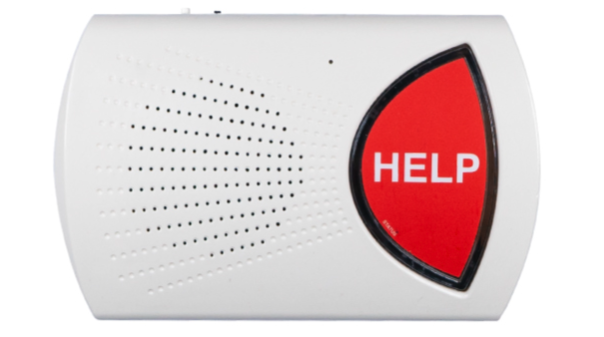
Bay Alarm Medical offers affordable in-home and mobile medical alert systems with 24/7 monitoring. Its mobile devices are well suited for dementia patients who may wander or need help outside the home.
Pricing
- Prices start at $27.95 per month
- Fall detection costs $10 per month
- Free caregiver mobile app included
Key Features
For dementia patients, the SOS All-In-One 2 and SOS Micro are the strongest options. These mobile devices use either AT&T or Verizon networks and include GPS tracking, two-way communication, and a large help button designed for easy use. The caregiver app provides real-time location updates and low-battery alerts, which can be important if a loved one becomes disoriented or forgets to charge their device.
Reliability and Coverage
Bay Alarm Medical reports an average response time of about 51 seconds. Battery life on the SOS All-In-One 2 lasts up to three days, reducing how often the device needs charging. In-home systems are also available and can provide coverage up to 1,000 feet, depending on the setup.
Limitations
One limitation is that mobile devices require equipment fees, and calls cannot be canceled once an alert is sent. However, Bay Alarm Medical is known for clear pricing, reliable GPS tracking, and strong caregiver support tools.
For more information, read our full Bay Alarm Medical review.
Medical Guardian Review
Great variety
|
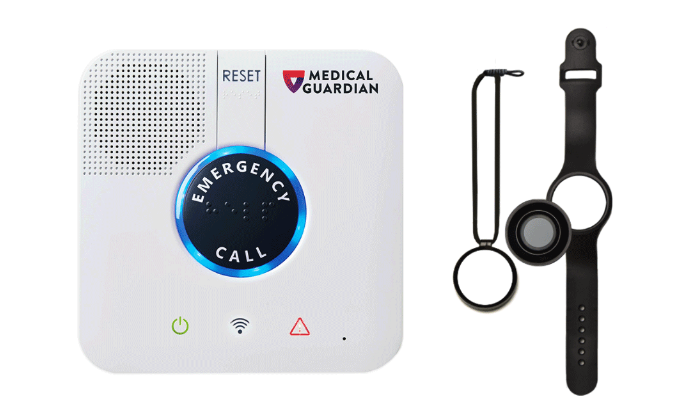
Medical Guardian focuses on ease of use, offering in-home and mobile medical alert systems supported by a 24/7 emergency response team. Its wearable devices are especially well suited for dementia patients who need a straightforward way to call for help.
Pricing
- Prices start at $31.95 per month
- Fall detection costs $10 per month
- Caregiver mobile app included at no extra cost
Key Features
The MGMini Lite is a wrist-worn medical alert device designed for simple, everyday use. It has a single large help button and two-way communication, which can be easier for users with memory loss to operate during an emergency. The device also supports GPS, Wi-Fi, and LTE location tracking, allowing caregivers and responders to locate users if they become disoriented or wander.
Reliability and Coverage
Medical Guardian lists an average response time of about 29 seconds. Through the MyGuardian app, caregivers can view location history, monitor battery levels, and manage emergency contacts. During an alert, monitoring agents can also share medical details such as conditions, medications, and hospital preferences with emergency responders.
The MGMini Lite has a battery life of roughly 36 hours. Medical Guardian also offers in-home systems with coverage up to 1,400 feet, which is among the longest ranges available.
Limitations
One drawback is that mobile devices require a one-time equipment fee, and wearable battery life is shorter than some alternatives. Still, Medical Guardian remains a strong choice for its simple device design, advanced location tracking, and fast emergency response.
For more information, read our full Medical Guardian review.
LifeStation Review
Great Value
|
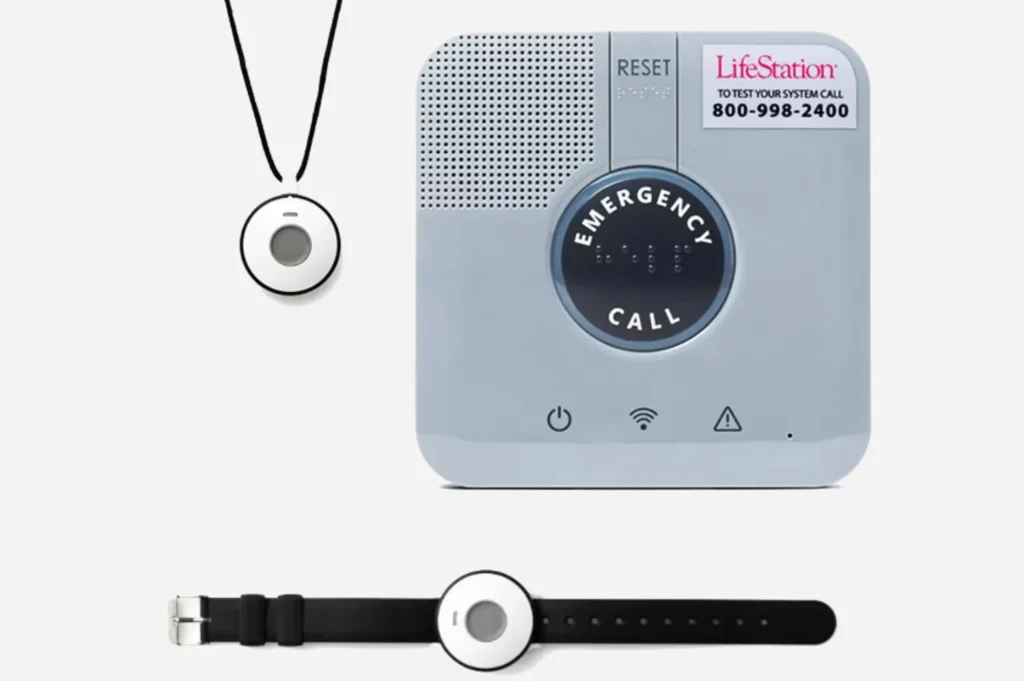
LifeStation offers in-home and mobile medical alert systems designed to make location checks simple for caregivers. It is best suited for dementia patients whose care partners want a quick way to check location without managing a complex app.
Pricing
- Prices start at $36.95 per month
- Fall detection available as a paid add-on
- No long-term contracts; 30-day risk-free trial
Key Features
For dementia patients, the Sidekick mobile device helps address wandering concerns. Caregivers can request real-time location updates by text message or through Amazon Alexa, which reduces steps during stressful moments.
The device can be worn as a pendant or watch and includes a large help button with two-way communication. Fall detection is available, and users can speak directly with the monitoring center if an emergency occurs.
Reliability and Coverage
LifeStation has an average response time of about 27 seconds. Mobile devices can last up to five days on a single charge, which helps reduce missed coverage if a user forgets to charge the device. In-home systems use a cellular connection and provide coverage up to 1,300 feet, which is suitable for most homes.
Limitations
LifeStation does not offer a standalone caregiver mobile app, and plan options may require closer review before purchase.
For more information, read our full LifeStation review.
LifeFone Review
Great for daily peace of mind
|
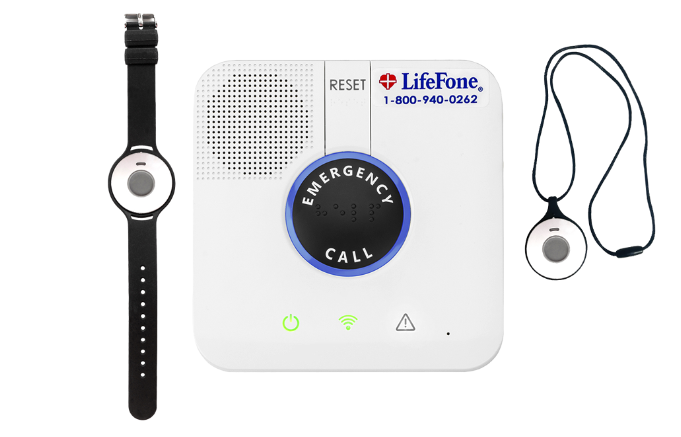
LifeFone offers in-home and mobile medical alert systems designed to reduce daily maintenance. It is well suited for dementia patients whose caregivers want fewer charging and battery-related tasks to manage.
Pricing
- Prices start at $24.95 per month
- Fall detection costs $5 per month
- Free spouse monitoring included with basic service
Key Features
LifeFone offers At-Home and At-Home and On-the-Go VIPx systems. The in-home option includes a base unit with a wearable pendant or bracelet and provides coverage throughout most homes. This setup works well for individuals who spend most of their time indoors and may forget to carry a mobile device.
The VIPx system adds mobile coverage while keeping the same simple design. Both options are built to limit daily interaction, which can help users who struggle with memory or routine tasks.
Reliability and Coverage
LifeFone reports an average response time of about 22 seconds. Mobile devices can last up to 10 days on a single charge, which is among the longest battery life available. In-home wearable buttons can last up to three years before needing a battery replacement, and battery levels are monitored automatically.
Limitations
Some add-on features increase the overall cost, and the best pricing may require longer billing plans.
For more information, read our full LifeFone review.
ADT Medical Alert Review
Great plans
|
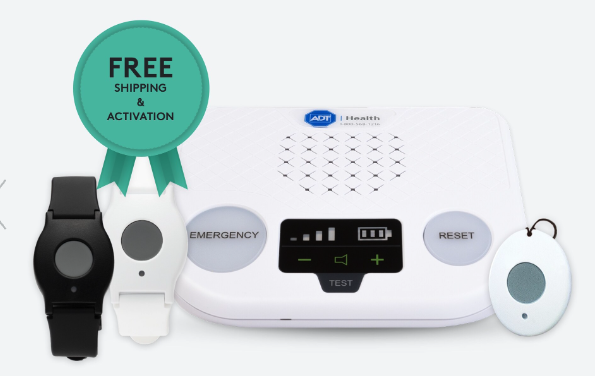
ADT Medical Alert offers in-home and mobile medical alert systems supported by a large, established emergency response network. Its mobile option is designed for dementia patients who may leave home or need help while away from familiar surroundings.
Pricing
- Prices start at $31.99 per month
- Fall detection costs $11 per month
- Fixed monthly pricing with a lifetime warranty
Key Features
ADT’s On-The-Go system provides mobile coverage with GPS tracking and two-way communication. This allows emergency responders to locate users even if they cannot explain where they are, which can be important during episodes of confusion or disorientation.
The system includes a palm-sized mobile unit with a built-in help button and speaker. Users can also wear a pendant or wrist button that connects to the main device, offering flexibility in how the system is carried or worn.
Reliability and Coverage
ADT reports mobile battery life of up to 40 hours on a single charge. In-home systems are also available and include temperature monitoring, which can alert responders to unsafe conditions inside the home. All mobile systems operate on AT&T’s cellular network.
Limitations
ADT does not offer a caregiver mobile app, and cellular coverage is limited to AT&T’s network, which may affect reliability in some areas.
For more information, read our full ADT Medical Alert review.
Lively Review
Great for senior-specific plans
|
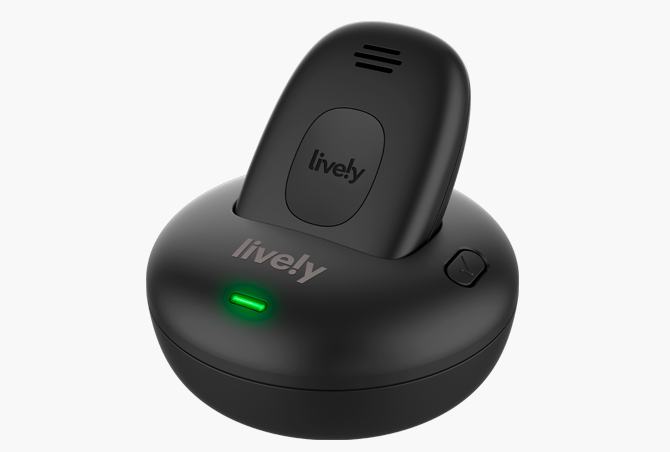
Lively offers a mobile-only medical alert system focused on keeping caregivers informed in real time. It is best suited for dementia patients who spend time outside the home and need simple emergency access with caregiver visibility.
Pricing
- Prices start at $24.99 per month
- Fall detection costs $10 per month
- Optional nurse hotline available with higher-tier plans
Key Features
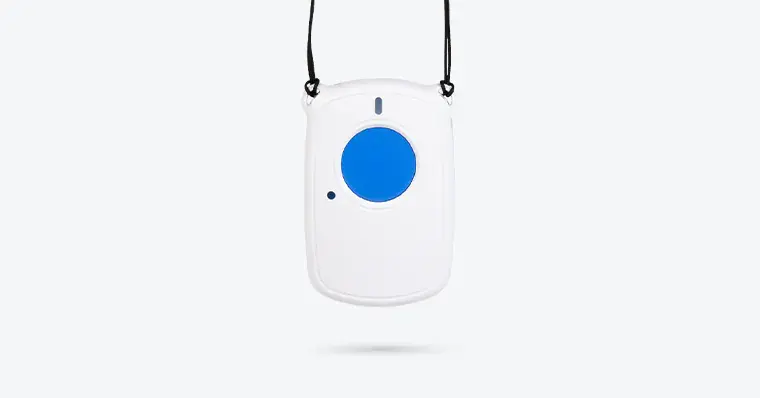
Lively’s Mobile2 is a lightweight pendant worn on a lanyard with a single help button. When the button is pressed, caregivers receive instant notifications through the Lively Link app, which can help families respond quickly if a loved one becomes confused or disoriented.
The app allows caregivers to view location, battery status, and device activity in one place. This setup works well for families who want ongoing visibility without requiring the user to interact with the device beyond pressing one button.
Reliability and Coverage
Lively connects users to 24/7 professional monitoring and supports two-way communication through the built-in speaker. Battery life lasts about 32 hours on a single charge, which requires daily charging. The device is waterproof and designed for use both indoors and outdoors.
Limitations
Lively does not offer an in-home medical alert system, and activation fees and add-ons can increase the overall cost. It works best as a mobile solution rather than a full home-based setup.
For more information, read our full Lively review.
Key Features to Look for in Medical Alert Systems for Dementia Patients
There are several types of medical alert systems for dementia patients, including in-home systems and mobile systems. Below are the most important features to consider when choosing a medical alert for dementia patients.
GPS Tracking and Location Tracking
GPS tracking helps you find your loved one if they leave home or cannot explain where they are. This is important for dementia patients who may wander or become confused, even in familiar places. With location tracking, caregivers or the monitoring center can see the user’s location in real time during an alert.
Some systems allow you to check location without starting an emergency call. This can help you confirm safety if your loved one misses a call or is late returning home. Location access may be available through a mobile app, text message, or voice assistant.
In-home systems do not track location outside the house. If wandering is a concern, choose a mobile medical alert with GPS and cellular coverage.
Emergency Response and Monitoring Center
The monitoring center is the most important part of any medical alert system. When a help button is pressed or a fall is detected, trained agents answer the call and decide what to do next.
Look for medical alert system that offer:
- 24/7 monitoring
- Fast response times
- Direct contact with emergency responders or first responders
Some centers can share medical details, such as conditions or medications, which is helpful if the user cannot speak clearly during an emergency.
Automatic Fall Detection
Automatic fall detection can place an emergency call if your loved one falls and cannot press the help button. This matters for dementia patients who may freeze, panic, or forget what the button is for during a medical emergency.
Fall detection works using motion sensors that look for sudden changes in movement. It does not catch every fall and may trigger false alarms, but it adds protection when no action is taken by the user. Look for systems that allow the monitoring center to quickly confirm whether help is needed and contact emergency responders if there is no response.
Battery Life
Battery life affects how reliable a medical alert device is day to day. If a device needs frequent charging, it may fail when it is needed most.
Mobile medical alert devices usually last one to five days per charge, though some last longer. Longer battery life reduces how often caregivers must remind or assist with charging. In-home wearable buttons often use replaceable batteries that can last one to three years, which lowers daily maintenance.
Range and Connection
In-home medical alert systems work within a set distance from a base unit, often between 600 and 1,400 feet. This allows coverage across most homes, including multiple rooms or floors.
Mobile systems use cellular networks and work anywhere there is a signal. These are essential if your loved one goes outside alone or may wander beyond the home.
Connectivity Options
Medical alert systems rely on different connection types to send emergency calls. The right option depends on where your loved one spends most of their time.
Common connectivity options include:
- Cellular network: Works anywhere with cell service and is best for mobile medical alerts
- WiFi: Helps improve location accuracy for some mobile systems when indoors
- LTE: Provides faster and more reliable mobile connections than older networks
- Landline: Used by some in-home systems that stay inside the house
If your loved one leaves home or may wander, a mobile medical alert with cellular and LTE support is the safest choice. Landline systems only work inside the home and do not provide location tracking.
Wearable Design and Comfort
Medical alert devices should be easy to wear and hard to forget. Comfort matters, especially for dementia patients who may remove devices that feel bulky or unfamiliar.
Common wearable options include:
- Wristbands
- Neck pendants
- Smartwatches
- Lanyards
Look for a large help button and a simple design with no extra steps. Devices should be waterproof or water-resistant so they can be worn in the shower or outside. A lightweight fit helps users keep the device on throughout the day, which is essential for consistent protection.
Medicare Coverage for Medical Alert Systems for Dementia Patients
Medicare does not cover medical alert systems, including those used for dementia or Alzheimer’s disease. These devices are not considered durable medical equipment. Some Medicare Advantage plans may offer limited coverage, but this depends on the plan and is not guaranteed.
Medicaid may cover basic medical alert services for people with dementia. This coverage varies by state and usually applies only to simple in-home systems. Features such as GPS tracking and mobile monitoring are generally not included unless the person qualifies through a Home and Community-Based Services waiver.
Free medical alert devices are uncommon. Most offers still require monthly monitoring fees, even if the equipment is discounted or provided at no upfront cost.
How Medical Alert Systems Work for Dementia Patients
Medical alert systems help dementia patients get assistance quickly when confusion or memory loss makes it hard to ask for help.
Here’s how medical alert system works:
- The user presses the help button, or the system sends an alert automatically if fall detection is enabled.
- The alert connects to a 24/7 monitoring center, where trained staff respond right away.
- The operator speaks with the user and follows a care plan that may include dementia or Alzheimer’s-related details.
- If needed, the operator places emergency calls to emergency responders, caregivers, or family members.
Caregivers and emergency contacts receive a notification when an alert is triggered. This can be a phone call, text message, or app alert, depending on the system.
Frequently Asked Questions About Medical Alert Systems for Dementia Patients
No. Fall detection is usually optional and costs extra. It often requires a separate sensor or pendant. Not every fall is detected, but it can place an emergency call if the user cannot press the help button.
If there is no response, the monitoring center follows a preset care plan. This usually includes contacting emergency responders and notifying caregivers, even if the user cannot explain what is happening.
SYes. Many mobile medical alert systems allow caregivers to check location through a mobile app, text message, or voice assistant without triggering an emergency call.
Most dementia-friendly medical alert systems cost between $25 and $50 per month. Extra features like GPS tracking, fall detection, or caregiver apps may increase the total monthly cost.
Only mobile medical alert systems with cellular coverage work outside the home. In-home systems operate within a limited range of a base unit and do not provide GPS tracking.
Charging depends on the device. Some mobile systems need daily charging, while others last several days or more. In-home wearable buttons often use batteries that last one to three years.
Concluding Thoughts on Medical Alert Systems for Dementia Patients
Medical alert systems help dementia patients stay safe when memory loss makes emergencies harder to manage. With features like 24/7 monitoring, help buttons, GPS tracking, and fall detection, these systems make it easier to get help quickly.
For caregivers, medical alert systems provide peace of mind. They offer a way to respond when a loved one wanders, falls, or cannot explain what is wrong. Many systems also allow caregivers to check location or receive alerts without starting an emergency call.
When choosing a system, focus on how your loved one spends their day. Consider whether they stay mostly at home, go out alone, or may forget to charge a device. Comfort, battery life, and ease of use matter as much as features.
While no device can replace caregiving, a medical alert system adds an important layer of protection. It helps keep assistance within reach, even when confusion or memory loss makes it hard to ask for help.