
Retirement Living takes an unbiased approach to our reviews. We may earn money when you click a partner link. Learn More
Best Wheelchair Lifts of 2026
Our top wheelchair lift picks focus on safety, reliability, and ease of use.


Updated:
|
Expert Reviewed
We recommend Arrow Lift, Lifeway Mobility, Bruno, Mobility123, Harmar, and Garaventa. We compared costs, customer service, manufacturing practices, safety features, and expert rankings. We spoke with accessibility and aging-in-place specialists to help you compare what matters most when choosing a wheelchair lift for your home.
Arrow Lift has showrooms in the Midwest and California. You can visit one to shop for stair lifts, luxury home elevators, and custom wheelchair lifts. Arrow Lift also offers comprehensive service and maintenance plans on all products. You can also explore their extended warranty options.
- Knowledgeable technicians and representatives
- Test-drive lifts in showrooms
- Professional installation included

Lifeway Mobility provides USA-made wheelchair platform lifts for outdoor and indoor applications. They help improve accessibility, independence, and quality of life at home. Their local experts can help you choose the right solution to fit your mobility needs.
- Excellent reviews
- Professional installation and service after install
- Warranty on product and labor

Bruno makes high-quality, USA-based wheelchair lifts with limited lifetime warranties. Customize power controls, power sources, platform sizes, and more.
- Great products
- Ample safety features
- Excellent customer reviews

4.3
- Wide range of accessibility products
- Trusted brands like Bruno, Savaria, and Stiltz
- Local, reliable service and maintenance

Offered at dealer locations in all 50 states, the Harmar wheelchair lifts can hold up to 750 pounds. Their stainless steel coating resists rust. All chair lifts come with a three-year warranty on parts. This warranty includes electrical and motor malfunctions.
- Great warranty
- Elevation up to 14 feet
- Optional battery backup
Garaventa Lift
4.5
Garaventa Lift manufactures accessibility products, including inclined, vertical, and portable wheelchair lifts. Choose from seven models of platform wheelchair lifts and three portable lifts. Garaventa Lift designs wheelchair lifts to carry up to 750 pounds and raise up to 50 feet. Platform lifts are priced around $4,000 to $6,000.
- Great High-Capacity Lifts
- High weight capacity
- Custom fit options
How We Chose the Best Wheelchair Lifts
- We researched nine leading wheelchair lift companies. Then, we consulted aging-in-place and home modification experts.
- We looked at wheelchair lift companies using our expert buying criteria. We compared manufacturing, cost, customer service, safety features, customer reviews, and customization options.
- We provided you with the best wheelchair lift companies for consideration.
Wheelchair Lift Reviews
After our evaluation, we chose the five best wheelchair lift companies. These are Arrow Lift, Lifeway Mobility, Bruno, Garaventa, Harmar, and Mobility123.
Many companies sell wheelchair lifts, and there are quite a few manufacturers. The best wheelchair lift companies prioritize affordability and custom options. Our top picks check all the boxes.
Arrow Lift Wheelchair Lifts Review
Knowledgeable technicians and representatives
|
Arrow Lift is a family-run company. They’ve been providing accessibility lifts since 1985. Its stylish, high-quality wheelchair lifts are tailored to your needs. Professional technicians and representatives will guide you through the selection and installation process. You can visit showrooms to check out their products in person.
Their indoor and outdoor vertical lifts typically have a weight limit of 750 pounds. This weight limit includes the wheelchair. They can accommodate level differences of 14 feet. Inclined platform lifts are also available.
To learn more, read our full Arrow Lift review.
Lifeway Mobility Wheelchair Lifts Review
Excellent reviews
|
Lifeway Mobility offers USA-made wheelchair lift models from the top manufacturers. They aim to increase at-home independence. Lifeway offers lifts for outside and inside use. They also have inclined platform lifts and commercial wheelchair lifts. For their residential models, the platform lift can travel between 4 feet and 10 feet. However, some units can travel up to 14 feet.
For indoor wheelchair lifts, the weight limit ranges from 750 lbs. to 1,050 lbs. Price depends on configuration/model, site prep, permits, and additional safety features. However, the average price range is $12,000–$35,000. Lifeway Mobility also offers a warranty for its products and labor.
To learn more, read our full Lifeway Mobility review.
Bruno Wheelchair Lifts Review
Great products
|
Bruno is a family-owned, ISO 9001-certified independent living aid product designer and manufacturer. It has 35 years in the mobility equipment business. The company sells to the public and works with the Department of Veterans Affairs.
Bruno produces vertical wheelchair lifts and indoor and outdoor stair lifts. Bruno also has a wide range of automotive wheelchair and scooter lifts. All of which are manufactured and packaged in the U.S. and sold around the world.
Bruno offers a wide range of vehicle wheelchair lifts. This includes platforms, interior lifts, hoists, and quick-connect lifts for small trailers. The company makes and sells a vertical wheelchair lift for indoor or outdoor use that runs up to 14 feet. This lift is especially useful for basements and decks.
A customer from Solon, IA, told us how much they love their lift. It gives them more freedom and allows them to spend time with their kids.
Bruno Independent Living Aids is accredited by the BBB and holds an “A+” rating.
To learn more, read our full Bruno review.
Mobility123 Review
Wide range of accessibility products
|
Mobility123 installs wheelchair lifts, also called vertical platform lifts (VPLs). They source products from leading manufacturers such as Bruno and Savaria. These lifts provide a safe and compact alternative to long ramps. They are ideal for accessing porches, decks, garages, and multiple floor levels. Popular models can travel up to 14 feet and accommodate both the rider and mobility devices.
Mobility123 does not list its pricing, but wheelchair lifts typically cost $4,000 to $30,000. Prices depend on brand, lift type, customization, and installation requirements. It is both a dealer and an installer. So, it provides in-home consultations and handles the installation process.
Customers frequently mention Mobility123’s professionalism and careful installation. Their wheelchair lifts work indoors and outdoors. They are a reliable choice for homeowners who want to boost safety and independence.
To learn more, read our full Mobility123 review.
Harmar Wheelchair Lifts Review
Great warranty
|
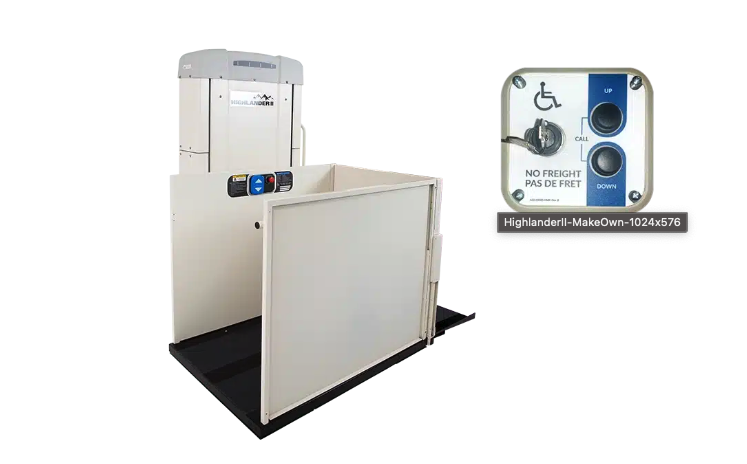
Harmar offers many mobility solutions. These include stair lifts and vertical platform lifts, also called wheelchair lifts. Wheelchair lifts are a more compact alternative to some ramps.
Harmar’s HIGHLANDER II lift is 36 inches by 48 inches. One feature we loved was that it can transport you and your mobility device up to 14 feet. This range easily provides access to decks, porches, second-story entries, and more.
Harmar does not publish wheelchair lift pricing online. Pricing for similar wheelchair lift brands ranges from $4,000 to $30,000. This range is based on the Retirement Living editorial team’s research. Your final costs depend on lift type, sizing, and travel distance.
To learn more, read our full Harmar review.
Garaventa Lift Review
Great High-Capacity Lifts
|
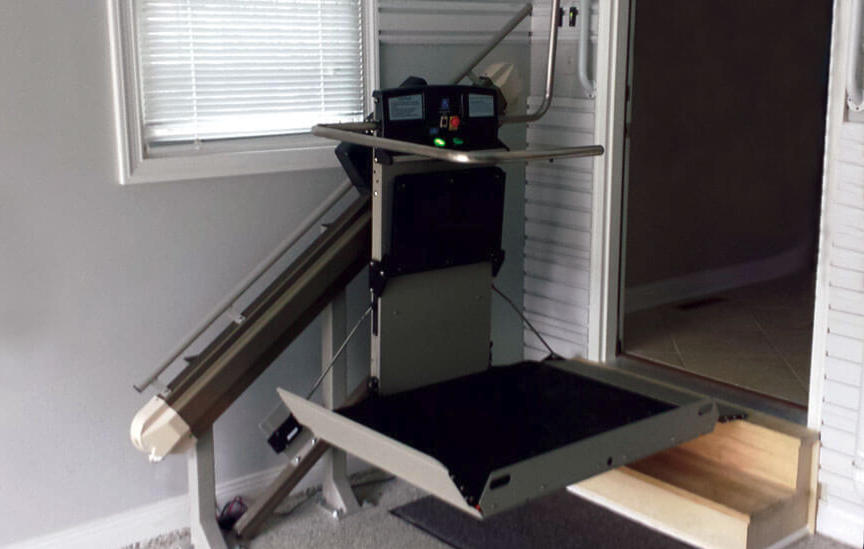
Garaventa Lifts makes vertical lifts, inclined lifts, and home elevators. They also sell evacuation chairs and portable lifts for both commercial and home use. Every Garaventa wheelchair lift is designed to ensure a custom fit. Company-certified technicians complete all installations. Techs will provide an equipment demonstration in an instructional session for the customer.
Many Garaventa Lifts have a weight capacity of up to 750 pounds, and some lifts are capable of reaching up to 50 feet. One feature that stood out to us was Garaventa’s portable wheelchair lifts. These provide users with convenient access to more areas than ever before. The Garaventa Evacu-Trac is a manual emergency wheelchair lift. Caregivers can use it during power outages. The Evacu-Trac is the only emergency model we’ve seen produced with a speed governor and brake for safety.
Garaventa Lift is not accredited by the BBB, but it has an “A+” rating.
Best Wheelchair Lifts Buying Guide
The best wheelchair lift depends on your needs and budget. Below, we offer tips for choosing the best wheelchair lift for your mobility needs, provide an overview of purchasing a lift, and explain the different types of wheelchair lifts. Once you understand your options, you can better identify which lift is best for you and your loved ones.
What is a Wheelchair Lift?
A wheelchair lift is a secure, motorized platform that can raise a wheelchair to and from a vehicle or over stairs. For a deeper look at the mechanics, check out our guide on how a wheelchair lift works. These lift systems are often used in vans, but they also work well in homes. They can connect areas like the front porch to the sidewalk, driveway, or doorway.
If you use a mobility aid device, a wheelchair lift will suit your needs better than a stair lift. Stair lifts only accommodate the rider, not the passenger and the wheelchair. However, finding a quality wheelchair lift can be time-consuming.
After evaluating nine wheelchair lift companies, we identified the best wheelchair lifts. Our top picks are Arrow Lift, Lifeway Mobility, Bruno, Garaventa, and Harmar. We considered cost, customer service, manufacturing practices, safety features, and expert rankings.
We also consulted aging-in-place and home modification specialists. They helped us identify the most important safety features that buyers should consider.
Tips for Choosing a Wheelchair Lift
Your first consideration when buying a wheelchair lift should be safety. Today’s platform lifts have many safety features and options for modifications. This ensures that each brand and model fits your needs.
Make a note of the wheelchair lift safety features you want and make these a priority when shopping. However, we recommend considering and prioritizing your future needs as well.
Ask yourself these questions when shopping for a wheelchair lift:
- What is the weight limit? You’ll need a model that can accommodate your weight and that of your mobility device. This includes electric wheelchairs, scooters, or manual wheelchairs. You might also consider the added weight of a caregiver who may need to ride with you. To be ADA-compliant, all lifts must carry up to 750 pounds, though many durable models accommodate additional weight.
- Do you need an enclosure for added safety? Similarly, if you have dexterity limitations, do you want power doors that will open by pushing a button?
- How high do you need the lift to rise? The lifts on this guide can reach heights between 10 and 14 feet.
- How will you “call” the lift? Most models have call stations that move the lift from one landing to another, but make note of how many stations it has. For example, you may prefer a call station on each landing with keyed access for added security.
- How is the lift powered? Some models have rechargeable batteries in case the power goes out. Some may require their own electrical circuit. Always consult with an electrician or installer.
- What other modifications and accessibility solutions do you need to feel comfortable using the lift? For example, you may request obstruction sensors, which stop the lift if there is an obstacle. You can also request alternative controls that are easier to operate.
Follow these tips to ensure the wheelchair lift you choose is right for you. Screenshot or print this list for easy reference:
- Ensure the weight capacity is high enough
- Ask about user-friendly controls
- Identify all included safety features
- Identify all missing safety features
- Ask about customization options
- Ask about warranties
- See if the company offers installation services
- Discuss the maintenance requirements
- Ask about payment plans
How to Buy a Wheelchair Lift
Based on our research and expert consultations, here are the key steps to successfully buying a wheelchair lift.
- Get evaluated. Talk to a mobility specialist or occupational therapist. They can help you find out your accessibility needs and the best lift for you. They assess factors like home layout, lift orientation, and doorway widths. They will also discuss the needed weight capacity and safety features.
- Research options. Look into different lift types, such as platform lifts, porch lifts, stair lifts, wheelchair vans, and more. Compare features, dimensions, and weight ratings. Reach out to manufacturers for brochures, spec sheets, and quotes.
- Secure funding. Apply for insurance coverage, loans, grants, or financial assistance if needed. A social worker or case manager may be able to point you toward available resources.
- Hire an installer. Ask the manufacturer or local dealer for a qualified, licensed contractor to do the installation. Verify that the necessary permits are obtained.
- Prepare the space. Make sure the mounting location has adequate structural support and necessary electrical connections. Your installer will also suggest any extra renovations for the lift. This might include concrete pads or wall supports.
- Install the lift. The contractor will deliver the lift, assemble it on-site, and test it to ensure proper functioning. Installation may take several days to complete. The installer and/or manufacturer should provide thorough training on how to use the lift safely and maintain it.
- Arrange inspections. Schedule any required municipal inspections after installation. Ongoing periodic inspections may be recommended to ensure optimal safety.
- Register the lift. Submit any registration documents to the manufacturer to activate warranty coverage. Maintain records of serial numbers and purchase info.
Buying Tip:
If you have an HOA, ask them about any limitations mentioned in the bylaws regarding installation locations and/or design. They may require the lift to be installed at a side entrance or back entrance.
Wheelchair Lift Costs
The average cost of wheelchair lifts can range from $4,000 to over $25,000. However, like many home accessibility products, the price includes equipment and installation. The cost of a wheelchair lift depends on weight capacity, the size of the lift, and the features you choose.
Vertical platform lifts often cost more due to their self-contained equipment. Curved wheelchair lifts require a lot of customization. This makes them the most expensive lifts.
A dealer and certified installer can offer a free quote for installation after an in-home consultation. Many factors impact the cost of installing a vertical wheelchair lift. These include:
- Permits required
- Vertical rise
- Platform size
- Weight capacity
- Leveling and ground preparation
- Needed electrical work
| Lift Type | Average Cost |
|---|---|
| Incline lifts, non-custom | $4,200 – $15,700+ |
| Vertical platform lifts | $8,000 – $25,000+ |
| Curved incline lifts | $10,000+ |
Payment and Financing Options
Many states offer resources for individuals needing wheelchair lifts. This is especially true if it is deemed medically necessary. Call your state’s Agency on Aging or Department of Disability Services for information about programs available in your area. They may be able to refer you to a local office. Veterans may be eligible for assistance with buying a van-adapted wheelchair lift through their local VA office.
You can also explore financing options. These include loans, grants, and charitable organizations, both local and national.
Depending on your state’s laws, the Medicaid Home and Community-Based Services (HCBS) Waivers may help cover the cost. However, you will need to qualify for Medicaid, and the lift must be deemed medically necessary.
Currently, Medicare does not cover wheelchair lifts. However, the Creating High-Quality Results and Outcomes Necessary to Improve Chronic (CHRONIC) Care Act could help. The act allows Medicare Advantage plan providers to include non-medical coverage. This can cover items like wheelchair lifts. CHRONIC addresses many other health care issues affecting retirees. It expands Medicaid’s Independence at Home program. While it doesn’t cover lifts, Medicare may cover an electric wheelchair.
If none of these options work for you, many wheelchair lift providers have payment plans. Such plans allow you to pay for your lift in manageable monthly payments. Ask your provider about the options available to you.
Aging in place can be expensive, but there are ways to offset the costs of wheelchair lifts and other home modifications.
Types of Wheelchair Lifts
The primary types of wheelchair lifts for homes are vertical platform lifts (VPL) and inclined platform lifts. Most wheelchair lifts are powered by a motor. However, some lifts may require manual operation.
Manual vs. Electric Wheelchair Lifts
Manual wheelchair lifts require physical effort to move the wheelchair, usually by cranking a pump or lever. They are typically more cost-effective, but require physical strength to safely operate. Electric wheelchair lifts use electricity to power a motor or battery to lift the user effortlessly.
A caregiver needs enough strength to operate a manual wheelchair lift. They must safely pull the lever or pump to lift the patient and the wheelchair. Typically, you will find manual lifts designed to lift only the person, and not the wheelchair as well. Examples of manual wheelchair lifts can include portable lifts and vehicle-mounted lifts.
Manual wheelchair lifts vary in cost, depending on their function and complexity, but you can expect to pay anywhere from $2,000 to $5,000.
Electric wheelchair lifts are most common and can either have hydraulic pump systems or electric motors. Hydraulic lifts convert mechanical energy into fluid power, creating high force and torque for heavy-duty tasks. Conversely, a lift with a motorized operation system will turn electric energy into mechanical power.
There are many different types of electric wheelchair lifts, making the cost vary widely, from $4,000 to over $25,000.
Vertical Platform Lifts
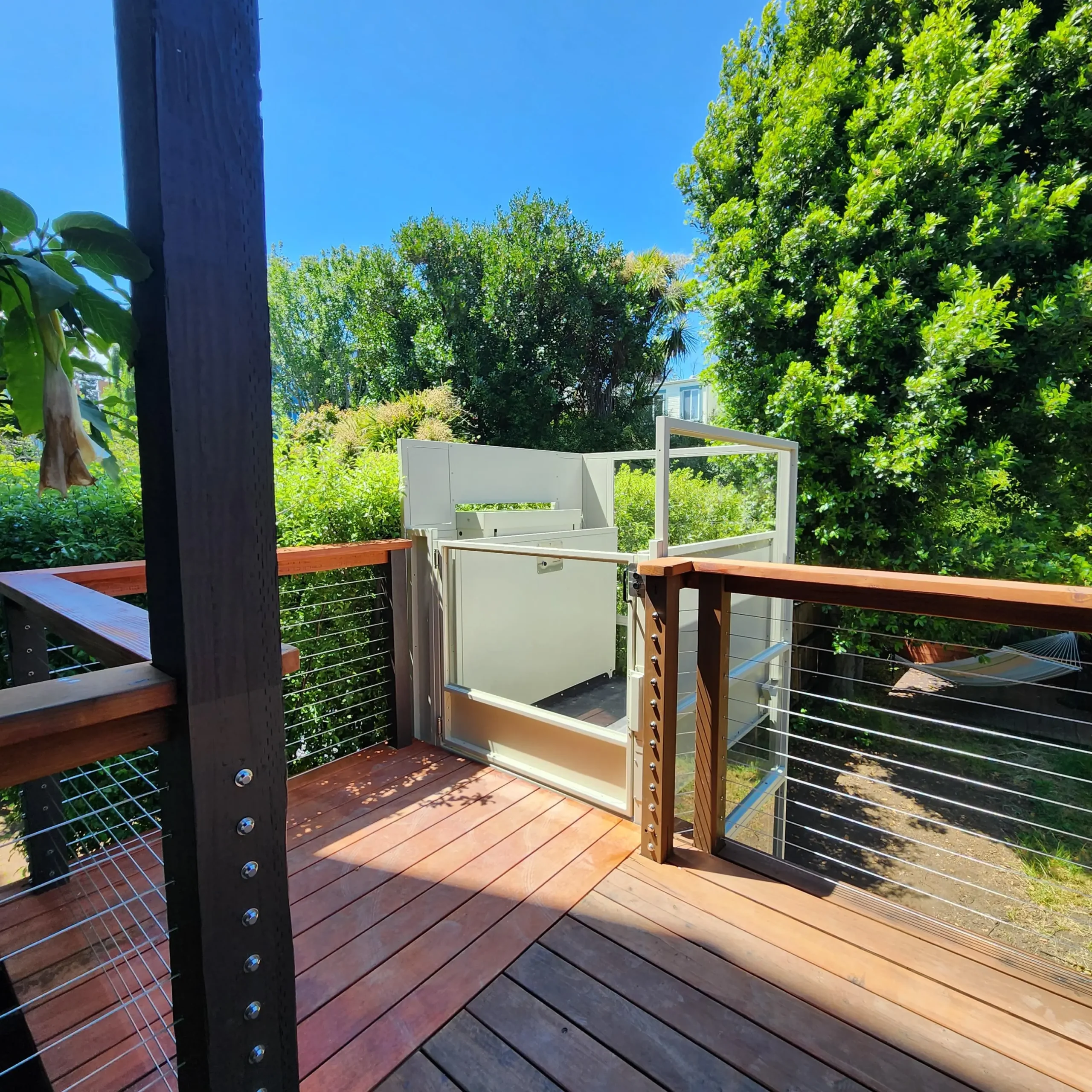
Like elevators, vertical platform lifts move between levels of your home using an open-air tower and platform. In most designs we’ve seen, the platform (and rider) is surrounded by a wall barrier for safety.
You might choose a platform lift if you have home entrances on a porch or have a multi-level home; some lifts can travel up to three floors. However, you’ll need ample floor space to accommodate a vertical platform lift—at least 36 inches wide by 48 inches to 60 inches long. Ideally, you’ll want 60 square inches of space to approach, turn, and maneuver your power chair or mobility scooter on the lift.
You’ll also need at least 80 inches of head clearance to accommodate larger power wheelchairs and standing passengers. Also, hard, level surfaces such as concrete or pavement are often required for safety and use.
Inclined Platform Lifts
Inclined platform lifts are designed to travel over the stairs, following the angle of the steps. An inclined lift is similar to a stair lift but can carry a wheelchair. For this reason, you’ll need more room to install an inclined lift, which tends to have a lower weight limit between 550 pounds and 660 pounds.
Incline lifts also typically have structural pieces at the bottom of the steps. They can be considered fall-risk spots for ambulatory users.
Portable Wheelchair Lifts
Portable wheelchair lifts are great for travel and events needing temporary access. They’re also useful for rental properties and places where a permanent lift can’t be installed.
Typically, portable wheelchair lifts are freestanding units. They are lightweight and easy to move. This makes them great for anyone needing flexible accessibility options.
While these lifts are convenient, they are generally less durable than permanent lifts. They also have a lower weight capacity, ranging from 300 to 550 lbs. Consider how much weight the lift will need to carry and what conditions it will face before purchasing or renting one.
On average, portable wheelchair lifts can cost anywhere from $1,000 to over $4,000. However, some models may reach up to $8,000, depending on the unit’s features and complexity.
Lifts for Vehicles
Many companies that build wheelchair lifts for homes also build wheelchair lifts for vehicles. This guide focuses on residential wheelchair lifts, but there are many options for getting in and out of cars if you use a mobility device. These include under-mount lifts, hoist lifts, and vehicle lifts, which can be installed in a van.
| Brand | Types of Lifts | Average Price Range | Key Features |
|---|---|---|---|
| Arrow Lift | Vertical lifts (open platform, shaftway, and enclosed) | $20,000 – $40,000 | Outdoor & indoor models, obstruction detection sensors, multiple enter/exit configurations |
| Lifeway Mobility | Vertical, inclined, and commercial | $12,000 – $35,000 | Outdoor & indoor models, multiple brands available, warranties on lifts and labor |
| Mobility123 | Vertical, inclined, and commercial | $8,000 – $15,000 | Outdoor & indoor models, multiple brands available, curved inclined platform lifts |
| Bruno | Vertical lifts (open platform and enclosed) | $9,000 – $15,000 | Outdoor & indoor models, ISO 9001-certified, scooter lifts available |
Wheelchair Lift Safety Standards
Wheelchair lifts must meet certain safety standards. They also must include features like tie-downs, non-slip surfaces, and more.
Wheelchair lift safety equipment is essential. This is true whether you buy a lift for a seated person or just the chair.
Tie-downs keep wheelchair lifts stationary when not in use. Similarly, non-slip surfaces and control lock switches are vital safety features.
From The Expert
“It’s important to think about WHO is going to use the safety features on your lift. Are they features that you, the user, can manipulate yourself, or will you need a second person to work them? This may impact your final decision, pending the level of care and frequency of care you have and anticipate.”

Dawn Heiderscheidt, OTR/L, ECHM, CAPS
Accessibility Consultant
Safety features for wheelchair lifts designed to move an occupied chair are far more extensive. However, models vary, and not all safety features may be available with all units.
- Interlocking devices: Prevent the lift from operating unless restraining devices are properly engaged. Restraining devices include lap belts or wheelchair locks. This helps ensure that the wheelchair user is properly secured before the lift moves.
- Threshold warning & obstacle detection: An alarm sounds if the lift is not properly situated with the bottom threshold. This indicates that you need to reposition the lift before traveling. It may also automatically stop the lift if an obstacle is detected under the platform.
- Handrails and safety railings: Prevent the wheelchair from moving or falling off the platform while in motion. Safety rails and straps come in a variety of heights and sturdiness levels.
- Non-skid platform surface: A textured surface that helps keep mobility devices from slipping or rolling. It ensures a stable footing throughout the ride.
- Weight capacity limit: Lifts have a weight capacity clearly posted and will not operate if exceeded.
- Emergency stop button: Allows anyone to immediately stop the lift mid-motion for any reason. These stop buttons are critical for lifts with no continuous pressure controls.
- Continuous pressure controls: These require the user to hold down a control button to keep the lift in motion. This ensures the operator retains control of the lift at all times. Pressure controls also allow for quick stops in case of an emergency.
- Backup battery systems: These allow lifts to function in the event of a power failure. Riders don’t have to worry about being stranded on the lift. Some wheelchair lifts have a manual movement backup instead of a battery backup, but these require assistance to operate. In either instance, consider investing in a generator if your area has frequent outages.
What Wheelchair Lift Customers Say About Their Experience
Retirement Living looked at reviews on our website from the past three years. This helps us understand the overall customer experience with the companies on our list. We considered factors like customer service, installation, maintenance, and repairs.
Of the 199 reviews for the companies on our list, customers left an average rating of 4.3 stars.
Here are some of our key findings from our analysis:
- 60% of customers who bought wheelchair lifts had a positive experience with customer service.
- Those who bought wheelchair lifts rated their experience an average of 4.6 out of 5 stars.
- 87.6% reported a positive experience with the installation process.
- Only 22.6% of users mentioned needing repairs and maintenance.
- 80.6% of customers who worked with the companies, for any reason, had a positive experience with customer support.
Overall, customers who purchased wheelchair lifts from the companies on our list found that their lives were made easier. Some users mentioned that the wheelchair lift required some maintenance, but they were very happy with it overall.
If you’ve purchased a wheelchair lift from one of the providers on our list, please tell us about your experience. Your input helps us continue to offer accurate insights and information.
Wheelchair Lift FAQ
Wheelchair lifts are rarely suitable for DIY projects. This is because they require specialized tools and structural modifications. In addition, some manufacturers only warranty wheelchair lifts installed by a professional. This includes refurbished lifts. Your dealer can recommend local contractors to help you.
No, a stair lift is a motorized chair that moves along a staircase, requiring the user to stand and walk to vacate the seat. An inclined wheelchair lift platform holds the chair and occupant while navigating stairs.
The main difference between a home elevator and a wheelchair lift is that the elevator is typically fully enclosed and moves faster. However, it may not safely accommodate all wheelchair sizes.
Most wheelchair lifts are installed in a few days with minimal disruption to your home and routine. However, the exact time required for wheelchair lift installation varies depending on prep work, such as pouring a cement base.
Whether a ramp is better than a lift depends on your mobility needs, space availability, and budget. Ramps are a more cost-effective option and require less maintenance. They can also provide more continuous and gradual access to other levels.
Wheelchair lifts, on the other hand, are more advantageous for smaller spaces, and they can provide vertical access to new levels. Additionally, they can be easier to navigate than a ramp for some individuals.
Whether you choose a portable wheelchair lift or a permanent one depends on your needs and where you plan to install the lift. A permanent wheelchair lift is ideal for ongoing accessibility needs. It’s also great for places where meeting code is important. Portable wheelchair lifts are usually more flexible and cost-effective for temporary accessibility needs.
Wheelchair lifts can last 10 to 20 years. A lift’s life expectancy is influenced by factors like maintenance frequency, usage, user weight, and the quality of parts. To increase the lifespan of your wheelchair lift, have regular maintenance and inspections. This way, you ensure everything is in working order.
No, Medicare does not typically pay for wheelchair lifts. Medicare doesn’t consider home modifications as necessary durable medical equipment. However, the Medicare Advantage (Part C) plan may help cover a wheelchair lift for a vehicle if it’s included in your plan.
The average cost of a vertical lift ranges from $8,000 – $25,000+. However, cost largely depends on height, size, features, installation complexity, and the type of lift. Some units cost as little as $1,000 – $4,000, while others may cost $30,000+.
Concluding Thoughts on Wheelchair Lifts
Overall, a wheelchair lift can be a vital part of maintaining self-sufficiency. When considering a wheelchair lift, we suggest taking a realistic look at your needs vs. the options available. If you only use a wheelchair for mobility and want an automotive lift, you may need to purchase a vehicle that is fitted with a lift or opt for a wheelchair van.
An inclined lift might feel safer, but it’s not ideal for narrow stairs where others often need to use the steps. Whatever your needs, there are plenty of options in a variety of price ranges to choose from to help you meet your mobility goals.